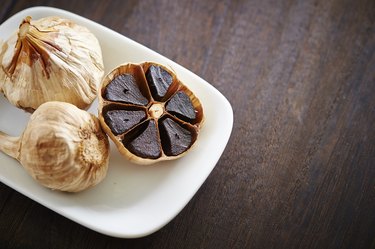
Wondering "What's the healthiest way to eat garlic?" Then you might want to try black garlic, which is a lot more nutritious than its conventional counterpart. With its sweet, moderate flavor, it's ideal for those who dislike the strong odor of fresh garlic.
What Is Black Garlic?
Video of the Day
Several garlic varieties exist and each has distinctive properties. Black garlic, for example, has been around for centuries, yet few people know about it. Today, it's widely used in high-end cuisine and promoted as a functional food in Asian countries.
Video of the Day
This versatile spice starts as fresh white garlic that is fermented at a high temperature in a humidity-controlled environment. Its black color results from the fermentation process, according to a January 2017 review published in the Journal of Food and Drug Analysis. Compared to its fresh counterpart, it's lower in allicin, the sulfur compound that gives garlic its pungent odor.
Black garlic has a jelly-like consistency. Its subtle flavor complements meat and fish dishes, salads and even desserts. This spice is also available in powdered form. Depending on your preferences, you can use it in soups and homemade dressings, enjoy it raw or mix it with mustard, soy sauce, vinegar and other ingredients and add it to your favorite meals.
Read more: 10 Incredible Garlic Hacks
This functional food is prized for its antioxidant, anti-cancer and anti-inflammatory effects, as reported in the above review. Compared to fresh garlic, it's higher in flavonoids, phenolic compounds and other antioxidants. Its carbohydrate content, on the other hand, decreases during the fermentation process.
Is Black Garlic Healthy?
A recent review published in IntechOpen in February 2019 suggests that black garlic may improve blood lipids, protect the liver and nervous system, boost immune function and reduce cancer risk. These potential benefits are due to its high levels of bioactive compounds, which increase during fermentation.
Its polyphenol content, for example, is 9.3 times higher compared to that of fresh garlic. S-allyl-cysteine levels in black garlic increase 4.3 to 6.3-fold during processing.
S-allyl cysteine (SAC), an organic compound in garlic, protects against oxidative stress and inflammation. Its levels are significantly higher in black garlic compared to its fresh counterpart, as noted in the Journal of Food and Drug Analysis review. This nutrient is also found in aged garlic extract. Research suggests that it inhibits oxidative damage, a contributing factor to stroke, neurodegenerative diseases, premature aging and cardiovascular problems.
Several studies cited in the Intechopen review support the health benefits of black garlic. This functional food has been shown to induce cancer cell death, prevent metastasis and inhibit tumor growth. Furthermore, it may protect against obesity and its complications.
Black garlic also benefits your brain, due to its anti-inflammatory, antioxidant and neuroprotective effects. In clinical trials reported in Intechopen, it was found to improve memory performance and slow cognitive decline.
Black Garlic Benefits Your Heart
Heart disease is the leading cause of death in the U.S., reports the American Heart Association. Cigarette smoking, bad eating and lack of exercise have a direct impact on cardiovascular health. While it's true that genetics play a role too, it's your lifestyle that really makes the difference.
One way to protect your heart is to add black garlic and other superfoods to your daily menu. The antioxidants in this spice support cardiovascular function and may improve circulation. These nutrients appear to be particularly beneficial for those with coronary heart disease, according to a November 2018 review published in Frontiers in Physiology.
Read more: Secrets of 16 Strange and Popular Superfoods
As the researchers note, black garlic may improve cardiac function by increasing plasma antioxidant levels. This spice may also protect against diabetes, a major risk factor for heart disease and stroke. Compared to fresh garlic, black garlic is about five times higher in polyphenols. As a result, it's more effective at protecting your heart from free radical damage.
According to the review featured in the Journal of Food and Drug Analysis, aged black garlic may improve blood lipids, which can further lower your risk of heart disease. In a small clinical trial, it increased good cholesterol levels and reduced concentrations of atherogenic lipoprotein, a marker for coronary artery disease risk. Further research is needed to validate these findings, though.
Keep Your Brain Sharp
As you age, your brain becomes less efficient at processing information and learning new things. Over time, you may experience memory problems and find it difficult to recall names. On top of that, certain factors, such as sleep deprivation, diabetes and heart disease, may affect cognition and brain function.
Black garlic is by no means a cure-all. However, it may help keep your brain sharp until late in life. The Journal of Food and Drug Analysis review suggests that this spice may improve memory due to its high antioxidant levels. In animal studies, it has been shown to protect the brain from oxidative damage and reduce the harmful effects of certain food additives on the nervous system.
Most studies have been conducted on mice, so it's hard to say how findings translate to humans. So far, researchers agree that black garlic is rich in antioxidants and anti-inflammatory substances.
Antioxidants reduce free radical damage and oxidative stress, which in turn, may help lower your risk of Alzheimer's disease. Due to its anti-inflammatory properties, this spice may protect against cognitive decline, a common health concern among older adults. Again, more research is needed to confirm its neuroprotective action.
Black Garlic Side Effects
There are no major side effects associated with this spice. Fresh garlic may cause allergic reactions, heartburn, indigestion and bad breath, as the National Institutes of Health (NIH) points out. Therefore, black garlic may have similar effects.
According to a July 2016 case report published in Allergology International, this functional food may contribute to pneumonia. A 77-year-old woman developed this disease after taking black garlic supplements for three weeks. As the researchers note, her symptoms were due to either an immune reaction or a cytotoxic effect.
Beware that garlic may interact with anticoagulants, as reported by the NIH. This spice acts as a blood thinner and may increase the risk of bleeding in those who take medications to prevent blood clots.
This spice may also trigger or worsen gastroesophageal reflux disease, warns the Cleveland Clinic. Certain foods and beverages, such as garlic, onions, dark chocolate, coffee and citrus juices, may irritate the esophageal mucosa. If you have this condition, you may eat black garlic, but try not to go overboard. Stick to small amounts and see how your body reacts.
- Journal of Food and Drug Analysis: "Black Garlic: A Critical Review of Its Production, Bioactivity, and Application"
- IntechOpen: "Black Garlic and Its Therapeutic Benefits"
- American Heart Association: "Heart Disease and Stroke Statistics—2019 Update: A Report From the American Heart Association"
- Harvard.edu: "The Genetics of Heart Disease: An Update"
- Frontiers in Physiology: "Black Garlic Improves Heart Function in Patients With Coronary Heart Disease by Improving Circulating Antioxidant Levels"
- NIH: "Diabetes, Heart Disease, and Stroke"
- Harvard.edu: "How Memory and Thinking Ability Change With Age"
- Alzheimer's Society: "Antioxidants and Dementia"
- Harvard.edu: "Chronic Inflammation May Put Your Brain at Risk"
- NIH: "Garlic: What Do We Know About Safety?"
- Allergology International: "A Case of Black Garlic-Induced Pneumonia as an Adverse Reaction"
- AARP: "When Supplements Become Dangerous"
- Cleveland Clinic: "Lifestyle Guidelines for the Treatment of GERD"