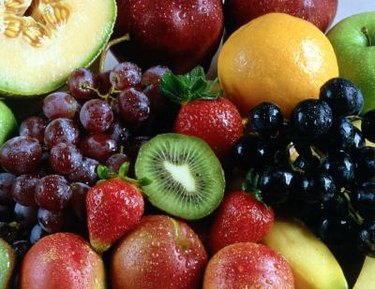
Consuming at least three daily servings of fruit will help to maintain your health, but you should eat more non-starchy fruits to minimize calories and sugar. Fruits darker in color are typically packed with the most nutrients. To make the best choices when it comes to fruit, it is important to understand the four fruit groups: sweet, melons, acidic and sub-acidic.
Sweet
Video of the Day
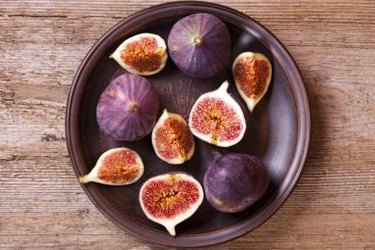
Starchy fruits such as bananas, plantains and dates, make up the sweet category and are ones to limit in your diet. Although healthy, these fruits are higher in calories and sugar. Figs are one exception to sweet fruits when it comes to dietary limitations. Packed with protein, figs are a natural aid for weight control. The potassium level of figs might also help to lower blood pressure. Figs and fig leaves are wise dietary choices for diabetics and pre-diabetics.
Video of the Day
Melons
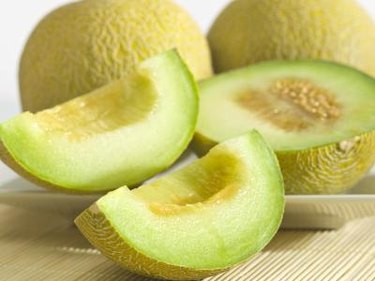
Despite their sweet flavor, melons are made up of mostly water. Non-starchy melons, such as watermelon, cantaloupe and grapefruit, are excellent sources of vitamin C and vitamin A. Fairly low in calories, melons are also helpful in weight management.
Acidic

Citrus fruits are largely acidic and should be combined with fruits in other categories to achieve a more balanced, alkaline diet. Although many citrus fruits are lower in starch, an unbalanced combination of acidic fruit is likely to cause acid stomach and digestive irritation.
Sub-Acidic Fruits
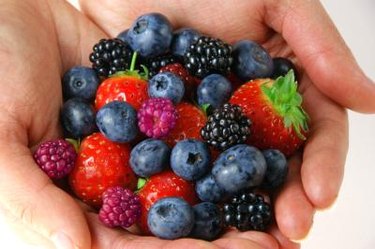
In addition to apples, plums, kiwi and peaches, nearly all berries are among the sub-acidic fruit group. For the lowest starch berries, opt for strawberries, cranberries, blackberries, raspberries and blueberries. Packed with fiber, berries also contain flavanoids, which have cancer-fighting properties.
Starch and the Glycemic Index

Existing in plant based foods, starch is a carbohydrate that plants use to produce energy in the form of glucose. It is more difficult for the body to metabolize glucose than sucrose, therefore too many high-starch fruits can have a negative effect on blood sugar and insulin. The glycemic index is used to rate carbohydrates based on their effect on blood sugar levels, so this can be used as a guide for determining the starch in fruits. Typically, the more starch a fruit has, the higher rating it will have in the glycemic index. Of the four categories, the five fruits lowest in starch are cherries, grapefruit, pear, plum and apple.
- Peter Thomson.co.uk: Fresh Non-Starchy Fruits
- Anti-Depression Foods; Non-Starchy Fruits List; 2010
- Veg Health Guide: Fruits and Vegetables
- 3 Fat Chicks on a Diet; Starch -- The Good, the Bad and the Baking; 2010
- Harvard School of Public Health: The Nutrition Source; Fruits and Vegetables -- Get Plenty Every Day