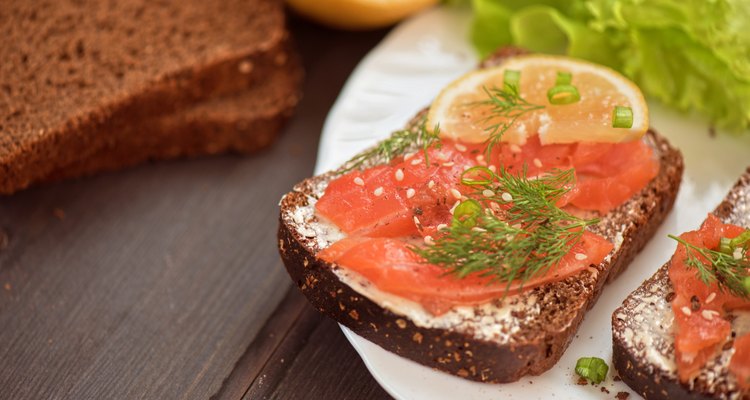
rusak/iStock/Getty Images
If you think you are getting all the benefits from your morning lox, bagel and cream cheese, think again. Although lox offers some omega-3 fatty acids, protein, vitamins and minerals, it pales in comparison to freshly baked salmon. Lox is not a bad choice, but try to include baked salmon at dinner or lunch a few times per week for greater nutritional value.
Sodium
Lox is thin slices of salmon cured in brine and cold-smoked. The brine is a combination of salt, water, spices and sometimes sugar – which leaves the final product with a significant sodium content. A 3-ounce serving of lox contains 1,700 milligrams of sodium, which exceeds the 1,500 milligrams recommended for half of Americans by the U.S. Department of Agriculture Dietary Guidelines published in 2010. Even for healthy people who can consume up to 2,300 milligrams of sodium daily – the sodium in lox is excessive. Baked salmon, without added salt, contains just 52 milligrams of salt per 3-ounce serving.
Omega-3 Fatty Acids
One of the greatest benefits of salmon is its omega-3 fatty acid content. Omega-3 fatty acids may protect your heart health and support brain development. The American Heart Association recommends you consume at least two 3.5 ounce servings of fatty fish per week to help protect your health. The smoking process destroys about 75 percent of the omega-3 fats in salmon, notes the University of Maryland Medical Center. A 3-ounce serving of lox contains 445 milligrams of the healthy fats as compared to 1,921 milligrams found in 3 ounces of baked salmon.
Calories and Protein
Lox are lower in calories than baked salmon, with 99 calories per 3 ounces versus 175 calories. Lox are a way to fit more protein into breakfast or lunch when a hunk of baked salmon is impractical. Lox can be made into a sandwich you pack in a cooler, for example. A 3-ounce serving of lox provides 16 grams of protein versus the 19 grams in the same serving of baked salmon.
Vitamins and Minerals
Lox and baked salmon contain similar amounts of iron, niacin and vitamin B-12, with 40 to 45 percent of the recommended daily B-12 intake. Baked salmon offers more vitamins A and C as well as folate and B-6. Both baked salmon and lox are superior sources of selenium, with 35.2 micrograms and 32.4 micrograms, respectively, per 3 ounce serving -- roughly 50 percent of the recommended daily intake. Selenium plays a role in reproductive health, proper functioning of your thyroid and DNA synthesis, as explained by the National Institutes of Health Office of Dietary Supplements. It may also possibly be effective in preventing cancer, heart disease and declining brain function.
Related Articles

Difference Between Canned Pumpkin & ...

How to Reduce Acne Inflammation

Nutrition Information on Blueberries

How to Freeze Tzatziki

Avocado Serving Size & Nutrition
Nutritional Facts of Fava Beans
How to Brine a Grilled Salmon
How to Cook Sardines in the Oven
Calories in Candied Walnuts

Calories in London Broil

Mineral Oil Vs. Olive Oil

How to Grill a Cod Fish

Calories of Tuna in Sunflower Oil
Is it Healthier to Cook Salmon With Its ...
Baked Salmon Filet Nutrition Information

How Many Calories are in Pistachio ...

Calories in One Slice Provolone Cheese

Can You Eat Paddlefish?

Skin Benefits of Eating Coconut Oil

Nutrition Facts for Domino's Philly ...
References
Writer Bio
Andrea Boldt has been in the fitness industry for more than 20 years. A personal trainer, run coach, group fitness instructor and master yoga teacher, she also holds certifications in holistic and fitness nutrition.
Photo Credits
rusak/iStock/Getty Images