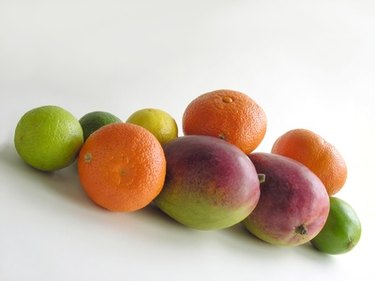
Hypoallergenic diets are designed to minimize the chances of provoking an allergic reaction. Doctors commonly recommend hypoallergenic foods to patients to determine whether their allergic reactions are a result of the foods they eat. Eating a hypoallergenic diet can be challenging, since common foods like wheat, eggs, milk and soy are not allowed. However, with some planning, you can find a pleasing variety of hypoallergenic foods that are both delicious and nutritious.
Vegetables
Video of the Day
Certain vegetables are considered hypoallergenic. Dr. Julia Gonen, N.D., of the Gaia Naturopathic Clinic, recommends eating cucumbers, carrots, broccoli, Brussels sprouts and cauliflower. She recommends avoiding tomatoes, corn, mushrooms, peppers and potatoes. These vegetables contain chemicals that can trigger allergic reactions. People with ragweed allergies should also avoid artichokes, iceberg lettuce, sunflower seeds and oil, safflower oil, dandelion, chamomile and chicory.
Video of the Day
Meat
Lamb is one of the most hypoallergenic meats, since it is not exposed to wheat or dairy products during its growth cycle. Most cows and chickens are fed wheat and dairy products to help them grow quickly; this can trigger allergic reactions. Organically raised beef and chicken can be hypoallergenic if they were not fed wheat or dairy products.
Fruit
Apples and pears are the most hypoallergenic fruits. Other fruits considered allergy safe are apricots, bananas, plums and melon. The University of Idaho recommends parents add canned fruit to the school lunches of children on hypoallergenic diets. Canned pineapple, peaches and pears are the safest; fruit cocktail and applesauce are also recommended. Dried fruit like raisins, prunes and dried berries are considered hypoallergenic as well.
Sweetener
Avoid processed sugars on a hypoallergenic diet. Hypoallergenic alternative sweeteners include maple syrup, brown rice syrup and carob. Do not drink sodas sweetened with sugar.
Grains
Wheat is not hypoallergenic. Alternative grains include amaranth, buckwheat, quinoa, millet and rice. The University of Idaho recommends snacks such as rice cakes, corn chips, Rice Chex, Corn Chex and baked potato chips.
Legumes
Most types of beans are hypoallergenic. These include pinto beans, lentils, lima beans, black beans, navy beans, garbanzo beans, kidney beans and green peas. They are also quality sources of low-fat protein.
Is this an emergency? If you are experiencing serious medical symptoms, please see the National Library of Medicine’s list of signs you need emergency medical attention or call 911.