artlensfoto/iStock/Getty Images
Every day, about 25 percent of Americans turn to fast food to help get them through the day. Burgers, french fries, soda, fried chicken, tacos -- consumers across the country spend more than $100 billion per year on this type of food. Although fast food's benefits might feel favorable when you're on the go, the long-term repercussions can be serious.
Speed and Convenience
If you're in a rush, you don't have to wait long to get your fast-food meal. A 2013 study from "Quick Service Restaurant" magazine found that seven fast-food chains average about three minutes to hand you your food once you order it. Wendy's had the fastest service time, at about two minutes, 13 seconds. Convenience is also a key advantage to choosing fast food, given the abundance of restaurants in every city. McDonald's, for example, had more than 14,000 locations in the U.S. as of 2012.
Calories and Fat
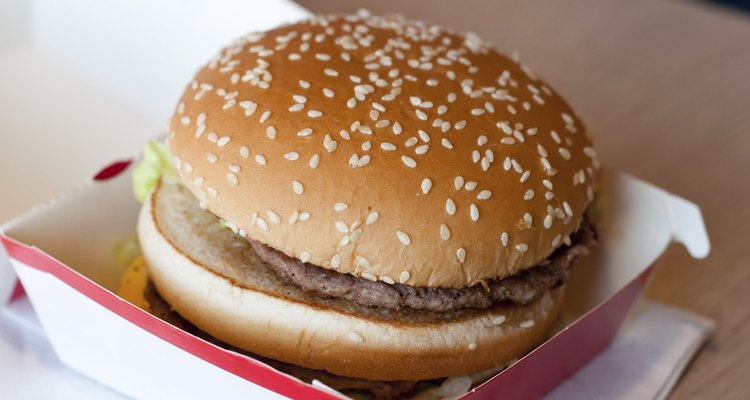
Most fast-food choices are loaded with a combination of fat, sodium and sugar; a single meal can easily top 1,000 calories. One double cheeseburger at an international fast-food restaurant, for example, has 830 calories, 50 grams of total fat, 1,040 milligrams of sodium and 13 grams of sugar. Adding several hundred more calories in fries and soda can make this one meal's caloric value greater than some people should eat daily, and the fat, sodium and sugar levels in fast food are also unhealthy.
Health Effects
The long-term effects of consuming fast food are serious. A high-calorie diet can lead to obesity, which can result in serious medical conditions such as Type 2 diabetes, coronary heart disease, stroke, sleep apnea and cancer. The high levels of sodium in fast food can easily make you eclipse the 1,500 milligrams of sodium you should limit yourself to daily, per the American Heart Association. Long-term consumption of a high-sodium diet can lead to high blood pressure.
Making the Most of Fast Food
Although you should limit your intake of fast food, choosing items on the healthier side is best when you do choose to eat it. Order small portion sizes, such as burgers and fries off the junior-sized menu. Drink water instead of soda and browse the restaurant's nutritional guide for healthy alternatives. For example, a grilled chicken sandwich with a baked potato is healthier than a fried chicken sandwich with fries. Many menus include salads containing grilled chicken, veggies and fruits, which are a healthier option with more fiber and less fat, especially if you limit the dressing.
Related Articles

Health Food Vs. Fast Food

How Many Calories Are for Breakfast, ...

Is Fat-Free Sour Cream Healthy?

Calories in a Subway Sandwich

Diets of Asian Martial Artists

Diet Menu to Lower Potassium

Dominos Nutrition Information

Low Calorie High Energy Foods

High Fiber & Protein Diet Menus

What Is the Michi Ladder Diet?

Spicy Shrimp Roll Calories

Seafood Gumbo Calories

How Many Calories Are in One Slice of ...

Can I Exercise on the Master Cleanse ...

The Best High Starch Foods to Eat for ...

El Toro Nutrition

A Daily Meal Plan With Protein, Grains, ...

How Many Calories Are in a Bagel With ...
When to Eat & Exercise With P90X

What Should I Be Eating to Lose Weight?
References
Writer Bio
Toronto-based journalist William McCoy has been writing since 1997, specializing in topics such as sports, nutrition and health. He serves as the Studio's sports and recreation section expert. McCoy is a journalism graduate of Ryerson University.
Photo Credits
artlensfoto/iStock/Getty Images