How to Read an EKG for Dummies
Reading an EKG is not the easiest procedure to decipher for a person who has not been medically trained. An electrocardiogram, or EKG as it is more commonly known, is a test that takes place at many hospitals and doctors' offices on a daily basis. An EKG is a procedure that allows doctors to measure the beats of your heart, in order to determine the condition of your heart. Once an EKG has been completed, the medical professional will receive what is called an EKG strip, which will show the electrical activity your heart displayed during the EKG.
Contact your primary care physician or another doctor whom you trust. Set up an appointment to conduct an EKG at their office. Ask them to provide you with the results of the EKG test after you have taken the EKG exam.
What Are the Four Parts of the EKG Machine?
Learn More
Find the points in the line of electrical activity on the EKG paper where the results have spiked. Know that these sharp spikes are the beat of your own heart.
Use the squares on the EKG results to measure your heartbeat 1. Understand that the squares that are bold are designated in measurements of one second, and that they are made up of 25 squares. Look for consistent time intervals between spikes, which may indicate regular heart rhythm.
How to Read an Abnormal EKG
Learn More
Take into account the distance that the line of activity jumps vertically. Know that each small square is the equivalent of .1 mV (millivolt). Measuring your results in this manner will allow you to track the electrical performance of your heartbeat.
Determine the rate of your heart. View the EKG strip in six-second segments and count the number of spikes that occurred. Multiply that number by a factor of 10 to figure out the number of times your heart beats each minute.
Warnings
This is not meant to serve as medical advice. Always consult a doctor when it comes to matters related to your health.
Related Articles
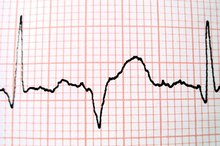
What Are the Four Parts of the EKG Machine?
Learn More
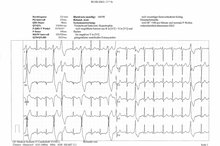
How to Read an Abnormal EKG
Learn More
How to Read the Lines on a Heart Monitor
Learn More

How to Count the Boxes on the EKG Paper to Determine Rate
Learn More

How to Hear Your Own Heartbeat Without a Stethoscope
Learn More

Submaximal Treadmill Test Protocol
Learn More
What Heart Monitors Work With Nordic Track Treadmills?
Learn More

How to Measure Heart Rate on a Telemetry Strip
Learn More
Normal Pulse Rate at 13 Years Old
Learn More

Naughton Treadmill Protocol
Learn More
References
Warnings
- This is not meant to serve as medical advice. Always consult a doctor when it comes to matters related to your health.
Writer Bio
This article was written by the CareerTrend team, copy edited and fact checked through a multi-point auditing system, in efforts to ensure our readers only receive the best information. To submit your questions or ideas, or to simply learn more about CareerTrend, contact us [here](http://careertrend.com/about-us).