What Are Signs of Pregnancy at 13 Weeks?
At the end of your 13th week of pregnancy you are at the beginning of your second trimester. Your baby is almost 3 inches long and weighs almost an ounce, according to Baby Center. It is important to realize that not all women experience the same symptoms at the same time. Symptoms may also vary from a previous pregnancy. You should discuss any change in symptoms with your obstetrician.
Larger Breasts and Belly
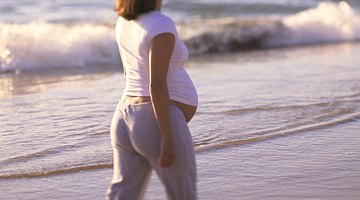
At 13 weeks you may begin to notice your breasts and abdomen expanding. Your breasts are preparing themselves to breast-feed your baby. They may seem heavier and fuller. Breast tenderness may begin to subside at this point, however some women may experience tenderness throughout their pregnancy. Your abdomen is also getting fuller, as your baby is rapidly growing. You may notice that your pants seem tighter around the waist. It may be time to begin shopping for maternity clothing. Expect to gain up to 4 lbs. a month until the end of your pregnancy, says Mayo Clinic.
Urinary Frequency

How Much Is an Unborn Baby Suppose to Weigh at 6 Months?
Learn More
During your 13th week of pregnancy you will experience urinary frequency. You may feel the urge to void more often throughout the day. The growing baby is placing additional pressure on your bladder. This symptom will probably last throughout the duration of your pregnancy, as the baby grows larger and becomes heavier.
Skin Changes
You may begin to notice the appearance of stretch marks on your abdomen, breasts, arms or thighs as your body begins to change around 13 weeks. If this is your second or third child you may notice these changes earlier than a first time mother. Your may also experience itching as your skin it stretches. There is no magic cream to prevent or heal stretch marks. Begin using a good moisturizer during this week, such as cocoa butter, and avoid hot showers, because hot water is especially drying to the skin. Stretch marks should decrease in color and size after your pregnancy.
Fatigue

When Do Your Breasts Start to Hurt During Pregnancy?
Learn More
At week 13 you may experience increased fatigue. Your body is channeling extra energy to the developing baby, which may leave you feeling much more tired than usual. It's possible that hormonal changes, in particular a dramatic rise in progesterone, are contributing to your sluggishness, reports Baby Center. Most women will feel some energy return sometime during their second trimester. Fatigue may return again around seven months and last up until delivery.
Related Articles

How Much Is an Unborn Baby Suppose to Weigh at 6 Months?
Learn More

When Do Your Breasts Start to Hurt During Pregnancy?
Learn More

Abdominal Pain at 15 Weeks Pregnant
Learn More
Pressure or Pain in the Vagina After Walking Too Much During Pregnancy
Learn More

Are Period-Like Symptoms Common When Pregnant?
Learn More

Are You Supposed to Feel Pregnancy Symptoms Everyday?
Learn More

Can You Decrease Breast Size After Baby Birth?
Learn More
Early Pregnancy Symptoms: Pink and Sore Nipples
Learn More

Uterus Signs of an Early Pregnancy
Learn More

When Does Your Baby Start Moving Inside the Womb?
Learn More

Laura Candelaria is a family nurse practitioner and assistant professor of nursing and nutritional science. Her experience includes neonatal and pediatric intensive-care, women's oncology, gynecology, obstetrics, lactation, nutrition and infertility. She has been published in "Nursing Spectrum," "Newsday" and on various websites.
