What does fact checked mean?
At Healthfully, we strive to deliver objective content that is accurate and up-to-date. Our team periodically reviews articles in order to ensure content quality. The sources cited below consist of evidence from peer-reviewed journals, prominent medical organizations, academic associations, and government data.
The information contained on this site is for informational purposes only, and should not be used as a substitute for the advice of a professional health care provider. Please check with the appropriate physician regarding health questions and concerns. Although we strive to deliver accurate and up-to-date information, no guarantee to that effect is made.
List of Low Insulin Index Vegetables
The glycemic index, or GI, is a system of ranking foods based on their carbohydrate content and ability to raise blood sugar levels 3. Low-glycemic foods have an index of 55 or lower on the GI 3.
These foods contain little carbohydrates and therefore cause only slight fluctuation in blood glucose levels.
**The purpose of the GI is to help you select the right kinds of carbohydrates for good blood glucose control.
** This will promote weight loss and healthy cholesterol levels, increased insulin sensitivity and improved diabetes management. Most vegetables are low on the GI.
Bell Peppers
Bell peppers are available in a rainbow of colors, including red, green, yellow, orange and purple. Packed with flavor and nutrients, this colorful vegetable is low on the GI, scoring a 10.
As some of the lowest GI vegetables, they will not raise blood sugar levels and therefore do not require that you take insulin after eating them. Snack on raw peppers or add them to any stir fry.
- Bell peppers are available in a rainbow of colors, including red, green, yellow, orange and purple.
- As some of the lowest GI vegetables, they will not raise blood sugar levels and therefore do not require that you take insulin after eating them.
Cabbage
What Is the Nutritional Value of an Acorn Squash?
Learn More
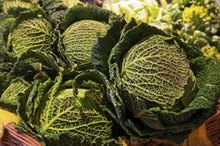
Cabbage also ranks a 10 on the GI. This low-GI vegetable is also rich in vitamins A and K, folic acid, phosphorus, calcium and dietary fiber. Choose from red or green varieties. Eat cabbage shredded for salad or cooked for a main side dish.
- Cabbage also ranks a 10 on the GI.
- Eat cabbage shredded for salad or cooked for a main side dish.
Broccoli
Rich in vitamins A, C and K; potassium; folate; phosphorus; and dietary fiber, this bright green vegetable has a GI value of 10. Low on the GI, broccoli is great eaten raw in a salad or with dip.
Lettuce
The Glycemic Index for Fruits
Learn More
In general, most raw vegetables have a low glycemic load.
**This is true for lettuce, which scores a 10 on the GI.
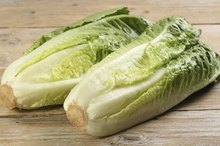
Lettuce comes in a wide variety of colors and flavors, each with its own nutritional value. ** Choose from iceberg, romaine, endive, arugula, Boston, red or green leaf, mesclun and watercress.
- In general, most raw vegetables have a low glycemic load.
- This is true for lettuce, which scores a 10 on the GI.
Onions
Onions have a unique combination of flavonoids and sulfur-containing compounds that contribute to its pungent odor and strong flavor as well as nutritional value. A member of the allium, or bulb family, onion scores a 10 on the GI.
Use onions to flavor foods while cooking or to top off a salad. Eat them regularly to reap their many benefits.
- Onions have a unique combination of flavonoids and sulfur-containing compounds that contribute to its pungent odor and strong flavor as well as nutritional value.
Mushrooms
Delicious and nutritious, mushrooms provide you with important nutrients while maintaining your insulin levels.
Mushrooms are an excellent source of vitamins D and B, manganese, phosphorus, magnesium, copper, selenium, zinc, potassium, protein and dietary fiber. In addition, mushrooms have a GI of 10.
Artichokes
Artichokes are a unique and nutritious vegetable. Scoring 15 on the GI, they are also low in carbohydrates and a good choice for a diabetic diet 2. Choose heavy, plump artichokes with tightly closed leaves.
- Artichokes are a unique and nutritious vegetable.
Tomato
Known for its antioxidant power, tomatoes are also rich in vitamins A and C, potassium, magnesium, calcium and dietary fiber.
Ranking 15 on the GI, tomatoes and tomato products are a low-carbohydrate vegetable. Eat tomatoes raw or add them to cooked soups and stews for added flavor.
Eggplant
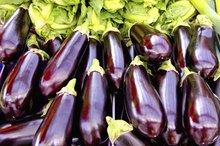
**Eggplant is a deep purple vegetable belonging to the nightshade family.
** Nightshade vegetables contain a compound known as alkaloids that promote healthy nerve muscle impulses, joint function and digestive health.
With its unique taste and texture, eggplant has a GI value of 15, making it a low-carbohydrate vegetable. Eggplants are in season from August through October.
- Eggplant is a deep purple vegetable belonging to the nightshade family.
- With its unique taste and texture, eggplant has a GI value of 15, making it a low-carbohydrate vegetable.
Related Articles

What Is the Nutritional Value of an Acorn Squash?
Learn More
The Glycemic Index for Fruits
Learn More

What Is Glycemic Index of Plantains?
Learn More
Glycemic Index of Cabbage
Learn More
Low Amylose Diet Foods
Learn More
List of Foods That Contain Nicotine
Learn More

Glycemic Index of Bell Peppers
Learn More

Pattypan Squash Nutrition Information
Learn More

Is Eggplant Good for Gout?
Learn More
Nutritional Value of Mesclun Greens vs. Romaine Lettuce
Learn More
References
Writer Bio
Erica Wickham covers health, exercise and lifestyle topics for various websites. She completed an internship in dietetics and earned a Master of Science in dietetics from D’Youville College in Buffalo, N.Y. Wickham now serves as a registered dietitian.