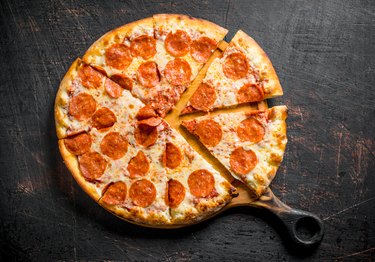
Pepperoni pizza lovers, prepare for heartbreak. Here's what you need to know about the amount of carbs in pepperoni pizza and its calorie content. Since it's not the healthiest meal, it is best eaten occasionally and replaced by healthier options whenever possible.
Video of the Day
Video of the Day
Tip
A slice of pepperoni pizza can have up to 450 calories, according to the National Heart, Lung, and Blood Institute (NHLBI).
Pepperoni Pizza Calories and Nutrition
The number of calories and carbs in pepperoni pizza can vary quite a bit depending on how it's made, the ingredients used and the size of the slice.
According to the U.S. National Library of Medicine, a medium-sized slice of Papa John's Pepperoni Original Crust Pizza has 230 calories, whereas a slice of Little Caesars' 14-inch Pepperoni Pizza has 280 calories. Per the NHLBI, as portion sizes get larger, a single slice of pepperoni pizza can have 450 calories.
The amount of carbs in pepperoni pizza varies depending on how thick the crust is; while deep dish pizzas have a higher carb content, thin crust pizzas have less. Pizza crust is usually made of refined flour, which has almost no fiber or nutrition, notes the Mayo Clinic. Similarly, the fat content also varies depending on how much oil is used in the preparation and how much cheese is added on top.
While pepperoni pizza does have some vitamin A, protein and calcium, as listed by the USDA, it also has quite a bit of sodium and cholesterol. Furthermore, pepperoni is a type of processed meat, which has been linked to a lot of health problems.
A study published in the March 2012 issue of the American Journal of Clinical Nutrition links processed meat to a higher incidence of diabetes. Another study, published in the April 2019 issue of the European Journal of Epidemiology found that consumption of processed meat was linked to a higher mortality rate.
All in all, pepperoni pizza is very high in carbs, fat and calories and the nutritional benefits are outweighed by the drawbacks by far, so the NHLBI recommends eating it sparingly.
Find Healthier Options
The Centers for Disease Control and Prevention recommends substituting your slice of pepperoni pizza with a bowl of minestrone soup instead, since it has less than half the amount of calories and the veggies provide fiber and nutrition. Although the recommendation is for people with Type 2 diabetes, it holds true for others as well.
However, if you love pizza and are struggling with the idea of cutting it out of your diet, you can try different ways to make it healthier. For instance, Michigan State University Extension suggests replacing the refined flour crust with a whole-wheat crust and using lower calorie cheeses like parmesan and ricotta instead of mozzarella. Adding a bunch of veggies to your pizza can also help boost the nutrition quotient.
If you're feeling adventurous and are willing to go the extra mile, you can try our Cauliflower Pizza Crust recipe or our Zucchini Pizza Crust recipe to help cut out some of the carbs and add fiber and nutrients to your meal. Replacing pepperoni with lean ham can help cut down on some of the sodium, while also protecting you against the dangers of eating processed meat.
- National Heart, Lung, and Blood Institute: “Do You Know How Food Portions Have Changed in 20 Years?”
- U.S. National Library of Medicine: “Calorie Count — Fast Food”
- Mayo Clinic: “Whole Grains: Hearty Options for a Healthy Diet”
- USDA FoodData Central: “Pepperoni Pizza”
- American Journal of Clinical Nutrition: “Associations of Processed Meat and Unprocessed Red Meat Intake With Incident Diabetes: The Strong Heart Family Study”
- European Journal of Epidemiology: “Red Meat, Processed Meat and Other Dietary Protein Sources and Risk of Overall and Cause-Specific Mortality in the Netherlands Cohort Study”
- National Heart, Lung, and Blood Institute: “U R What U Eat”
- Centers for Disease Control and Prevention: “Have Healthy Food You Enjoy”
- Michigan State University Extention: “Choosing a Healthy Slice of Pizza”