
It's the backed-up feeling we know all too well — we're desperate to relieve ourselves but nothing seems to help. While some turn to supplements to speed things along, the real culprit to take a long, hard look at (perhaps while you're on the toilet) is our meal plan.
Constipation can target people of all ages and our diet is the single most important factor that affects our gut and bowel movements, Laura Burak, RD, tells us. When our diet has a healthy balance of soluble and insoluble fiber, we probably won't experience as much constipation. But if we typically fill our breakfasts, lunches and dinners with various foods that have little-to-no fiber, well, you can guess what happens.
Video of the Day
Video of the Day
If you're having a hard time in the bathroom, note these common foods that are bad news for our bowel movements, as well as foods that can help alleviate the issue.
5 Foods That Can Cause Constipation
1. Dairy
Though resisting that cheese plate is sometimes difficult, it's best to stay away if you notice your bowel movements slowing down.
Casein, a protein found in dairy products, is thought to be more difficult for some people to digest, leading to disruptive gut issues like constipation, Patrica Bannan, RDN, says. That's why you may feel bloated or pass gas after a late-night ice cream binge.
On the other hand, if you have lactose intolerance, Bannan says you could have the opposite result and experience diarrhea after eating or drinking dairy-rich foods.
2. Microwave Meals, Frozen Dinners and Packaged Foods
When you're in a pinch to make dinner for the whole fam, preparing a meal in five minutes flat seems like a smart solution. Though it's definitely easier than cutting, chopping and sautéing or roasting, your colon won't appreciate the convenience factor, nurse practitioner Marina Yuabova, FNP, DNP, says.
Microwave meals, frozen dinners and packaged foods are generally incredibly high in fat, salt and sugar, while being super-low in protein, she says. "Excess salt collects moisture in your cells, ensuring that your intestine doesn't have access to the fluids it needs to push through the waste efficiently." This is true for nearly anything that has a laundry list of ingredients you can't pronounce, so be sure to check the back label before buying.
3. Fried Foods
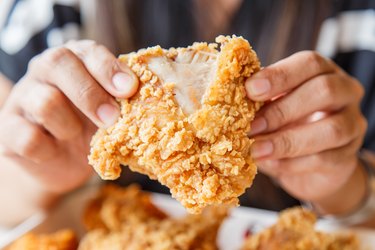
Especially when you don't have time to plan ahead or shop, picking up a nibble via the drive-through window is sometimes a necessary evil. But those predominately fried foods — like chips, french fries or crispy chicken sandwiches — aren't doing the digestive system any favors.
As Bannan explains, these types of meals tend to be low in fiber and high in fat and salt. That means these foods are more difficult for your body to process, and thus, take longer to digest — resulting in constipation. What's even more troublesome is that these types of foods can make our stool harder, which can also be painful when it does finally pass, she adds.
4. Refined Grains
When you think of those foods you gobbled up as a kid, what comes to mind? Probably staples like white bread, crackers, pasta and white rice. They lacked strong flavor, which helped as your taste buds were still developing. But now that you're a bonafide, grown adult, it's time to upgrade your palate as these refined grains can cause major constipation woes, according to Bannan.
This is due to the fact that they have very little fiber and contain a lot of gluten — which many people are sensitive to. In fact, if you have a gluten sensitivity, constipation is one of the common side effects, especially in kids, per the Mayo Clinic.
5. Saturated Fats
Although some fat in our diet is healthy, when we eat too much of the "bad" kind — saturated and trans fat — our digestive system suffers. In fact, a diet that's high in saturated fats was found to correlate significantly with higher rates of constipation, according to an October 2015 study published in the journal Neurogastroenterology and Motility.
Plenty of foods have high contents of this not-so-great fat, including fatty cuts of beef or pork, dark chicken and tropical oils (like coconut and palm oil), to name a few.
6 Foods That Can Keep Things Moving
1. Water
Is there anything water can't fix? While not technically a food, drinking more H2O can help your bowels move along since constipation is synonymous with intestinal dehydration, Yuabova says. This means the more water we take in every day, the easier it will be to pass stool from our diets and the more enjoyable your trips to the bathroom will become.
"After proper hydration of your skin, less water will be released from the colon. This will make it soft and easy to pass your stool," she adds. Drink at least four to six cups of fluids (preferably water) a day to prevent constipation, per Harvard Health Publishing.
2. Kefir
Recently trendy, kefir is a fermented milk drink that registered dietitian Jim White, RD, says aids in better bowel movements, softer stools and more regularity.
If you've never tried it, it resembles a very thin yogurt and is often created from kefir grains, a specific type of mesophilic symbiotic culture. What's helpful about this beverage is that it features natural probiotics, which White says can help gain a microbiota balance. "This can improve the digestion process and the intestines' functions as well as better resolve GI issues — resulting in better bowel movement," he says.
3. Prunes
There's a reason your grandmother always kept these bad boys on hand in her home — prunes are excellent for overall digestion, and serve as a natural solution for constipation. Bannan says this oldie-but-goodie contains a high amount of both soluble and insoluble fiber, which increases movement and makes our stool heavier and therefore easier to pass.
"It is thought that the sorbitol content in prunes could be responsible for their mild laxative effect. Sorbitol is a sugar alcohol, which is not well-absorbed by the body, leading to increased water in the colon and a laxative-like effect," Bannan explains.
4. Chia Seeds
Whether you sprinkle them on your avocado toast or add a spoonful into your smoothie, Burak says these small-but-mighty seeds are mini fiber warriors.
Specifically, chia seeds have a good amount of insoluble fiber, giving them a gel-like consistency when they come in contact with water. When digested, they add bulk to our stool, causing it to be heavier and easier to pass.
5. Apples and Pears
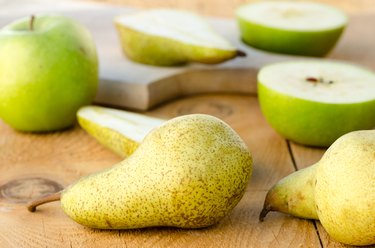
An apple a day keeps constipation away: One medium-sized apple contains 17 percent of the fiber our body needs daily, per the USDA. Specifically, the type of fiber that's found in this delicious fruit is called pectin, a fast-absorbing strain that speeds along the digestive process, Bannan says. Just don't peel your apple as the skin contains plenty of fiber, too.
If you're not a fan of apples, Burak suggests chomping on pears, which hosts 22 percent of your daily fiber needs, per the USDA. "Pears, specifically, contain more fructose and sorbitol than other fruits — which are not well-absorbed by the body and can, therefore, help contribute to healthier bowel movements and less chance of chronic constipation," she explains.
6. Beans
Whether in your favorite chili recipe or mixed into a garden-fresh salad, nearly every type of bean or legume can fight against constipation worries.
"A mere one-cup serving of most beans — such as black beans, kidney beans and pinto beans — can provide upwards of 80 percent of daily fiber needs," Bannan says. They tend to be effective because these bite-sized wonders contain both soluble and insoluble fiber, which not only jumpstart our digestive system but make our stool softer, too.
Related Reading
- Neurogastroenterology and Motility: “Association of High Dietary Saturated Fat Intake and Uncontrolled Diabetes with Constipation: Evidence from the National Health and Nutrition Examination Survey (NHANES)”
- Mayo Clinic: "Celiac disease"
- Harvard Health Publishing: "Natural ways to relieve constipation"
- USDA: "Apples"
- USDA: "Pears"