rudisill/E+/GettyImages
When it comes to fast-food sandwiches, Subway is king. In fact, the company has more than 44,000 locations in more than 100 countries around the world. The Subway menu offers a wide array of choices for all palates and dietary preferences, with breakfast options, sandwiches, sides and desserts.
Although menu items may vary from store to store, Subway publishes standardized nutrition information for its entire menu, including sandwiches, bread, condiments and vegetables and breakfast, desserts, sides and salads.
Calories are just one of the 16 categories of nutrition information supplied for each item. Here’s a breakdown of some of the most popular items, as well as how customizing your order affects the nutritional information.
Subway Sandwich Menu Nutrition
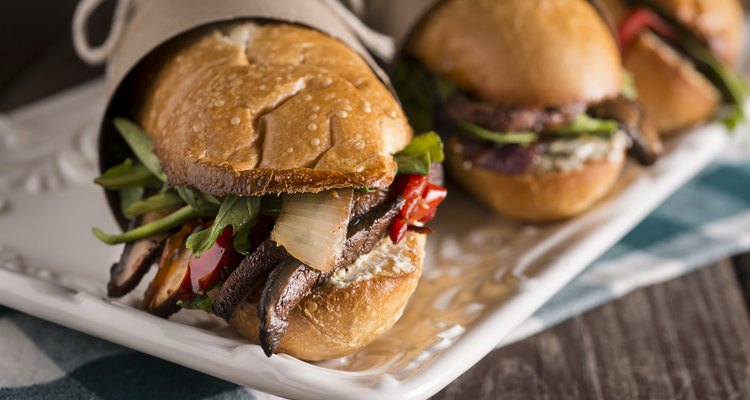
No doubt the most popular offerings are the sub sandwiches. The Subway sandwich menu has 15 options to choose from, with varied calorie counts, fats, carbohydrates and protein. Here are your best bets, organized from least to most calories.
- Veggie Delite (230 calories, 2.5 grams of fat, 44 grams of carbohydrates, nine grams of protein)
- Turkey Breast (280 calories, 3.5 grams of fat, 46 grams of carbohydrates, 18 grams of protein)
- Black Forest Ham (290 calories, 4.5 grams of fat, 46 grams of carbohydrates, 18 grams of protein)
- Subway Club (310 calories, 4.5 grams of fat, 46 grams of carbohydrates, 23 grams of protein)
- Oven Roasted Chicken (320 calories, five grams of fat, 46 grams of carbohydrates, 23 grams of protein)
- Roast Beef (320 calories, five grams of fat, 45 grams of carbohydrates, 25 grams of protein)
- Cold Cut Combo (340 calories, 12 grams of fat, 43 grams of carbohydrates, 17 grams of protein)
- Rotisserie-Style Chicken (350 calories, six grams of fat, 45 grams of carbohydrates, 29 grams of protein)
- Steak & Cheese (360 calories, 10 grams of fat, 43 grams of carbohydrates, 24 grams of protein)
- Sweet Onion Chicken Teriyaki (370 calories, 4.5 grams of fat, 58 grams of carbohydrates, 25 grams of protein)
- Italian B.M.T. (390 calories, 17 grams of fat, 43 grams of carbohydrates, 19 grams of protein)
- Meatball Marinara (460 calories, 18 grams of fat, 53 grams of carbohydrates, 20 grams of protein)
- Classic Tuna (470 calories, 25 grams of fat, 41 grams of carbohydrates, 20 grams of protein)
- Spicy Italian (470 calories, 24 grams of fat, 43 grams of carbohydrates, 19 grams of protein)
- Chicken & Bacon Ranch Melt (590 calories, 30 grams of fat, 44 grams of carbohydrates, 37 grams of protein)
According to Christy Brissette, RD, president of 80 Twenty Nutrition, her go-to Subway sandwich choice is the Rotisserie-Style Chicken. “The chicken in this sandwich is raised without antibiotics,” she told Women’s Health, “and it’s all white meat, so it’s low in fat. Plus, with five grams of fiber and 29 grams of protein, I’m fuller for longer.”
And as far as your worst options at Subway, LIVESTRONG.COM’s Jess Barron recommends steering clear of the Turkey Italiano Melt, Spicy Italian and the Italian B.M.T.
Calories in Subway Bread
The great thing about the Subway menu is that you can customize your sandwich to your dietary needs. You’ll start building your sandwich with a choice of bread.
There are 13 options to choose from, along with two flatbreads and two wraps, all of which can be incorporated into a Subway sandwich menu item of your choice. Take note of the following list, with the lowest calorie options right up front:
- Mini Italian (130 calories)
- Mini Wheat (140 calories)
- Rye (190 calories)
- Italian (200 calories)
- 9-Grain Wheat (210 calories)
- Hearty Italian (210 calories)
- Parmesan Oregano (210 calories)
- Multigrain Flatbread (220 calories)
- Rosemary & Sea Salt (220 calories)
- Roasted Garlic (230 calories)
- 9-Grain honey oat (230 calories)
- Flatbread (230 calories)
- Italian Herbs & Cheese (240 calories)
- Jalapeno Cheese (240 calories)
- Monterey Cheddar (240 calories)
- Spinach Wrap (300 calories)
- Tomato Basil Wrap (300 calories)
While the Mini Italian and Mini Wheat choices are the lowest calorie, you can also consider having just half of the more caloric bread options and saving the rest for later.
Calories in Subway Condiments
The addition of condiments into any Subway sandwich menu item will up your calorie content, depending on the type and amount. If you’re counting or tracking calories, keep note of this when ordering and adding any of the following 12 condiments (arranged fewest calories to most) to your Subway sandwich of choice:
- Red wine vinegar (0 calories)
- Yellow mustard (5 calories)
- Spicy brown mustard (5 calories)
- Honey mustard sauce (30 calories)
- Sweet onion sauce (40 calories)
- Subway vinaigrette (40 calories)
- Cranberry mustard sauce (40 calories)
- Oil (45 calories)
- Light mayonnaise (50 calories)
- Chipotle southwest sauce (100 calories)
- Regular mayonnaise (110 calories)
- Ranch (110 calories)
Calories in Subway Cheese and Vegetables
Subway offers seven types of cheese that range in calories per serving from 40 for the American and Shredded Mozzarella to 60 for Cheddar:
- American (40 calories)
- Shredded Mozzarella (40 calories)
- Monterey Cheddar (50 calories)
- Pepperjack (50 calories)
- Provolone (50 calories)
- Swiss (50 calories)
- Cheddar (60 calories)
If you want to top your sandwich with one or several of the 10 veggie options offered, take note that every option will add zero additional calories to your sandwich:
- Banana peppers (0 calories)
- Black olives (0 calories)
- Cucumbers (0 calories)
- Green peppers (0 calories)
- Jalapenos (0 calories)
- Lettuce (0 calories)
- Pickles (0 calories)
- Red onions (0 calories)
- Spinach (0 calories)
- Tomatoes (0 calories)
Additionally, bacon, guacamole and pepperoni can be added for 80, 70 and 80 additional calories per serving, respectively.
Photography by Paula Thomas/Moment/GettyImages
Subway Wrap Nutrition Information
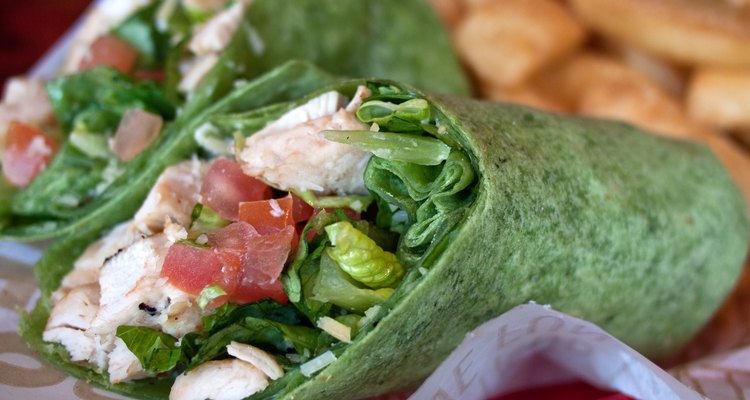
If you’re looking for something besides a standard sub sandwich, you might want to try one of Subway’s wraps. The Subway wrap menu includes many of the same types of options you will find on the main menu but in wrap form, along with several others, totaling 27 wrap options to choose from.
Among the Subway wrap options, here are the five best in terms of calorie and nutrition content:
- Veggie Delite (330 calories, eight grams of fat, 56 grams of carbohydrates, 10 grams of protein)
- Turkey Breast (430 calories, 10 grams of fat, 57 grams of carbohydrates, 28 grams of protein)
- Turkey Breast & Black Forest Ham (430 calories, 11 grams of fat, 57 grams of carbohydrates, 28 grams of protein)
- Black Forest Ham (430 calories, 12 grams of fat, 57 grams of carbohydrates, 27 grams of protein)
- Subway Club (490 calories, 13 grams of fat, 56 grams of carbohydrates, 39 grams of protein)
Here are the five worst Subway wrap options when it comes to calorie content and nutrition:
- Chicken & Bacon Ranch Melt (850 calories, 42 grams of fat, 56 grams of carbohydrates, 60 grams of protein)
- Spicy Italian (820 calories, 52 grams of fat, 57 grams of carbohydrates, 32 grams of protein)
- Tuna (820 calories, 54 grams of fat, 53 grams of carbohydrates, 33 grams of protein)
- Meatball Marinara (820 calories, 40 grams of fat, 80 grams of carbohydrates, 34 grams of protein)
- Turkey, Bacon & Guacamole (810 calories, 42 grams of fat, 62 grams of carbohydrates, 43 grams of protein)
Subway Salad Nutrition Information
While salads are often thought to be a smart choice when it comes to weight loss, some options might provide just as many calories as a sandwich would! Below are your five best and five worst options at Subway. Note that the following Subway salad nutrition components do not include the addition of dressings.
5 Best Salads at Subway
- Veggie Delite Salad (60 calories, one gram of fat, 11 grams of carbohydrates, three grams of protein)
- Turkey Breast Salad (110 calories, two grams of fat, 13 grams of carbohydrates, 12 grams of protein)
- Black Forest Ham Salad (110 calories, three grams of fat, 13 grams of carbohydrates, 12 grams of protein)
- Roast Beef Salad (140 calories, 3.5 grams of fat, 12 grams of carbohydrates, 19 grams of protein)
- Subway Club Salad (140 calories, 3.5 grams of fat, 13 grams of carbohydrates, 18 grams of protein)
5 Worst Salads at Subway
- Chicken & Bacon Ranch Salad (540 calories, 40 grams of fat, 15 grams of carbohydrates, 32 grams of protein)
- Meatball Marinara Salad (310 calories, 17 grams of fat, 27 grams of carbohydrates, 15 grams of protein)
- Tuna Salad (310 calories, 24 grams of fat, 11 grams of carbohydrates, 15 grams of protein)
- Spicy Italian Salad (310 calories, 23 grams of fat, 13 grams of carbohydrates, 14 grams of protein)
- Italian B.M.T. Salad (230 calories, 15 grams of fat, 13 grams of carbohydrates, 14 grams of protein)
Nutritionist Brigitte Zeitlin, RD, reccomends the Oven Roasted Chicken at 150 calories, 3.5 grams of fat, 13 grams of carbohydrates and 17 grams of protein.
“The lean protein from the chicken helps keep you satiated, but don’t skimp on the veggie base!” she told Women’s Health. “Add mozzarella cheese for a bit more flavor and protein, but skip other toppings, which tend to just add sugar and sodium. Dress it with one to two tablespoons of red wine vinegar instead.”
Comparing the best Subway salad choice to the worst in terms of exercise, according to LIVESTRONG.COM’s food database MyPlate, it would take you just 13 minutes of walking at 3.5 miles per hour to burn off your 60-calorie Veggie Delite Salad, but nearly two hours of walking at that same speed to burn off the 540-calorie Chicken & Bacon Ranch Salad.
LauriPatterson/E+/GettyImages
Subway Breakfast Nutrition Information
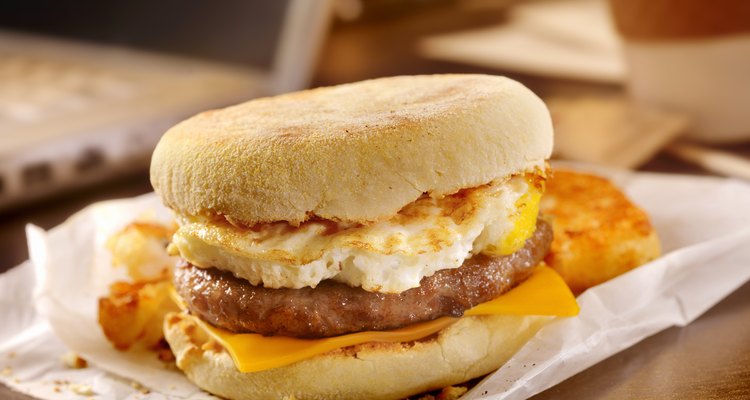
Among the Subway menu choices you will also find eight breakfast sandwich options. The Subway menu nutrition for its breakfast sandwiches vary in calorie content from 380 to 680 calories:
- Bacon, Egg & Cheese on flatbread (460 calories, 21 grams of fat, 43 grams of carbohydrates, 25 grams of protein)
- Black Forest Ham, Egg & Cheese on flatbread (410 calories, 16 grams of fat, 44 grams of carbohydrates, 23 grams of protein)
- Black Forest Ham, Egg & Cheese on a multigrain flatbread (630 calories, 28 grams of fat, 57 grams of carbohydrates, 38 grams of protein)
- Egg & Cheese on flatbread (380 calories, 15 grams of fat, 43 grams of carbohydrates, 19 grams of protein)
- Egg & Cheese on flatbread (570 calories, 26 grams of fat, 54 grams of carbohydrates, 29 grams of protein)
- Steak & Cheese on a tomato basil wrap (570 calories, 19 grams of fat, 59 grams of carbohydrates, 41 grams of protein)
- Steak, Egg & Cheese on a multigrain flatbread (450 calories, 18 grams of fat, 45 grams of carbohydrates, 28 grams of protein)
- Steak, Egg & Cheese on flatbread (680 calories, 30 grams of fat, 59 grams of carbohydrates, 44 grams of protein)
Calories in Subway Desserts and Sides
With nine soups to choose from, along with six different cookie options, Subway gives you plenty of ways to make your food choices into a complete meal. Take a look below at the Subway menu calories for soups and cookies:
Soup Menu
- Beef Chili Soup (350 calories)
- Black Bean Soup (210 calories)
- Loaded Baked Potato Soup (210 calories)
- Creamy Chicken & Wild Rice Soup (190 calories)
- Broccoli Cheddar Soup (170 calories)
- French Onion Soup (150 calories)
- Creamy Chicken & Dumpling Soup (150 calories)
- Tomato Basil Soup (130 calories)
- Chicken Tortilla Soup (110 calories)
Cookies
- White Chip Macadamia Nut Cookie (220 calories)
- Chocolate Chip with Rainbow Gems (210 calories)
- Chocolate Chunk Cookie (210 calories)
- Double Chocolate (210 calories)
- Chocolate Chip Cookie (200 calories)
- Raspberry Cheesecake Cookie (200 calories)
With a plethora of menu items to choose from, you could go to Subway every day and never order the same thing twice!
Related Articles
Calories in a Turkey Bacon Club Sandwich
Turkey & Cheese Wrap Calories

The Nutrition in a Grilled Chicken Wrap ...
Calories in the Subway 6 Inch Ham & ...
Monte Cristo Sandwich Calories
High Fiber Fast Foods
How Many Calories in a Taco Bell Bean ...
The Kinds of Bread at Subway
Nutritional Information for the Texas ...
Big Boy Nutrition Information

How Many Calories Are in a McDonald's ...

Calories in a Ham & Cheese Sandwich on ...
Leftover Prime Rib Sandwich Recipe
Cooking Ideas for Beef Sirloin Top Butt ...

Bubba Gump Shrimp Nutrition

Fuddruckers Nutrition Guide
Calories in a Cucumber and Avocado Roll

Nutrition Information for Toppers Pizza
Nutrition Facts for Domino's Philly ...
Sammy's Woodfired Pizza Nutrition ...
References
Writer Bio
A.J. Walkley earned a B.A. in literature from Dickinson College in 2007 before heading into the U.S. Peace Corps as a health volunteer in Malawi, Africa. Upon her return to the States, she became a United Nations correspondent and freelance writer working out of New York City, before moving to the Los Angeles area. She is currently writing out of Connecticut.