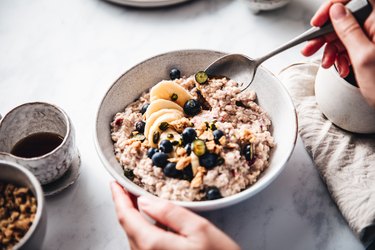
If you're looking to lower your cholesterol or you just want to get on the path to heart-healthy eating, you've come to the right place.
Dietary cholesterol is only found in animal foods, so knowing the right foods to add and subtract from your diet is a good place to start when you're looking to lower your numbers. In a nutshell, a low-cholesterol meal plan involves reducing the amount of saturated and trans fats in your diet, and adding more plant foods to your diet.
Video of the Day
Video of the Day
Warning
Do not stop taking your cholesterol-lowering medication unless directed by your doctor. Diet is just one strategy within a wider network to help lower your cholesterol. Have a discussion with your doctor about how diet, exercise and lifestyle changes can help you naturally lower your cholesterol.
What Is Cholesterol?
Cholesterol is a steroid that we make in the body and one that we get from food. That means even if you don't eat any animal foods (aka, you're on a vegan diet), your body still produces cholesterol on its own. We use cholesterol to make hormones and vitamin D, according to the Cleveland Clinic.
When you get your cholesterol checked, you'll often get a total cholesterol number that comes from adding your LDL and HDL together, plus 20 percent of your triglycerides. Here's a breakdown of each:
- LDL cholesterol: Also known as your "bad cholesterol." LDL, or low-density lipoproteins, carry cholesterol from the liver to other parts of the body. If you have a lot of LDL cholesterol in your blood, it can sometimes get stuck on the walls of your arteries and this buildup of cholesterol is called atherosclerosis.
- HDL cholesterol: Known as your "good cholesterol," HDL, or high-density lipoprotein, helps shuttle LDL cholesterol from the blood back to the liver to get rid of it.
- Triglycerides: This is a type of fat that the body produces on its own, but you can also get it from food. Many factors influence your triglyceride levels, including eating too much sugar, saturated fat and alcohol, according to the American Heart Association (AHA).
Healthy cholesterol levels for adults over 20, according to the Cleveland Clinic, are:
- LDL: Less than 100 mg/dL
- HDL: 50 mg/dL or higher for people assigned female at birth and 40 mg/dL or higher for people assigned male at birth
- Triglycerides: Less than 150 mg/dL
How Much Cholesterol Should I Eat?
The thoughts on dietary cholesterol have changed in the last 10 years. In the 2015 to 2020 Dietary Guidelines for Americans, the recommendation on cholesterol intake was removed due to lack of evidence. (The same is true for the 2020 to 2025 guidelines.) Turns out, experts aren't convinced that dietary cholesterol has anything to do with the cholesterol in your blood.
But there are some caveats to this: Foods high in cholesterol also tend to be high in saturated fat, and studies show that folks who ate high amounts of both were at higher risk for heart disease, according to a June 2018 review in Nutrients.
Remember the egg debate? Eggs are high in dietary cholesterol, but they are low in saturated fat. The AHA no longer recommends that you limit your dietary cholesterol if you have high numbers, but to limit your saturated fat and trans fat, as these are more likely to make your cholesterol numbers worse.
What Does a Cholesterol-Lowering Diet Look Like?
You can think of a cholesterol-lowering diet as a heart-healthy diet. When you get right down to it, that's what you're doing — eating to protect your heart from the damaging effects of cholesterol build-up.
Eating for your heart is rooted in a plant-forward diet rich in fruits, vegetables, heart-healthy fats and whole grains. Not only are these foods high in vitamins and minerals, but they are also rich in fiber.
Fiber has many benefits including improving your cholesterol and blood sugar levels. Fiber is typically classified into two types: soluble and insoluble. Most plant foods have a mixture of both types of fiber, but soluble fiber — the kind in oats, broccoli, peas and many fruits — grabs hold of cholesterol and pulls it from the body, helping to lower your levels.
The Academy of Nutrition and Dietetics recommends that you get 14 grams of fiber per 1,000 calories in your diet. But there really isn't an upper limit for fiber — as long as you slowly increase it and drink plenty of water to reduce your risk of gastrointestinal discomfort.
Foods to Fill Up On
- Fruits: Apples, oranges, bananas, pears, peaches, berries
- Vegetables: Broccoli, potatoes, sweet potatoes, green beans, peas, cauliflower, onions, squash
- Legumes: Black beans, chickpeas, kidney beans, lentils
- Nuts: Pistachios, cashews, almonds, walnuts
- Whole grains: Quinoa, barley, oats, popcorn
- Healthy fats: Olive oil, avocados, nut butters, olives
- Lean proteins: Lean chicken, turkey, fish, eggs
Foods to Eat in Moderation
- Red meat: You'll want to especially limit red meats with a lot of marbling because they're high in saturated fat. Lean beef is a source of iron, so you don't need to avoid it completely — just limit it to 3 ounces or less per week if you have high cholesterol, per the Cleveland Clinic.
- Full-fat dairy: Cheese, butter and whole milk are rich in saturated fat. Choose reduced-fat versions when you can.
- Added sugars: While it might be recommended to avoid these completely, it's not realistic. A diet high in added sugars (over 50 grams per 2,000-calorie diet) is linked to a three-fold higher risk for heart disease, according to March-April 2016 research in Progress in Cardiovascular Diseases. The AHA recommends limiting your added sugars to no more than 25 to 36 grams per day. If it's helpful to remember numbers, it's roughly the same as the amount of fiber you should get in a day. Foods with added sugars include:
- Pastries
- Dairy desserts
- Sodas
- Candy
Foods to Avoid
Trans fat: Found in highly processed and shelf-stable food. Although the FDA banned trans fats and phased them out of our food system back in 2020, manufacturers can still include the fats in products if the amount is less than 0.5 grams. To avoid those sneaky trans fats, look for the word "hydrogenated" in the ingredients list. Foods with trans fat can include:
- Fast food
- Pastries
- Margarine and shortening
- Refrigerated dough
- Non-dairy coffee creamer
Tip
If your goal is to lower your cholesterol, there are two diet patterns that could be especially helpful: the Mediterranean Diet and the DASH (Dietary Approaches to Stop Hypertension) diet.
Both of these patterns are primarily plant-based and include lean proteins and heart-healthy fats. They are typically low in saturated fat, sodium and added sugar.
These plans can also help if you have high cholesterol and high blood sugar, as they are both high in fiber (which helps lower cholesterol and blood sugar levels).
Your 7-Day Meal Plan to Lower Cholesterol
Sunday
- Breakfast: This Pumpkin Bran Muffins from the blog Eating Bird Food will keep you full until lunchtime.
- Lunch: This Slow Cooker Golden Lentil Soup from the blog Dishing Out Health is a winning low-sodium lunch with 12 grams of fiber.
- Dinner: This Stuffed Butternut Squash from the blog Gourmandelle is a beautiful addition to your diet.
Monday
- Breakfast: Raspberries are high in fiber and antioxidants, and you'll get a good dose of both nutrients in these Raspberry Pancakes from the blog The Endless Meal.
- Lunch: Black beans, turkey and corn make up this nutritions Turkey Taco Salad from the blog Chelsea's Messy Apron.
- Dinner: No added sugar and 11 grams of fiber to round out your day with The Best Homemade Tacos, from The Wholesome Dish blog.
Tuesday
- Breakfast: Get 8 grams of fiber and less than 200 milligrams of sodium with this heart-healthy Bircher Muesli from Eating Bird Food.
- Lunch: Lentil Pasta With Kale and Marinara Sauce from the blog The Awesome Green uses high-fiber beans to make it creamy without dairy.
- Dinner: Get dinner on the table fast with this 10-Minute Chickpea Tuna Salad from the blog Dishing Out Health.
Wednesday
- Breakfast: Start the day right with 11 grams of fiber in this Slow Cooker Apple Pie Steel Cut Oats from the blog Dishing Out Health.
- Lunch: This Avocado Chicken Salad from Feel Good Foodie will keep you full until dinner.
- Dinner: Aim for seafood twice a week and have this Mojo Salmon Bowl from the blog Chelsea's Messy Apron.
Thursday
- Breakfast: Full of 11 grams of fiber, this Crunchy Smashed Chickpea Salad from the blog Real Food Whole Life will keep you satisfied until lunch.
- Lunch: Add a salad to this crustless Instant Chicken Pot Pie from the blog The Recipe Well.
- Dinner: Add diced chicken breast to bump up the protein with these Veggie Lettuce Wraps with Peanut Sauce from the blog Salt & Lavender.
Friday
- Breakfast: Breakfast is as delicious as dessert with Chocolate Strawberry Oatmeal from the blog I Love Vegan.
- Lunch: Peanut butter adds a nice, unexpected flavor to this Easy Vegetarian Chili from the blog Eating Bird Food.
- Dinner: Low in sodium and high in fiber, pair this Oven Roasted Broccoli from blogger Debra Klein with a piece of roasted cod or chicken breast for a complete dinner.
Saturday
- Breakfast: Add a piece of fruit to this Caramelized Onion and Red Bell Pepper Frittata from the blog Eating Bird Food for a complete and nutritious breakfast.
- Lunch: Pair a Smoky Lentil Stuffed Sweet Potato from the blog Dishing Out Health with a grilled chicken breast for a protein- and fiber-rich lunch.
- Dinner: Feel free to add a whole-wheat roll to this Healthy Black Bean Sweet Potato Burgers, from the blog Two Raspberries, for even more fiber.
Can Apple Cider Vinegar and Grape Juice Lower Cholesterol?
As a dietitian, I’m a no on apple cider vinegar. All of the research done on apple cider vinegar for cholesterol are on animals, and so there's no evidence that suggests it can help lower cholesterol in humans.
The same goes for grape juice — there's no solid human evidence that it can lower cholesterol. Plus, fruit juice is high in sugar and can raise your blood sugar levels.
- American Heart Association: "What Your Cholesterol Levels Mean"
- Cleveland Clinic: "Cholesterol Numbers: What Do They Mean?"
- Nutrients: "Dietary Cholesterol and the Lack of Evidence in Cardiovascular Disease"
- AHA: "Prevention and Treatment of High Cholesterol"
- Progress in Cardiovascular Diseases: "The Evidence for Saturated Fat and for Sugar Related to Coronary Heart Disease"
- AHA: "Added Sugars"
- Academy of Nutrition and Dietetics: "Fiber"
- The Wholesome Dish: "The Best Homemade Tacos"
- Eating Bird Food: "Pumpkin Bran Muffins"
- Dishing Out Health: "SLOW COOKER APPLE PIE STEEL CUT OATS"
- Gourmandelle: "Stuffed Butternut Squash"
- Real Food Whole Life: "Crunchy Smashed Chickpea Salad"
- Chelseas's Messy Apron: "Mojo Salmon Bowl"
- Eating Bird Food: "Caramelized Onion and Red Bell Pepper Frittata"
- Dishing Out Health: "Smoky Lentil Stuffed Sweet Potatoes"
- The Awesome Green: "Lentil Pasta With Kale And Marinara Sauce"
- Debra Klein: "Oven Roasted Broccoli"
- The Recipe Well: "Instant Pot Chicken Pot Pie"
- Feel Good Foodie: "Avocado Chicken Salad"
- Eating Bird Food: "Easy Vegetarian Chili"
- Two Raspberries: "HEALTHY BLACK BEAN SWEET POTATO BURGERS"
- The Endless Meal: "Raspberry Pancakes"
- Salt & Lavender: "Veggie Lettuce Wraps with Peanut Sauce"
- Chelsea's Messy Apron: "Turkey Taco Salad"
- Eating Bird Food: "Bircher Muesli"
- Dishing Out Health: "10-Minute Chickpea Tuna Salad"
- I Love Vegan: "Chocolate Strawberry Oatmeal"
- 2020-2025 Dietary Guidelines for Americans