ChesiireCat/iStock/Getty Images
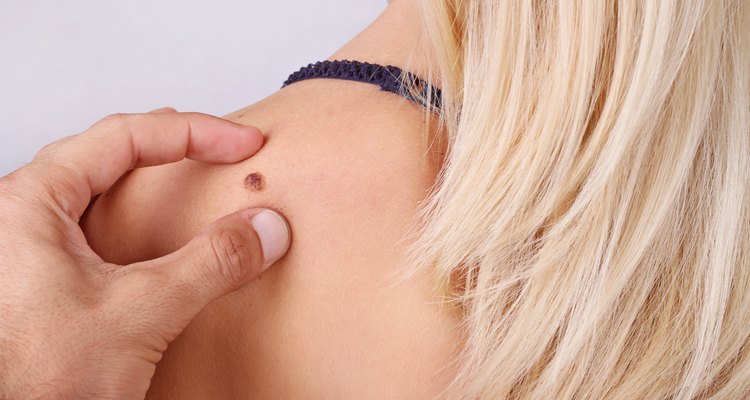
Warts are noncancerous skin growths. According to Medical News Today, they are caused by the human papilomavirus, which causes skin cells to multiply too rapidly. Although warts come in many varieties, a wart that develops on the shoulder is most likely to be a common wart, which make up 74 percent of all warts, notes Medical News Today.
Identification
Common warts are a viral infection and can be flesh-colored, pink, white or tanned. They are raised growths, rough to the touch and can multiply quickly. MayoClinic.com notes that they can contain black dots known as seeds which are, in fact, clotted blood vessels. Other types of warts generally occur on the genitals or plantar surfaces like the sole of the feet and so are unlikely to be a concern for a wart on the shoulder.
Viral
The human papillomavirus that is responsible for warts can be spread from person to person easily. It can be caught by simply touching a towel or object used by a person with the HPV virus, notes MayoClinic.com. Children and young adults are most at risk along with people with compromised immune systems, including those with HIV or other diseases. Cracks in your skin or biting your fingernails can cause warts to spread more quickly.
Home Treatment
You can treat warts at home with salicylic acid. MayoClinic.com recommends using a patch or solution of salicylic acid with 17 percent strength. After soaking the wart area in warm water for 10 to 20 minutes, the product can be applied. Carried out daily it can help peel off infected skin. Duct tape is a more crude treatment. A study showed that covering warts with duct tape for six days before rubbing with a pumice stone was effective.
Clinical Options
Surgical removal of warts is normally the last resort because it can cause scarring. A dermatologist might use liquid nitrogen to freeze the wart, causing blistering underneath the wart, which allows it to slough off. A substance derived from the blister beetle called cantharidin can be applied to the wart and create the same blistering effect, notes MayoClinic.com. Topical application of retinoid creams or injections of bleomycin medications are other possible treatments.
Considerations
Most warts will not need treatment and will disappear within two years. However, because of the viral nature of warts, more can develop nearby. Indeed, Medical News Today notes that if you are susceptible to warts, they can often reoccur, even after successful treatment. Warts might not appear until months after the initial HPV was contracted. Consult your doctor if you have a wart that you find bothersome.
Related Articles
Subungual Warts and Treatment

Fraxel Laser Treatment Dangers

How to Heal an Inflamed Bikini Area

How to Cure Razor Burn on a Woman's ...
How to Kill a Nail Bed
How to Shave Skin Moles
How to Care for a Rook Piercing

Negative Effects of Endermologie
Aloe Vera & Seborrheic Dermatitis
Review of New-Skin Scar Therapy

Remedy for Scratches in Leather

How to Use Bleach on Poison Oak

How to Heal a Bikini Razor Burn
How to Treat Folliculitis at Home
Dangerous Spiders Located in Connecticut
How to Use Colloidal Silver to Kill ...
Can You Clean Scuff Marks on Patent ...
How to Soothe Waxed Skin

Acai Berry & Acne
How to Treat a Burn From Nair
References
Writer Bio
Stuart Biggs began writing in 2010 and specializes in health, beauty and lifestyle articles for various websites. Biggs graduated from Bournemouth University in 2003 with a Bachelor of Arts (Hons) in scriptwriting for film and TV.
Photo Credits
ChesiireCat/iStock/Getty Images