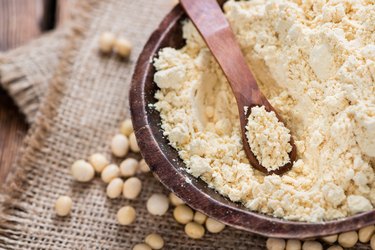
For those who choose to supplement their diets with protein powder, there's a laundry list of options on the market, from whey powder to hemp and soy powders. Though for a more affordable and potentially healthier alternative, you can make protein powder at home.
Tip
Use protein-heavy ingredients such as almonds and dried milk to make protein powder.
Video of the Day
Types of Protein Powders
Protein plays a fundamental role in our everyday diet needs. It helps fortify and repair all areas of the body, including muscles, skin and nails. Factors such as age and weight will affect how much protein is required daily. For example, a woman around 143 pounds would require about 52 grams of protein per day, says HealthLinkBC. A 176-pound man, on the other hand, would require 64 grams of protein each day.
Video of the Day
If you stick to a balanced diet, you should be getting sufficient protein intake. There are instances in which your daily protein needs aren't being met, in which case you may want to use protein powder to supplement your diet.
According to The Pharmacy Guild of Australia, these exceptions might include teenagers whose bodies are still growing, people who exercise frequently and those recovering from sports injuries. Certain lifestyle choices, such as veganism, can also require protein supplementation.
The different types of protein powders, according to The Pharmacy Guild of Australia, include: whey, casein, hemp, soy, pea/rice protein and egg. While whey is the fastest-digesting protein and the most popular protein powder, hemp, soy and pea/rice protein powders are great options for those with dietary restrictions. All of these powders can be incorporated into recipes.
Recipes for Protein Powder
If you'd like to use protein powder but are looking for a more affordable option, you can make protein powder at home. One DIY protein powder recipe by registered dietitian Serena Ball involves using dry milk powder, dry oats and almonds.
Dry milk contains both whey protein and essential nutrients; oats, which contain a significant amount of fiber (a type of fiber found to help you feel fuller for longer, according to an April 2014 paper from Nature Communications); and almonds, which also contain fiber and aid in heart health, according to Harvard School of Public Health. About half a scoop of this homemade protein powder contains 180 calories and 12 grams of protein.
You can also add your homemade protein powder or any protein powder to shakes and smoothies. PennState Extension recommends an already-protein-heavy smoothie that includes yogurt (8 ounces low-fat vanilla), strawberries (10), milk (1 cup) and ice cubes. For more protein, you can add a couple of tablespoons of your protein powder. There are many recipes into which you can "sneak" protein powder. You can make protein powder cookies, shakes, bars, puddings and more.
Risks of Protein Powder
In addition to being more affordable, homemade protein powder may also be a healthier option as you know exactly which ingredients are being used. An article in Harvard Health Publishing reports on the risks of protein powders.
One risk is that protein powders are not FDA-regulated or approved. As they are a dietary supplement, the FDA leaves it to the manufacturers to determine the product safety. Moreover, the long-term effects of protein powder are unknown. There's little data on the side effects of protein supplementation.
For some individuals, especially those who are lactose intolerant, protein powder can cause intestinal discomfort if they're using a milk-based powder. Finally, be wary of the fact that certain protein powders may be high in sugars and calories.
Generally, it's best not to consume too much protein as it can put excess pressure on the kidneys, says The Pharmacy Guild of Australia. This could increase the amount of calcium excreted in the urine and could affect bone health in the long run.
- PennState Extension: "Protein and Protein Supplements"
- HealthLinkBC: "Quick Nutrition Check for Protein"
- Harvard Health Publishing: "The Hidden Dangers of Protein Powders"
- The Pharmacy Guild of Australia: "Protein Supplementation - Weighing the Benefits of Protein Powders"
- Teaspoon of Spice: "How to Make Homemade Protein Powder"
- Nature Communications: "The Short-Chain Fatty Acid Acetate Reduces Appetite via a Central Homeostatic Mechanism"
- Harvard School of Public Health: "Almonds"