If you've ever popped zinc lozenges while reaching for tissues and sipping hot soup, you probably know that the mineral helps support a healthy immune system.
Not only does zinc play a role in immune function, but it also helps heal wounds and create proteins — a key part of cell growth and development, according to the National Institutes of Health (NIH).
Video of the Day
Video of the Day
Unlike other nutrients that can be stored in the body, our bodies are not designed to store zinc, so it's important to eat foods high in zinc every day, per the NIH. Not getting enough of the trace mineral can cause zinc deficiency, which comes with side effects like slowed growth, loss of appetite and a weakend immune system.
How Much Zinc Do You Need?
The recommended daily intake for zinc is 11 milligrams for people assigned male at birth and 8 milligrams for people assigned female at birth, according to the NIH.
So what foods are high in zinc? While animal foods contain some of the highest amounts of zinc, some vegetarian foods are great sources of zinc, too. Note that the Daily Value (DV) percentages below are based on eating 11 milligrams of zinc per day.
1. Oysters: 472% Daily Value (DV)
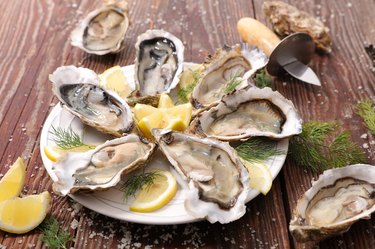
Just six cooked oysters give you 52 milligrams or 472 percent of the DV for zinc (talk about a powerhouse!). Oysters also provide 34 percent of the DV for iron and 457 percent of the DV for vitamin B12. Vitamin B12 is crucial for cell health and helps prevent megaloblastic anemia, per the NIH.
2. Some Fortified Cereals: 170% DV
Cereals are often fortified with vitamins and minerals, making them a great vegetarian food high in zinc. Some cereals can provide upward of 19 milligrams or 170 percent of the DV for zinc per 3/4 cup serving as well as iron (109 percent of the DV).
Tip
Choose cereals that are low in added sugar, which should be limited to just 10 percent of total daily calories, according to the Dietary Guidelines for Americans.
3. Beef: 85% DV
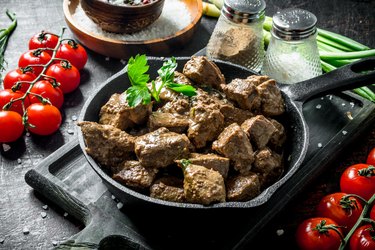
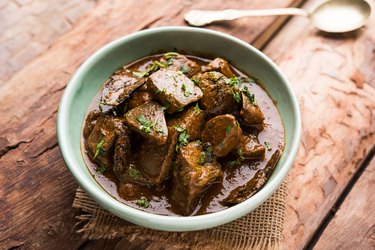
Beef has lots of good-for-you nutrients, including protein, iron and vitamin B12. A 3-ounce cooked steak gives you 9.3 milligrams or 85 percent of the DV for zinc, too.
And when it comes to red meat like beef, moderation is key. The World Cancer Research Fund (WCRF) advises limiting your intake to no more than 18 ounces of cooked red meat per week as eating too much red and processed meats is linked to an increased risk of colorectal cancer.
4. Tofu: 36% DV
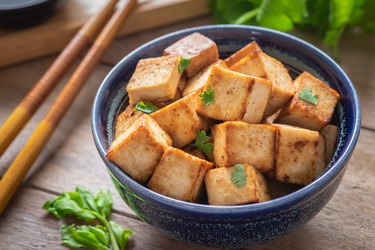
Tofu is one of the best vegan foods high in zinc because it's one of the only plant foods to provide complete protein, containing all nine essential amino acids. A 1-cup serving provides 4 milligrams or 36 percent of the DV for zinc as well as fiber, calcium and iron. Try it in these anything-but-bland tofu recipes.
5. Turkey: 27% DV
White and dark meat turkey is a good source of protein, vitamin B12 and zinc. A 3-ounce serving of dark meat, which is higher in saturated fat than white meat (and should be enjoyed in moderation), contains 3 milligrams or 27 percent of the DV for zinc. Try it in these delicious leftover turkey recipes.
6. Pork: 25% DV
Pork provides ample protein, iron, vitamin B12 — and a 3-ounce cooked serving has 2.7 milligrams or 25 percent of the DV for zinc. Try it in these tasty pulled pork recipes.
Tip
Loin cuts of pork are lower in saturated fat, which is associated with increased levels of heart disease, according to the American Heart Association.
7. Lentils: 23% DV
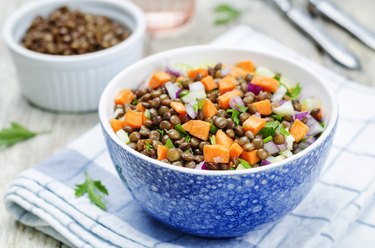
Lentils, a type of legume (and even more specifically, a pulse), are a great plant food high in zinc, with 2.5 milligrams or 23 percent of the DV per cup cooked as well as 56 percent of the DV for fiber.
Lentils are great for heart health thanks to their high fiber content, according to the Harvard T.H. Chan School of Public Health. Lentils are easy to make and go well in a variety of dishes, like these high-protein recipes.
8. Chickpeas: 23% DV
Chickpeas, like lentils, are legumes, making them another popular plant-based, nutrient-dense food. Also known as garbanzo beans, chickpeas — the base for hummus — are a good source of fiber and healthy fat.
A 1-cup cooked serving provides 2.5 milligrams or 23 percent of the DV for zinc and 14.5 grams of protein. Try them in these high-protein chickpea recipes.
9. Yogurt: 22% DV
A 1-cup serving of non-fat yogurt contains 2.4 milligrams or 22 percent of the DV for zinc. But be choosy: Flavored yogurts — like some cereals — are high in added sugar, so opt for plain, unsweetened varieties when you can. Aside from snacking on it on its own, try it in these Greek yogurt recipes that satisfy.
10. Oatmeal: 21% DV
Oatmeal might really be the breakfast of champions. It's rich in complex carbs, which fuel your muscles and brain, and contains 2.3 milligrams or 21 percent of the DV for zinc per 1 cup cooked as well as 4 grams of filling fiber.
Oatmeal mixes well with a variety of toppings including nut butter, fruit, cacao nibs and seeds. Try it in these delicious overnight oats recipes.
11. Squash and Pumpkin Seeds: 20% DV
Next time you roast squash or pumpkin, don't toss the seeds! Just 1 ounce has 2.2 milligrams or 20 percent of your DV for zinc as well as 40 percent of your DV for magnesium and nearly 9 grams of protein.
Find out how to roast pumpkin seeds and easy, tasty ideas for adding them to your everyday diet.
12. Black-Eyed Peas: 20% DV
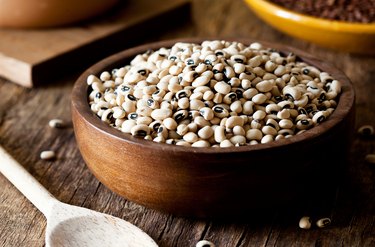
Beans are a popular vegan food high in zinc. A 1-cup serving of cooked black-eyed peas contains 2.2 milligrams or 20 percent of the DV for zinc and 11 grams of fiber, making them a great mix-in for salads and soups.
13. Shiitake Mushrooms: 18% DV
The shiitake variety is one of the more flavorful mushrooms when sautéed, making them a popular addition to omelets and stir-fry dishes. A 1-cup cooked serving provides 2 milligrams or 18 percent of the DV for zinc as well as vitamin D and potassium.
14. Green Peas: 17% DV
When cooked just right, green peas can be rich in flavor (and not mushy). Peas, like other legumes, are a good source of plant-based protein, fiber and iron. One cooked cup contains 1.9 milligrams or 17 percent of the DV for zinc.
Thanks to its zinc and vitamin E content, green peas can help support a healthy immune system, making them a good addition to your favorite chicken soup when you're home with the common cold.
15. Cashews: 14% DV
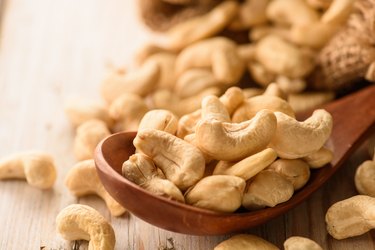
A handful of cashews makes for a satisfying, crunchy snack that's rich in plant-based nutrition, including protein, iron and magnesium — and 1 ounce provides 1.6 milligrams or 14 percent of the DV for zinc.
Cashews are also an excellent source of heart-healthy fats, which will leave you feeling full between meals. Toss cashews with your favorite trail mix, eat them plain or serve them atop a chicken or veggie stir-fry.
16. Spinach: 12% DV
Spinach (and other leafy greens) seems to have a little bit of everything that's good for you: folate, plant-based iron, fiber, vitamins A, C, E, K and magnesium to name a few. But spinach happens to be one of the few vegetables that have zinc.
A 1-cup serving of cooked spinach contains 1.4 milligrams or 12 percent of the DV for zinc, 20 percent for vitamin C and 25 percent for vitamin E.
17. Avocado: 12% DV
One whole avocado has 1.3 milligrams or 12 percent of your DV for zinc. Eating a whole avocado will also give you almost 14 grams of fiber and 22 percent of your DV for vitamin C.
Other fruits high in zinc include blackberries, blueberries, raspberries, pomegranates and durian.
18. Eggs: 6% DV
Eggs aren't as high in zinc as the other foods on this list, but one egg has 0.6 milligrams or 6 percent of your DV of zinc. So if you eat two eggs for breakfast, you'll get 12 percent of your zinc DV.