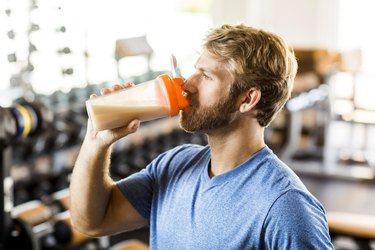
The early stages of your bodybuilding journey are the best time to make strength and size gains. Being new to training, your body responds and adapts rapidly to lifting weights and builds muscle at a faster rate.
You can expect a gain of around 1 to 2 pounds per month when exercising properly, according to U.S. News. Getting the best from your training regime also requires a solid diet plan, however.
Video of the Day
Video of the Day
A Muscle-Building Meal Plan for Beginners
The most important aspect of your bodybuilding diet is calorie intake. To build mass, you need between 20 and 22 calories per pound of body weight each day, according to sports scientist Jim Stoppani, PhD.
This would mean a 150-pound beginner bodybuilder would need between 3,000 and 3,300 calories per day to gain weight.
Stoppani advises reducing your intake slightly on non-training days, though, as you're less active. On these days, aim for 18 calories per pound, meaning the 150-pound bodybuilder would need 2,700 calories on rest days.
Build Your Best Bodybuilding Breakfast
Breakfast has been called the most important meal of the day, and that phrase certainly rings true with bodybuilders. After going overnight without eating, getting in a solid meal should be the first thing on your morning agenda if you regularly work out. You need a meal that not only cures your hunger but also sets you up for whatever training regimen is on your schedule.
Begin your day right with a breakfast for bulking. The bodybuilding staple of eggs and oats is a good option, as is any type of vegetable-packed omelet, boiled or poached eggs on toast, or a lean bacon sandwich on rye or whole-grain bread.
When you're in a rush, go for something quick and easy, such as:
- Greek yogurt or cottage cheese mixed with almonds or almond butter
- Frozen berries and a chopped banana
Try these bodybuilder breakfast foods:
Eggs: Eggs are a favorite breakfast food among bodybuilders the world over. The main bodybuilding benefit of eggs is their protein content, with 6 grams of protein per large egg. Have your eggs boiled, scrambled, poached or fried in a little coconut oil. If you're in bulking mode, add some cheese or serve your eggs with toast or a whole-grain tortilla.
Smoothie: When you're in a rush, sometimes you just want a breakfast you can eat on the go. This is when a blender becomes your best breakfast companion. For the ultimate muscle-building smoothie, coach Nate Green of Scrawny to Brawny recommends following a seven-step process. First, you need ice — the more you use, the thicker your drink. Ingredients two, three and four are a type of fruit, either spinach or celery, and a scoop of protein powder. For step five, pick a nut or seed (or a nut or seed butter). For step 6, add liquid — either water, green tea, milk, plant-based milk or coffee. Then, top your smoothie with dark chocolate, chopped nuts or coconut. The variations are endless.
Meat: If the idea of a conventional breakfast makes you want to crawl back under the covers, try the meat and nuts breakfast. Lean beef or pork combined with almonds, chicken breast and macadamias or venison accompanied by cashews all make for a healthy breakfast for bodybuilders.
Bodybuilding Breakfast Recipes
- Steak Breakfast Burrito (470 calories)
- Mochaccino Smoothie (471 calories)
- Savory Protein Breakfast Bowl (583 calories)
Go for Calorie-Packed Lunches
Forget your typical lunch of a sandwich and chips and opt instead for a calorie- and protein-packed healthy lunch. Try the following lunch options for your bodybuilders' diet:
- Brown rice or noodles with a piece of baked salmon, vegetables and olive oil (this can be made in advance and stored in a container until you're ready to eat it).
- Two to three whole-grain wraps filled with turkey or ham, plenty of salad and grated cheese, served with a piece or two of fruit and a handful of unsalted nuts.
Include these lunch recipes in your diet plan for bodybuilding beginners — feel free to mix and match two options.
Bodybuilding Lunch Ideas
- Pasta Caprese Grain Salad (635 calories)
- Greens, Fruit and Chickpea Wrap (543 calories)
- Sirloin Tip Side Steak and Brown Rice Bowl (598 calories)
Eat a Hearty Dinner
Keep things simple at dinner and aim for an even distribution of protein, starchy carbs and vegetables. Consider making double your evening meal to take for lunch the next day.
- Protein: Pick steak, chicken, pork, turkey or fish for your protein or a soy-based product if you're vegetarian.
- Carbs: Pasta, sweet potatoes, couscous, quinoa and buckwheat are all nutrient-dense, high-fiber carb sources.
- Fats: Cook your meal with a healthy oil like olive oil or avocado oil.
- Veggies: As for vegetables, anything goes.
Make the most out of your weightlifters' meal plan by mixing and matching some recipes below for your dinner.
Bodybuilding Dinner Ideas
- Baked Salmon with Georgia Pecan Herb Crust (638 calories)
- Pasta With Avocado Sauce (699 calories)
- Beet and Carrot Buddha Bowl with Savory Dressing (609 calories)
Getting Extra Calories With Shakes and Food
One aspect many new bodybuilders look into is protein shakes. These are a quick and convenient way to take in more protein and calories, but they aren't necessary.
If you have a busy lifestyle and can't always make time to eat a meal, a shake may be useful. But otherwise, you should be able to get all your protein and calories from whole foods.
When pushed for time, try a simple, healthy, high-calorie shake consisting of almond milk, bananas, whey protein powder and a handful of spinach. Have one or two of these per day if you can't fit in solid meals. Adjust meal serving sizes to fit your calorie needs and aim to split these calories among three meals plus a couple of snacks.
Should you find you're struggling to hit your calorie goal, add in more calorie-dense foods such as:
- nuts
- nut butters
- seeds
- seed butters
- dried fruit
- avocado
- whole-grain bread or wraps
- whole milk
- olive oil
- cheese
Related Reading