If you eat too little, make poor food choices or don't eat often enough, you may feel a lag in energy on your weight-loss diet. To keep energy levels up on a low-calorie diet, you need to eat nutrient-rich meals throughout the day. Consult your doctor before starting a weight-loss diet.
How Much and What to Eat
Video of the Day
Not eating enough calories on your low-calorie diet can leave you feeling fatigued, according to the Weight-Control Information Network. Calorie needs for weight loss vary depending on age, gender and activity level. In general, a low-calorie diet for women is 1,000 to 1,200 calories a day and for men 1,200 to 1,600 calories a day. Talk to your doctor to help you determine your calorie needs. Your weight-loss plan should include three meals that contain about the same number of calories, plus one snack to keep energy steady and hunger at bay. Additionally, eat foods that are rich in nutrients -- including fruits, vegetables, whole grains, low-fat dairy and lean proteins such as seafood, poultry and beans -- when following a low-calorie diet for high energy.
Video of the Day
High-Energy Breakfast
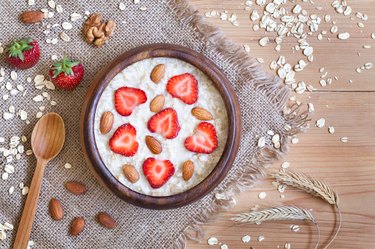
If you're looking for more energy on your low-calorie diet, don't skip breakfast. Eating breakfast not only provides your body with the energy it needs to get up and go, but it also helps control hunger. Carbohydrates are your body's preferred source of energy, so be sure to eat a high-carb breakfast meal. A high-energy, low-cal breakfast might include 1 cup of cooked oatmeal topped with 2 tablespoons of raisins and four to eight chopped pecan halves and served with one container of nonfat yogurt. This meal contains 355 to 400 calories.
Power-Pumped Lunch
For lasting energy, include mostly complex carbs -- whole grains, whole-wheat bread and pasta, beans and root vegetables such as sweet potatoes -- on your low-calorie, high-energy diet. A healthy lunch meal on your high-energy diet plan might include 1 to 2 tablespoons of hummus stuffed into a small whole-wheat pita and served with 1/2 to 1 cup of cut veggies such as cucumbers, red peppers and carrots, a small apple and 1 ounce of low-fat mozzarella cheese. The lunch will yield 345 to 395 calories.
Midday Energizer
A snack between lunch and dinner makes a good midday energy booster. Limit your snack to 100 calories to help you stay within your low-calorie budget. High-energy snack options include five whole-grain nonfat crackers with 2 teaspoons of peanut butter, one container of nonfat, sugar-free yogurt, a small orange with 1 ounce of nonfat cheese, 1 cup of mixed greens topped with 1 tablespoon of nonfat salad dressing and 1 tablespoon of raisins or 1 ounce of turkey on a slice of whole-wheat bread.
Healthy Dinner
While the day might be ending, it's important to eat a healthy dinner to replenish energy stores for the next day. A low-calorie dinner for high energy might include 3 ounces of broiled salmon with 1 cup of cooked sweet potato and 1 to 1 1/2 cups of steamed broccoli for 375 to 400 calories. Healthy fats from foods such as salmon, oils, nuts and seeds also provide your body with energy. But as a concentrated source of calories, healthy fats should be eaten in small amounts.
- FamilyDoctor.org: What It Takes to Lose Weight
- Weight-Control Information Network: Very Low-Calorie Diet
- Academy of Nutrition and Dietetics: Back to Basics for Healthy Weight Loss
- The Merck Manual: Carbohydrates, Proteins and Fats
- University of Arkansas Division of Agriculture: The Exchange List System for Diabetic Meal Planning
- U.S. Department of Agriculture National Nutrient Database for Standard Reference: Hummus, Commercial
- Academy of Nutrition and Dietetics: Smart Snacking for Adults and Teens