How to Take Care of Your Nose
The nose is an important part of the human body, allowing you to enjoy the smells of the world. Allergies, colds and other problems can cause the nose to function at less than its best. Whether your nose is simply dry because of allergies or because you've had a surgery for your sinuses, there are ways to care for your nose until it reaches full health again.
If you are experiencing serious medical symptoms, seek emergency treatment immediately.
Breathe in warm steam two to four times a day to help moisten the nose and prevent dryness. This can be done by taking a hot shower or by filling the bathroom sink with hot water and placing a towel over your head while leaning close to the sink. Continue to run the hot water as needed.
At Home Remedies for Clogged Sinus
Learn More
Do not use nasal sprays more than recommended on the bottle unless instructed by a doctor. Over-the-counter sprays can help with allergies or colds, but using them too often can irritate the nose and worsen the problem.
Place a vaporizer or a humidifier in your room to keep the air moist when you are not breathing in steam to help prevent dryness in the nose.
How to Get Rid of a Scabby Nose
Learn More
Dip a cotton swab in warm water or a salt water mix of 1/2 tsp. of salt in 12 ounces of water to gently soak and loosen any crust that is stuck to the inside of your nose. Only use the cotton swab at the entrance of the nose, do not stick it deep inside. Repeat once at night and once in the morning.
Consult your doctor if you have allergy problems or problems with your sinuses. These symptoms can include sinus pressure in the face, headaches and other signs of an allergy, such as sneezing.
Warnings
Always follow the doctor's instructions for care if you have had surgery.
Related Articles
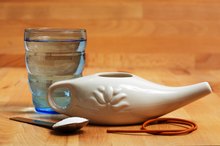
At Home Remedies for Clogged Sinus
Learn More
How to Get Rid of a Scabby Nose
Learn More

Chest Congestion While Pregnant
Learn More

Wasabi for Aiding Sinus Congestion
Learn More

How to Get Relief From Sinus Pain & Post Nasal Drip
Learn More

Why Does My Nose Stop Up When Lying Down?
Learn More

How to Get More Air Through Your Nose
Learn More

Does Cayenne Pepper Help a Stuffy Nose?
Learn More

How to Reduce Sinus Bags Beneath the Eyes
Learn More

Kids Complaining of Clogged Ears and Nose
Learn More
References
- Sforza C, Grandi G, De Menezes M, Tartaglia G, Ferrario V. Age- and sex-related changes in the normal human external nose. Forensic Sci Int. 2011;204(1-3):205.e1-205.e9. doi:10.1016/j.forsciint.2010.07.027
- Sharma P, Arora A, Valiathan A. Age changes of jaws and soft tissue profile. ScientificWorldJournal. 2014;2014:301501. doi: 10.1155/2014/301501
- Lee JW, McHugh J, Kim JC, Baker SR, Moyer JS. Age-Related Histologic Changes in Human Nasal Cartilage. JAMA Facial Plast Surg. 2013;15(4):256-262. doi:10.1001/jamafacial.2013.825
- Feng Wen Y, Ming Wong H, McGrath CP. A longitudinal study of facial growth of Southern Chinese in Hong Kong: Comprehensive photogrammetric analyses. PLoS One. 2017; 12(10): e0186598. doi: 10.1371/journal.pone.0186598
- Sforza, Chiarella, Grandi, Gaia, De Menezes, Marcio, Tartaglia, Gianluca M and Ferrario, Virgilio F. Age- and Sex-Related Changes in the Normal Human External Nose. Forensic Science International. Vol 204, Issue 1-3, pp. 205.e1-205.e9
- van der Heijden P, Korsten-Meijer AG, van der Laan BF, Wit HP, Goorhuis-Brouwer SM. Nasal growth and maturation age in adolescents: a systematic review. Arch Otolaryngol Head Neck Surg. 2008 Dec;134(12):1288-93. doi: 10.1001/archoto.2008.501
Warnings
- Always follow the doctor's instructions for care if you have had surgery.