MUFA List of Foods
Historically, dietary fats wore a scarlet letter for being "unhealthy." Although overconsuming certain types of fat can negatively affect your lipid levels, fat plays an essential role in your health. The Institute of Medicine recommends getting 20 percent to 35 percent of your daily calories from fat. The goal is to get the majority of that amount from unsaturated sources, which consist of monounsaturated and polyunsaturated fats. These "good fats" will benefit your health.
Health Benefits
Appropriate amounts of unsaturated fat provide your body with essential nutrients so it functions properly. Monounsaturated fats, or MUFAs, promote healthy cholesterol levels, supply certain nutrients like vitamin E and help your body absorb fat-soluble vitamins. Along with polyunsaturated fats, MUFAs provide essential fats that play a role in healthy vision, nervous system function, brain development, neurological function and cardiovascular health.
Go Nuts
What Are the Benefits of Groundnut Oil?
Learn More
Dry and roasted nuts provide a rich source of monounsaturated fats. Nuts are a concentrated source of calories, so eat them in the appropriate portions; a handful goes a long way. If you're interested in getting more MUFAs in your diet, try almonds, macadamia, pecans, cashews, hazel nuts, Brazil nuts, pistachios, pine nuts and peanuts -- technically classified as a legume.
Seed All About It
Seeds provide a good source of monounsaturated fats and are versatile. You can add seeds to yogurt for a snack, sprinkle them atop a salad, add them to trail mix or enjoy them on their own. The richest sources include sesame seeds, pumpkin and squash seeds. Other seeds to try include sunflower, ground flaxseed, poppy, chia seed and quinoa. The latter two double as grains.
Oil Check
Can Coconut Oil Clog Arteries?
Learn More
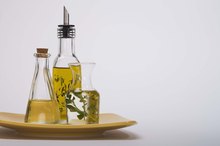
Using healthy oils is another way to get more monounsaturated fats in your diet. You can use monounsaturated oils for making marinades, drizzling over salads in place of traditional salad dressing and brushing over meat and fish prior to grilling or baking. Nut oils and seed oils provide a good source of monounsaturated fats. Some common options include flaxseed oil, roasted almond oil, roasted peanut oil and roasted cashew oil. These oils have a roasted, nutty, delicate flavor and go well with a variety of dishes. For example, peanut oil goes well with Thai-style stir-fry dishes.
Other Foods
Many foods contain a mixture of several types of fats. In addition to nuts, seeds and oils, a few other foods contain monounsaturated fats. These foods include avocado, poultry, veal, pork, lamb, duck, eggs, goose, beef, olives and dark chocolate. Enjoy dark chocolate in moderation. A 1-ounce serving of dark chocolate contains about 5 grams of saturated fat and is a concentrated source of calories. Choose dark chocolate that does not have a lot of extra added ingredients, as these tend to add extra calories and fat. When choosing meat, opt for lean cuts such as loin and sirloin, since certain cuts contain high amounts of saturated fat.
Related Articles
What Are the Benefits of Groundnut Oil?
Learn More
Can Coconut Oil Clog Arteries?
Learn More
How Much Oil Should You Eat?
Learn More
Foods Containing Flaxseed Oil
Learn More
How to Eat Broccoli Sprouts
Learn More
Free List of Healthy Low-Fat Foods
Learn More
A Diet Plan for Coronary Heart Disease
Learn More

How Much EPA & DHA Are in Chia Seeds?
Learn More
List of Foods That Are High in Lipids
Learn More

How to Make Face Cream Using Rosehip Oil
Learn More
References
Writer Bio
Janet Renee is a clinical dietitian with a special interest in weight management, sports dietetics, medical nutrition therapy and diet trends. She earned her Master of Science in nutrition from the University of Chicago and has contributed to health and wellness magazines, including Prevention, Self, Shape and Cooking Light.