
How Track Spikes Work
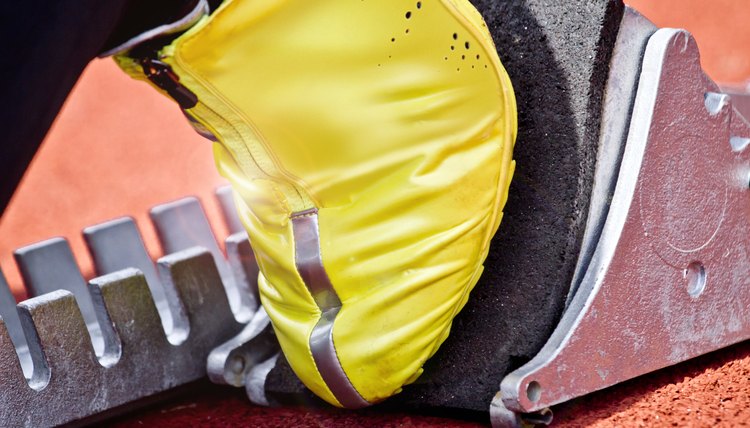
Track spikes are athletic shoes that are specifically designed for the track athlete competing in each individual event. Different track spikes have been designed for all track events and even some field events, such as jumps and pole vault. The spikes are designed to allow for proper support, force the foot into the most advantageous position, and provide optimal ground traction. Track spikes are offered by many athletic shoe companies who compete to provide the most scientifically advanced shoes.
History
The spiked athletic shoe has been around for quite some time, dating back to the 18th century. The first spiked shoe specifically designed for running was developed in 1852. The first track spike was made of kangaroo leather and contained six spikes. In the early 20th century, alternative materials such as canvas and rubber were introduced. Over time, technology has made shoes lighter and has improved the spikes themselves. Today track spikes are primarily made of synthetic materials which are extremely lightweight, flexible and comfortable.
Design
There are several key features to the track spike that set it apart from other the spikes used for other sports. First, track spikes are exceedingly lightweight. This is achieved by eliminating a majority of the cushioning and lateral support structures that are found in other spikes. Secondly, the track spike has a curved and tapered toe. The amount of tapper differs slightly based on the event it is meant for. For example, a sprinter's spike has a very aggressive taper. Finally the track spike has short spikes located only on the balls of the feet and the toes.
Biomechanics
The fact that track spikes are very light in weight is a benefit to the track athlete because the less extra weight that the athlete is carrying, the higher the potential for speed. The short duration of track events makes it possible to eliminate cushioning without causing any negative effects. The taper of track spikes forces an athlete to run more on the balls of the feet and toes, which is the biomechanically optimal position for speed. The short nature of the spike allows for proper gripping of the track surface without overextending ground contact time and slowing the athlete down.
Writer Bio
Thelma Gomez is an expert in fitness and exercise who has advised professional athletes and celebrities. She draws on her experience to write articles for print and online publications and peer-reviewed journals. Gomez holds a Master of Science in Education degree in exercise physiology from the University of Miami.