
What does fact checked mean?
At SportsRec, we strive to deliver objective content that is accurate and up-to-date. Our team periodically reviews articles in order to ensure content quality. The sources cited below consist of evidence from peer-reviewed journals, prominent medical organizations, academic associations, and government data.
- American Council on Exercise: Why is the Concept of Spot Reduction a Myth?
- Harvard School of Public Health: Right and Wrong Ways to Do Lunges, Squats and Planks
- Harvard School of Public Health: The Benefits of Physical Activity
The information contained on this site is for informational purposes only, and should not be used as a substitute for the advice of a professional health care provider. Please check with the appropriate physician regarding health questions and concerns. Although we strive to deliver accurate and up-to-date information, no guarantee to that effect is made.
10 Worst Exercises
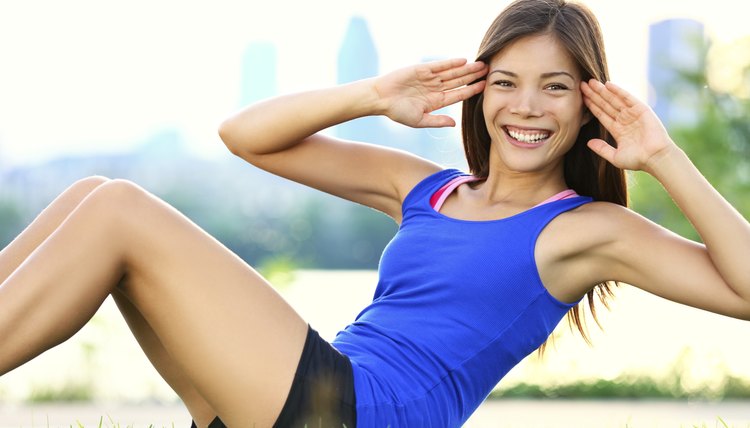
Exercising on a regular basis will help you control your weight, stay healthy and boost your mood and energy levels, according to Harvard School of Public Health. With that in mind, you may think that just about any type of exercise is better than no exercise. In reality, some exercises are unnecessary, a waste of time or even dangerous. Thus, they consistently rank among top lists of worst exercises.
Traditional Sit-Ups and Crunches
Maridav/iStock/Getty Images
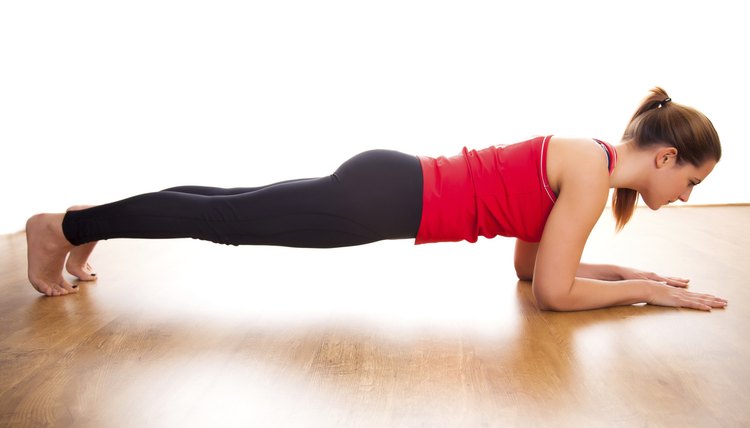
Crunches and sit-ups focus only on the middle abdominal muscles -- the rectus abdominis -- also known as the “six pack.” In addition, the motions involved in sit-ups and crunches can cause back pain, according to the Harvard Health Publications. Exercises such as planks are more effective at working all of your core muscles, plus they won’t strain your back.
Ab Machine Workouts
Maridav/iStock/Getty Images
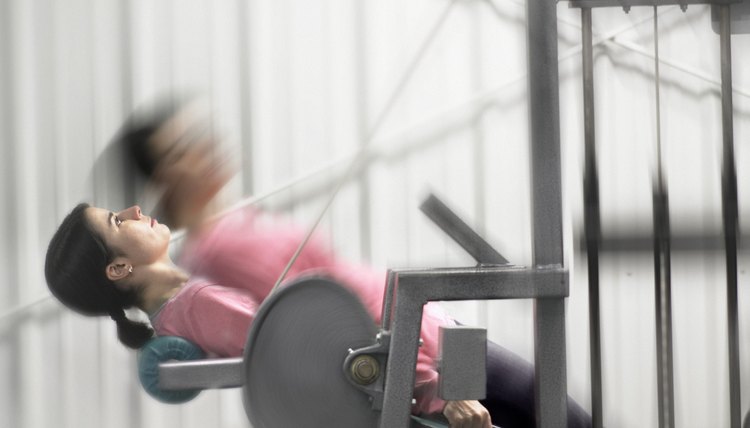
Using ab machines can detract from a good abdominal workout because it gives you leeway to flex your arms, shoulders and legs instead of relying on your core strength, according to Fitness Together, a personal training fitness website. Doing bicycle crunches or performing crunches with a stability ball will force you to use more core strength.
Lat Pull-Downs and Shoulder Presses Behind the Neck
Maridav/iStock/Getty Images
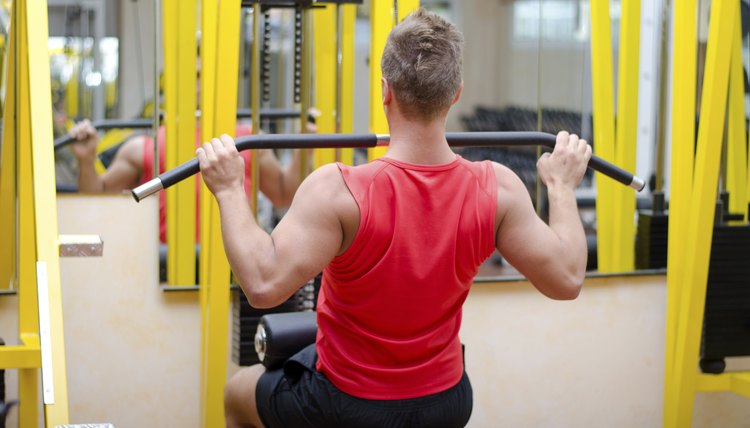
Pulling down cables or lifting an object over your head behind your neck stresses your rotator cuff muscles and can lead to long-term painful shoulder impingement. You are at an especially high risk of damaging your shoulders if you have limited range of motion in your shoulder joints. If you are going to lift weights or use a lat pull-down machine, keep the action in front of your breastbone.
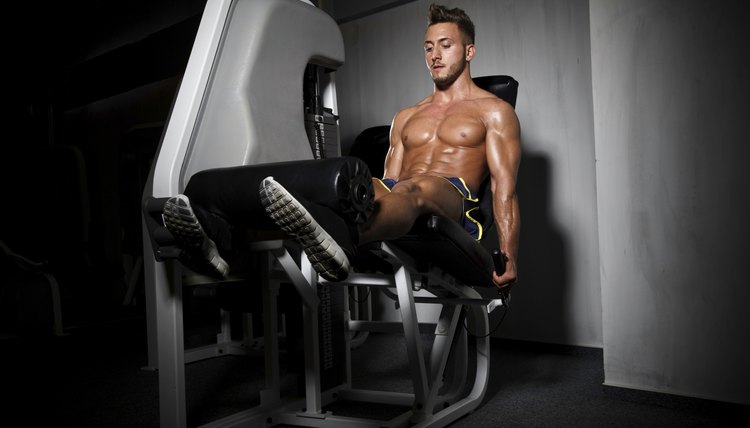
Leg Extensions
Maridav/iStock/Getty Images
Using a leg extension machine isn’t functional because it doesn’t mimic any movements you would normally perform in daily life, according to exercise physiologist Neal I. Pire in an Oprah.com article. Leg extensions also are less effective than other leg exercises because they isolate your quadriceps, which are your front thigh muscles. You may end up straining your hamstrings, which are on the backside of your thigh, if you don’t balance your legs out with more holistic leg exercises such as lunges.
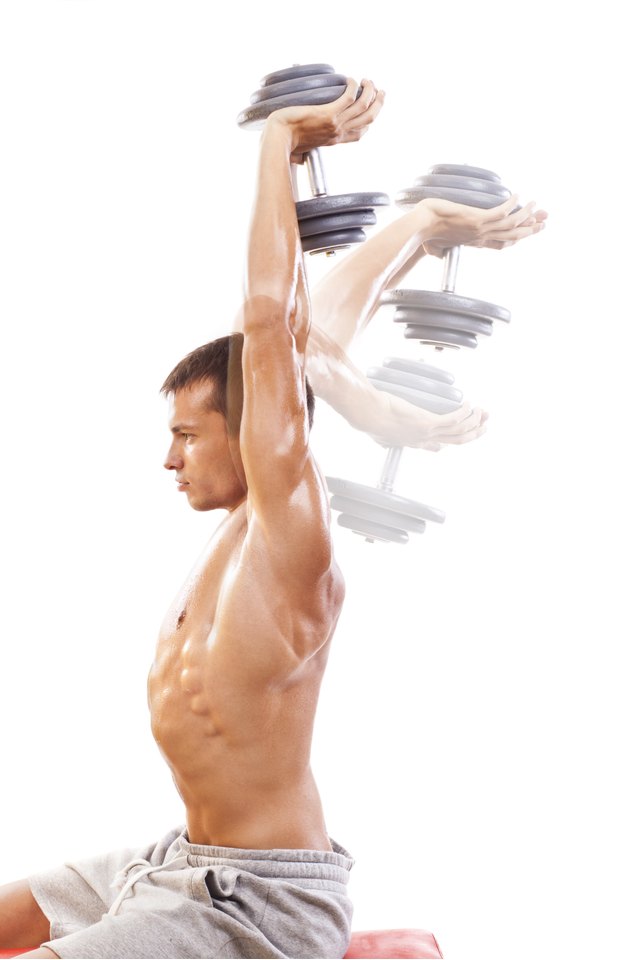
Tricep Extensions
Maridav/iStock/Getty Images
Doing triceps extensions can be impractical because proper form requires you to reach fully behind your back with your upper arms by your ears and your elbows pointing straight up, according to Oprah.com. You may find that you develop neck pain and can’t fully extend your triceps if you have a stiff and inflexible back. Try a more inclusive and effective upper body workout such as triceps pushups.
Ballistic Stretches
Contrary to popular belief, “bouncing” into stretches won’t help you work into a bigger stretch. In reality, your muscles contract to protect themselves if you suddenly overstretch them, according to the Better Health Channel, a health-based website established by the Australia State Government. This can lead to small muscle tears and unnecessary soreness. A healthier alternative is to focus on slowly working your way into a stretch, hold it for about 10 to 20 seconds, rest and then hold a gently increased stretch.
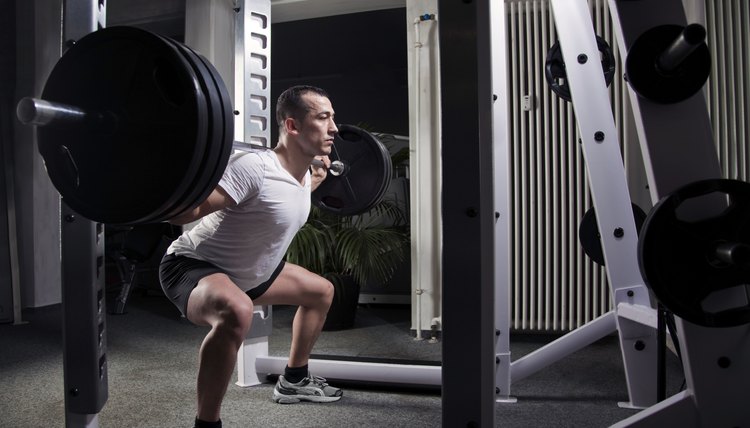
Full Squats
Maridav/iStock/Getty Images
Squats make excellent upper-leg exercises, but you risk straining your knee joints and lower back if you force your knee joints past about a 90-degree angle, warns the Better Health Channel. Keep your squats to about half that -- 45 degrees -- and keep an eye on your body mechanics by watching your reflection in a mirror.
Extended Cardio Sessions

Maridav/iStock/Getty Images
More isn’t always better when it comes to cardio. An ideal jog or other cardio workout should have your heart rate within 65 to 85 percent of its maximum. You may end up canceling out your hard-earned strength training and burn off muscle mass if you stay at this intensity for over 45 minutes. Keep your cardio workouts to about three 30-minute sessions a week to preserve muscle mass, recommends Health Services at Columbia University.
Waist Twists and Bends
Twisting your waist and bending your sides may slightly boost your flexibility, but it probably won’t do much to trim down your waistline or tone your core muscles. You also may end up straining your lower back if you twist and bend too often or too abruptly. For a safer and more effective core workout that involves torso movement, stand upright with your feet planted firmly on the ground, hold a weighted medicine ball and rotate slowly from side to side.
Any Spot-Reduction Exercise
If you do any kind of strengthening or toning exercise to try to take inches from any one area of your body – your thighs or buttocks, for instance – you won’t specifically burn fat from that area. Spot-reduction just doesn’t work. Evidence that spot-reduction is a myth includes the fact that tennis players have about the same amount of fat in their playing arm as they have in their inactive arm, according to the American Council on Exercise. You will gain more muscle in an area if you consistently work on it, but you need to do cardiovascular exercise and burn fat throughout your body to see fat burn in any one spot.
References
- American Council on Exercise: Why is the Concept of Spot Reduction a Myth?
- Oprah.com: 5 Exercises You Think You Need -- But Don’t
- Harvard School of Public Health: Right and Wrong Ways to Do Lunges, Squats and Planks
- Better Health Channel: Exercises That Could Be Harmful
- Mark’s Daily Apple: 10 Unnecessary, Worthless or Dangerous Exercises
- Harvard School of Public Health: The Benefits of Physical Activity
Resources
Writer Bio
Christa Miller is a writing professional with expertise in massage therapy and health. Miller attended San Francisco State University to earn a Bachelor of Arts in creative writing with a minor in journalism and went on to earn an Arizona massage therapy license.