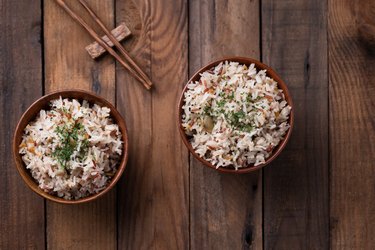
Black and brown rice are just two types among the more than 40,000 varieties of rice believed to exist, according to the Rice Association. Both are whole grains with plenty of nutrients.
When it comes to brown rice versus black rice nutrition, black rice offers more bang for your buck.
Video of the Day
Video of the Day
Brown Rice Nutrition Info
The calories in brown rice come mostly from carbs. Here's a rundown of brown rice nutrition facts per 1 cup cooked, per the USDA:
- 218 calories
- 1.6 g fat
- 2 mg sodium
- 45.8 g carbs
- 3.5 g fiber
- 0 g sugar
- 4.5 g protein
Brown rice gives you 17 percent of your Daily Value (DV) of thiamin, 2 percent DV for riboflavin, 17 percent DV for vitamin B6, 2 percent DV for folate and 16 percent DV for niacin. These B vitamins tend to work hand-in-hand to pull energy from the foods you eat while supporting brain processes and blood cell formation, according to Harvard Health Publishing.
You'll also get a bit of magnesium and phosphorus to keep your bones strong; in addition, there's 2 percent of your DV of calcium in brown rice. You'll also get some potassium.
Black Rice Nutrition Data
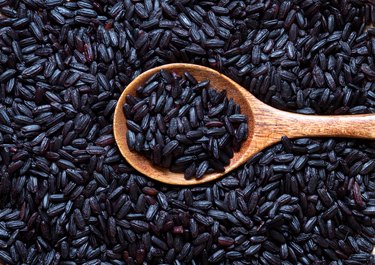
Also known as forbidden rice, black rice has a sticky texture and a nutty flavor. Grown in the Philippines and Indonesia, it is consumed mostly in Asia for noodles, sushi, pudding and adding decoration to food. Like brown rice, black rice has similar nutrient levels and higher amounts of antioxidants.
About 1/4 cup of uncooked black rice contains:
- 160 calories
- 1.5 g fat
- 0 mg sodium
- 34 g carbs
- 1 g fiber
- 0 g sugar
- 4 g protein
Like brown rice, black rice has similar nutrient levels and higher amounts of antioxidants. It is also a source of fiber and minerals, including iron.
The Benefits of Black Rice vs. Brown Rice
Protein in Rice
Grains are an important source of plant-based protein for people who don't eat meat. Although they're not as high in protein as animal foods, both types of rice can contribute to an adult's daily protein needs for healthy muscles and a strong immune system.
Brown and Black Rice Carbs
Grains are known for their carbohydrate content, and many dieters avoid rice for this reason. But brown and black rice carbs aren't bad for you, and they won't cause weight gain when you eat rice in moderation. Both types of rice are examples of whole grains, meaning they are unprocessed and sold in their natural state. This differs from white rice, which has been milled to remove its outer husk, or bran and germ, according to the Harvard T.H. Chan School of Public Health.
The outer husk of rice provides dietary fiber, a type of carb your body can't digest. It moves through your digestive tract mostly unchanged and, as it does so, attracts liquid and bulks up in size. This helps move food and waste through the colon, per the Mayo Clinic.
Fiber benefits digestion and elimination, preventing constipation and diarrhea; it also improves the health of your colon and may help prevent colon cancer. Other benefits of fiber include helping to stabilize blood sugar and lowering cholesterol.
Vitamins, Minerals and Antioxidants
As whole grains, brown and black rice retain all their naturally occurring vitamins and minerals in the bran, germ and endosperm. According to Harvard T.H. Chan School of Public Health, the bran provides B vitamins, iron, copper, zinc and magnesium, while the germ contains B vitamins and vitamin E.
The germ of the grain is the main source of food for the growing plant. Smaller amounts of B vitamins and minerals are contained within the deepest layer of the grain called the endosperm.
Like all plant foods, brown and black rice contain naturally occurring chemicals called phytonutrients, or phytochemicals. There is no recommended daily intake of these nutrients as there is for vitamins and minerals, but they play an important role in human health.
Many kinds of phytonutrients have antioxidant activity. Antioxidants are substances that can neutralize harmful molecules called free radicals, which are highly reactive molecules that can damage cells and lead to disease. According to a May 2018 review in the journal Antioxidants, the phytochemicals in brown rice may have anti-diabetes, anti-cholesterol cardioprotective effects.
Black rice may have especially powerful antioxidant activity due to phytonutrients called anthocyanins. Anthocyanins are natural pigments responsible for the coloring of red, blue and purple plant foods, including black rice.
According to an August 2017 research review in Food & Nutrition Research, human trials have shown that anthocyanins have antimicrobial effects and are linked to improved visual and neurological health and lower rates of non-communicable diseases, such as cancer.
Related Reading
Adding Black and Brown Rice to Your Diet
There's no need to choose between one or the other because they are both nutritious additions to a healthy diet. Replacing white rice in your meals with black or brown rice can make a big difference in the nutritional content, especially when paired with other healthy foods, like fresh veggies and lean protein.
Brown rice has a nuttier flavor than white rice, and black rice has an even stronger flavor. The texture is also firmer and chewier. If you've been eating only white rice, switching to brown and black rice may take some getting used to. But once you make the change, you'll likely come to enjoy the texture and flavor and find that it creates more interesting and flavorful dishes.
Brown and black rice take longer to cook than white rice because they are unmilled. But the process is generally the same. Cooking times depend on the types of rice, so refer to the preparation instructions on the package.
How to Eat Brown and Black Rice
Basic instructions involve combining rice and water in a pot, covering, bringing to a boil, then reducing the heat to a simmer for about 40 minutes. When most of the water has been absorbed, remove from the heat and allow to steam, covered, for about 10 minutes. Fluff with a fork and serve.
You can substitute chicken or vegetable broth for water for more flavor. You can also add a little butter or oil before cooking, and mix in herbs and spices when the rice is done.
Black and brown rice can be used interchangeably in any recipe. Here are a few ideas on how to use it.
- For a simple preparation, serve seasoned black or brown rice alongside some steamed vegetables and baked fish or chicken.
- Brown rice works well in vegetable and bean burritos, soups and stir-fries.
- The firmness of black rice makes it a good addition to fresh salads. Just chill the rice and combine with vegetables, fruits, lean protein, and nuts and seeds. Dress with a light, lemony vinaigrette. Black rice salads make great pack-and-go healthy lunches.
- Rice Association: "Types of Rice"
- USDA: "Black Rice"
- USDA: "Brown Rice"
- Genetics Home Reference: "What Are Proteins and What Do They Do?"
- National Academies of Medicine: "Summary Tables, Dietary Reference Intakes"
- Harvard T.H. Chan School of Public Health: "Rice"
- Mayo Clinic: "Dietary Fiber: Essential for a Healthy Diet"
- Harvard T.H. Chan School of Public Health: "Whole Grains"
- Antioxidants: "Phytochemical Profile of Brown Rice and Its Nutrigenomic Implications"
- American Institute for Cancer Research: "AICR HealthTalk"
- Food & Nutrition Research: "Anthocyanidins and Anthocyanins: Colored Pigments as Food, Pharmaceutical Ingredients, and the Potential Health Benefits"