Can You Swim Post ACL Surgery?
Injuries to your anterior cruciate ligament, or ACL, are some of the most devastating injuries in sports. To compound matters, the surgery to fix your ACL is traumatizing as well, with most athletes needed up to a year to fully recover. After ACL surgery, swimming is something you can do to ease back into exercise, as it helps you regain your range of motion without placing too much strain on your knee. Be sure to consult a physician or athletic trainer before resuming exercise after surgery.
Wait until your incision site is fully healed before attempting to swim. You will likely need your stitches removed between seven and 14 days after your surgery, but sometimes you may need to wait at least three weeks before getting your incision site wet. Until that point, you still technically have an open wound, and the pool chemicals or foreign particles from a different body of water can get into your incision site and cause an infection. Typically, you can start swimming after about three weeks, according to the University of Connecticut Health Center, but your doctor may recommend waiting anywhere from two to five months.
Calories Burned in Swimming vs. Aqua Jogging
Learn More
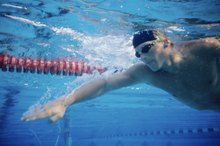
Use only the front crawl stroke to start out, after you get clearance from your doctor. Placing too much stress on your ligament can cause setbacks in your rehabilitation or even further damage to your ACL. The front crawl focuses predominantly on the upper body, with only a slight flutter kick for stability. If you can do this stroke with no pain, then consult your physician or athletic trainer about progressing to strokes where you would need to use a whip kick, like the butterfly or breast stroke.
Use a flotation device under your legs if necessary. This will help keep your legs at the surface of the water, so that you can swim with your upper body without your legs sinking in the water. This also takes the stress off your legs, allowing you to swim without aggravating your ACL.
Tips
If possible, swim under the supervision of an athletic trainer to help ensure you are not causing any damage to your knee.
Related Articles

Calories Burned in Swimming vs. Aqua Jogging
Learn More

How to Swim With Hip Pain
Learn More
Ankle Pain & Swimming
Learn More

How To Lose Weight with Dumbbells
Learn More

How to Tread Water for Weight Loss
Learn More

Iliopsoas Tendon Pain When Walking
Learn More

How Long Until a Chipped Bone on the Knee From Playing Football Heals?
Learn More

How to Tell if You Have a Bruised MCL
Learn More

Swimming After Vasectomy
Learn More

Stretching Exercises for ACL Injuries
Learn More
References
Writer Bio
Chris Callaway started writing professionally in 2007 and has worked as sports editor, managing editor and senior editor of "The Racquet" as well as written for the "La Crosse Tribune" and other newspapers in western Wisconsin. He graduated from the University of Wisconsin-La Crosse with a Bachelor of Arts in English and communications.