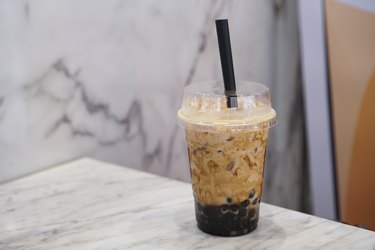
Thai tea is a delicious but decadent drink that can have a lot of added sugar and calories, depending on how it's made. Here's what you need to know about the ingredients in your Thai tea and its nutritional information.
Read more: Can Iced Tea Replace Water for the Body?
Video of the Day
Video of the Day
What’s in Your Thai Tea
Thai tea is brewed with Assamese tea and condensed milk. Condensed milk is a thicker, sweetened form of milk that is made by removing some of the water content in milk, according to the American Dairy Products Institute (ADPI). Star anise, a spice with a licorice-like flavor, is added to the tea to give it its unique sweet and spicy flavor.
Orange blossom water, tamarind, vanilla and cinnamon are some of the other ingredients that can be used to flavor the tea. Red and yellow food dyes are also sometimes added to the tea to give it its distinctive orange color. Thai iced tea is the cold version of this drink, but it can also be served hot.
Read more: Does Green Tea Lose Antioxidants When Cold?
Thai tea parlors often have extensive menus that let you add ingredients like boba and cubes of jelly to your tea. A study published in the January 2017 issue of the journal Food Science & Nutrition explains that boba are balls made of tapioca, sweet potato, cassava starch and brown sugar, which are boiled and shaped into round, chewy balls.
Thai tea that has boba in it, also referred to as bubble tea, is served with a large straw so that you can slurp up the boba along with your tea.
Thai Milk Tea Calories
According to the January 2017 study in Food Science & Nutrition, a 16-ounce serving of Thai milk tea has 263 calories and 38 grams of sugar. The study notes that adding boba and other ingredients to your tea can add to the calorie content. A 16-ounce serving of Thai milk tea can have up to 450 calories if it has additional ingredients like boba in it. For a 2,000-calorie diet, that's almost a quarter of your total daily calorie intake.
The study found that the amount of sugar in a 16-ounce Thai milk tea drink can exceed the daily recommended limit of added sugar prescribed by the USDA's 2015-2020 Dietary Guidelines for Americans, which is set at 10 percent of your daily calorie intake. For a 2,000-calorie diet, that works out to an upper limit of 200 calories from added sugar per day.
According to the USDA, Thai tea isn't a significant source of nutrition either; the only nutrition an 8-ounce serving offers is 1.01 grams of protein and 60 milligrams of calcium. You might be surprised to find out that Thai tea also contains sodium; per the USDA, 8 ounces of Thai tea also has 64.8 milligrams of sodium.
The authors of the study take note of bubble tea's growing popularity around the world and caution people to consume these beverages only in moderation, given the rising rates of obesity and the severity of the conditions associated with it, like diabetes, heart disease and cancer.
Read more: Sweet Tea Vs. Soda Pop
The Calorie Control Council offers a recipe for Thai iced tea that has only 20 calories per serving. The recipe uses a combination of water and evaporated milk, which is similar to condensed milk but not sweetened, according to the ADPI. The recipe substitutes sugar with monk fruit, a zero-calorie sweetener. Star anise is added for flavor, and cinnamon sticks are suggested as a garnish.
- American Dairy Products Institute: “Condensed Milk”
- Food Science & Nutrition: “Calories and Sugars in Boba Milk Tea: Implications for Obesity Risk in Asian Pacific Islanders”
- Health.gov: “2015-2020 Dietary Guidelines for Americans”
- USDA: “Thai Tea”
- Calorie Control Council: “Thai Iced Tea”
- American Dairy Products Institute: “Evaporated Milk”
- International Food Information Council: Everything You Need to Know About Monk Fruit Sweetenerss”