Yulia_Davidovich/iStock/Getty Images
Peanut butter is a rich source of essential vitamins, minerals and dietary fiber. Unfortunately, is it not a significant source of calcium, an essential mineral. However, you can still enjoy peanut butter daily with a variety of calcium-rich foods in order to ensure adequate intake of the mineral and other nutrients. Consult with a dietitian for a full list of calcium-rich foods.
Peanut Butter and Calcium
Although it is not a rich source of calcium, peanut butter does contain trace amounts of the mineral. A 2- tbsp. serving of smooth peanut butter provides only 13.8 mg of calcium or 1 percent of your recommended daily value. A food that provides less than 5 percent of the recommended daily value for a particular nutrient is considered a low source. Peanut butter would have to provide more than 10 percent of the recommended daily value for calcium to be considered a good source. Peanut butter provides good sources of other minerals such as magnesium, phosphorus, potassium and manganese.
Calcium and Health
Calcium is an abundant mineral found in all bones and teeth of the body. It is necessary for proper function, growth and maintenance of vital areas of the body. As an essential mineral, the body cannot produce calcium and it must be obtained daily through your diet. Calcium is especially important for growing children, adolescents and aging adults where the need for the essential mineral is greatly increased. Ensuring adequate intake of calcium every day can help prevent osteoporosis.
Recommendations
Adult males require 1,000 mg of calcium daily. Women require greater amounts of calcium, approximately 1,200 mg daily. Growing children and adolescents require 1,000 mg to 1,300 mg of calcium per day. Ask your health care provider if calcium supplements are necessary for your lifestyle. Dairy products such as milk, cheese and yogurt provide the most significant source of calcium. Other food sources of calcium include green leafy vegetables, fish, almonds, seeds and legumes.
Diet Considerations
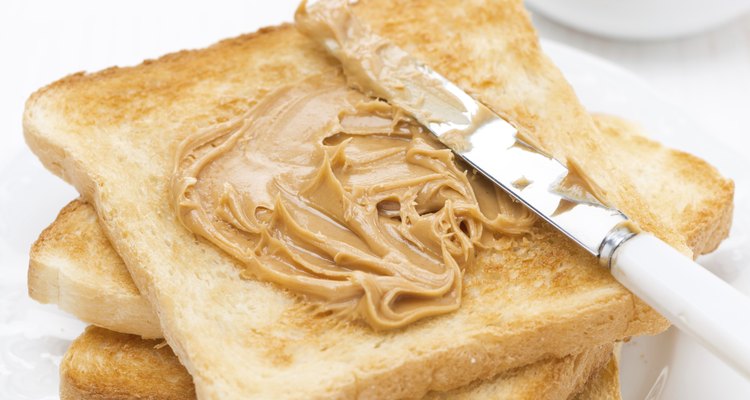
Peanut butter can be enjoyed with calcium-rich foods such as dairy -- for example, peanut butter spread on wheat toast with a glass of skim milk. An 8-oz. glass of milk provides 300 mg of calcium, or 30 percent of your recommended daily value. Other examples include peanut butter and cottage cheese. When consuming dairy products, choose low-fat options that provide the same nutrients but fewer calories from saturated fat.
Almonds and Brazil nuts are nuts that provide much more concentrated sources of calcium. Just 3 oz. of almonds provides 210 mg of calcium, or 20 percent of your recommended daily value. As an alternative to peanut butter, almond butter can also be added to toast or other foods and provide a more significant source of calcium.
Related Articles

Zinc & Copper for Aging Skin
Selenium & Silica
Potassium in Pinto Beans

Qualifications to Enter a State-Run ...

L-Lysine for Hair Growth

Almonds and Magnesium

How to Get Rental Assistance for Seniors

How to Clean an Amethyst Ring

Vitamins for Mental Alertness

How to Sterilize Eyeglasses

How to Stop Facial Hair Growth for Men

Selenium For Children

Can Age Spots Be Reversed?

Foods Rich in Magnesium & Phosphorus

Nutritional Values of Cheese

How to Bake Boneless Skinless Tilapia

A List of Foods That Contain Choline

How Many Calories Is Wheat Toast?

Is Zinc Good for Hair Growth?

How to Obtain a Death Certificate in ...
References
Writer Bio
Anthony Isaac Palacios has been a professional writer for more than five years for various media including magazine, newspaper and the Internet. He has a Master of Science in dietetics and nutrition and specializes in health and nutrition articles for the general public. Palacios enjoys cooking with wine, and sometimes even adding it to the food.
Photo Credits
Yulia_Davidovich/iStock/Getty Images