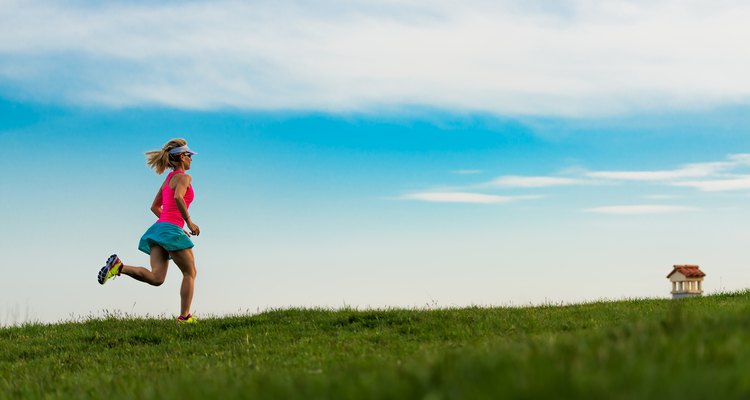
michelangeloop/iStock/Getty Images
While corns rarely cause serious problems, they can cause pain and irritation to runners. A corn is an area of thickened skin that becomes inflamed. Poorly-fitting shoes are often implicated as the cause, and the American Academy of Sports Medicine asserts that 85 percent of the public wears shoes that are too small.
What is a Corn?
According to the "New York Times" Health Guide, a corn is actually a protective mechanism, although runners often feel they need protection from the corn. Pressure or friction causes skin to form a layer of dead skin cells in a small area. Corns often look cone-shaped with a rounded core that can cause pain. Soft corns, found in moist areas, can peel.
Causes of Corns
Several causes of corns exist. Since toes are the area often affected by corns, situations that cause pressure on the toes are to blame. Shoes or socks that fit too tight as well as shoes that fit too loose cause corns. Loose shoes increase friction, particularly when running. If your toes are unusually shaped and rub together, you are at risk for corns.
Traditional Treatment
DermNet NZ recommends reducing pressure and thickness of skin to treat corns. A corn cushion can be used to distribute pressure evenly for areas on the side of the foot when running. For corns in between the toes, try separating toes with cotton or lambswool. To reduce the skin thickness, soak the affected area to soften it. Gently use a pumice stone on the surface of the corn. There are specially-designed corn trimmers that may be helpful. Since running puts extra stress on feet, frequent runners should see a podiatrist for corn removal.
Preventive Measures
With extra pressure and friction on their feet, properly fitting shoes become a key corn prevention tool for runners. The American College of Sports Medicine offers the following tips to keep in mind when purchasing running shoes. Look for shoes that have half an inch of room between the longest toe and the top of the shoe. The shoes should also be wide enough, with the fit not tight, but also not allowing for much movement of the foot. Try the shoes late in the day with the same socks you will run in. Keep the shoes on for at least 10 minutes to assess the fit. Break in the new shoes in short running sessions.
Related Articles
How to Keep My Shoes From Sliding While ...

Natural Ways to Remove Stubborn Corns & ...
How to Increase the Grip on a Shoe's ...
Blisters After Golf

How to Break in Man-Made-Leather Shoes

How to Make Steel-Toe Shoes Comfortable

How to Wash Mesh Athletic Shoes
How to Deodorize Suede Sandal Footbeds

How to Loosen Nike Dunks
Smelly Feet in Women

How to Keep Flip-Flops From Slipping
Callus From Pullups

How to Loosen Tight Socks
How to Use Sea Salt for Cracked Heels ...
How to Correct the Wearing Down of the ...
How to Replace Rubber on Heels
How to Avoid Bending Your Uggs

How to Soak Your Feet in Mouthwash
How to Use Alum Powder for Smelly Feet
How to Fix Nicks in Shoe Toes
References
Writer Bio
Kimberly Wilson has been a freelancer since 2009. She also works as a marketing and sales professional. Wilson specializes in mental heath and wellness articles for various websites. She has a Bachelor of Arts in psychology from Syracuse University.
Photo Credits
michelangeloop/iStock/Getty Images