
You're going about your day when all of a sudden, it feels like you've been transported to the Sahara: Your heart starts racing and your skin might redden, as an intense warmth radiates from your chest out to your arms, neck and face. The next thing you know, you're breaking out in a sweat, beads of perspiration coursing down your skin, your armpits damp and clothing soaked.
Welcome to menopause. In a 2015 University of Pittsburgh survey, 80 percent of people assigned female at birth (AFAB) said they experienced hot flashes, night sweats or both during menopause, which tends to last between seven and 10 years.
Video of the Day
Video of the Day
Hot flashes are believed to be caused by hormonal fluctuations that occur in mid-life. Hormones influence your thermoregulatory system, which controls body heat, so if they're running amok, your temp might get thrown out of whack.
But it's not just that feeling hot and sweaty is annoying; in a 2020 survey by the Female Founders Fund, 78 percent of people AFAB reported that menopause symptoms had interfered with their lives. Some become shaky or dizzy in the throes of a hot flash, which typically lasts between 30 seconds to five minutes, according to Johns Hopkins Medicine. Hot flashes can also lead to fatigue, mood swings and forgetfulness.
Give hot flashes the deep freeze with these natural, hormone-free remedies.
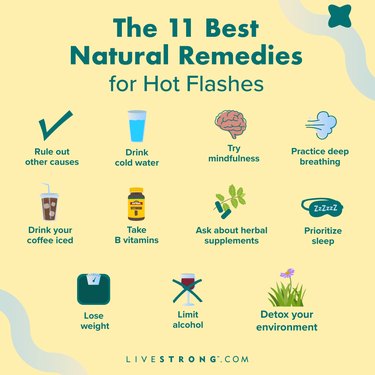
1. Rule Out Other Causes
If you wake up in a puddle of perspiration, hot flashes aren't always to blame. According to the Sleep Foundation, common reasons you might sweat in your sleep include:
- Medications (particularly a class of antidepressants called SSRIs, steroids and fever-reducers) along with caffeine, alcohol and drug use
- An infection that causes a fever
- Hormone-related health conditions, including diabetes and hyperthyroidism
- Being pregnant or postpartum
- Anxiety and panic attacks
- Hyperhidrosis (excessive sweating)
- Acid reflux, although evidence for this is limited
- Certain kinds of cancer or cancer treatments
2. Reach for Cold H2O

If you feel a hot flash coming on, this is the fastest way to chill out: "Drink a tall, very cold glass of water," says ob-gyn Tara Scott, MD, medical director of integrative medicine at Summa Health System, chief medical officer at Revitalize Medical Group and clinical associate professor of OB/GYN at Northeast Ohio Medical University.
It sounds basic, but it works. "Hot flashes are triggered by vasomotor instability: Your core body temperature rises and your heart rate speeds up, pumping blood to your skin," Dr. Scott says. "As you warm up, your thermoregulatory system kicks in and you start to sweat." Lowering your temp stat will mitigate these unpleasant side effects.
You can also try a cooling neck wrap. Simply run cold water over it, shake it out and drape it around your neck to score instant relief.
3. Try Mindfulness
Time to score some zen!
A November 2018 study in Climacteric found a correlation between mindfulness and menopause symptoms. In the study, people AFAB ages 40 to 65 were given a questionnaire to gauge how frequently they live in the present, as opposed to being preoccupied. Study participants also filled out a questionnaire rating their menopause symptoms. The results revealed that people with greater mindfulness and less stress had fewer menopause symptoms, including hot flashes.
"Hot flashes are linked to higher levels of the stress hormone cortisol," Dr. Scott says. "Mindfulness modulates your cortisol system, resulting in fewer hot flashes."
In the University of Pittsburgh study, people AFAB who were anxious or depressed began having hot flashes sooner than others, and their symptoms lasted longer overall. Meanwhile, a September 2019 study in PLOS One found a correlation between stress levels and severity of hot flashes.
There are plenty of ways to become more mindful, but here's one that's scientifically sound: signing up for the UMass Medical Center's mindfulness-based stress reduction course. This eight-week program is offered live online and incorporates meditation, stretching and yoga. "There is some data suggesting that people have fewer hot flashes after going through this course," Dr. Scott says.
Related Reading
4. Practice Deep Breathing

Taking relaxing inhales and exhales is another super quick way to stop a hot flash in its tracks. "A rapid heart rate contributes to a rise in temperature," Dr. Scott says. "By decreasing your heart rate, you can control your body heat."
It's as simple as breathing in and out slowly until the hot flash has eased up. Or, try one of these easy and effective strategies Dr. Scott recommends:
- Alternate nostril breathing: Plug one nostril and breathe in. Release and plug the other side as you exhale. Repeat eight times.
- 4-7-8 breathing: Inhale for four counts, hold your breath for seven and then breathe out for eight.
- Box breathing: Inhale for four slow counts, hold the air in your lungs for four and then release for four.
5. Order Your Coffee Iced
The next time you're at Starbucks, consider ordering your Americano on the rocks.
"For some people, the heat from a warm beverage actually triggers hot flashes," Dr. Scott says.
Why Some Hot Flashes Are Worse Than Others
Not all hot flashes are created equal. You may have noticed that sometimes they feel more intense or seem to be getting worse. What gives?
“Your hormone levels shift throughout the day and as you age, which can lead to a difference in the severity of hot flashes,” Dr. Scott says. “In addition, hot flashes can trigger anxiety or even a panic attack as a result of blood rushing to your skin.” This magnifies the experience and makes you feel even crappier.
6. Get Your B Vitamins
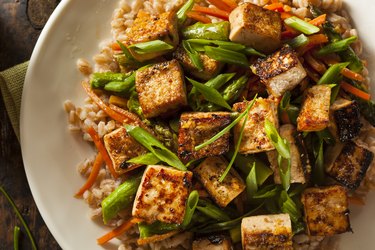
Vitamins B6 and B12 play a key role in how your body processes estrogen. "They support your liver function to keep estrogen levels more stable," Dr. Scott says. "B vitamins also produce mood-regulating neurotransmitters, which is important because many [people AFAB] in midlife have mood issues."
Although the research is not yet conclusive, a December 2019 study in Climacteric suggests that people AFAB ages 40 to 65 who consumed higher levels of B6 and oily fish had less severe hot flashes than those whose diets contained lower amounts of these nutrients.
Foods high in B6 include meat, poultry, seafood, starchy veggies like potatoes and many fruits (but not citrus).
"Vitamin B12 comes mostly from animal protein, so if you aren't eating meat you need to supplement," Dr. Scott says. Ask your doctor or pharmacist for a prescription B-complex supplement or pick up a high-quality over-the-counter one, such as Seeking Health B Complex Plus ($25.95 for 100; SeekingHealth.com).
Related Reading
7. Ask Your Doc About Herbal Supplements
There are some all-natural, hormone-free supplements that can help you keep your cool. Talk to your doctor or ob-gyn to see if one of the following might be right for you:
Rhubarb extract: "Rhubarb extract has been shown to decrease hot flashes and improve sleep," Dr. Scott says, noting that her office carries Estrovera, a supplement containing rhubarb extract. Take one tablet twice a day until your symptoms have improved, and then go down to one pill a day. (You'll need a prescription from your doctor to buy this supplement.)
Black cohosh: "This is a phytoestrogen, which mimics the action of estrogen," Dr. Scott says. "If your hot flashes are the result of a drop in estrogen, it can help." Take 400 milligrams of Gaia Herbs Black Cohosh ($28.99 for 60; GaiaHerbs.com) once or twice a day.
Soy isoflavone: "Soy is also considered a phytoestrogen," Dr. Scott says. "Women in Japan have a lot of high-quality soy in their diet and they have fewer hot flashes."
Just make sure you take a soy isoflavone that is an equol derivative (called S-equol), as this is the type that has data backing up its effectiveness. A February 2019 review in the Journal of Medicinal Food suggests that supplementing with S-equol significantly lowers the incidence and intensity of hot flashes.
Magnolia bark: "This calming ingredient improves sleep and helps protect your body from the toxic effect of cortisol, reducing stress and hot flashes," Dr. Scott says. Try Estroven Menopause Relief Mood Boost ($10.99 for 30; Estroven.com).
8. Prioritize Sleep
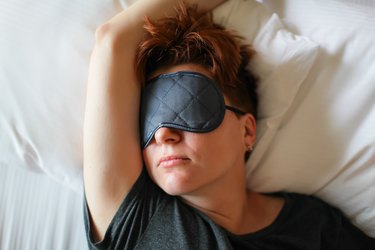
Almost all of us could benefit from a little extra shut-eye — but if you're plagued by hot flashes, it's even more important. It has long been thought that hot flashes can interrupt your zzzs — but according to the National Institute on Aging, it might be the other way around. It turns out waking from sleep can actually trigger hot flashes and night sweats.
"When you don't have enough estrogen, it's hard to maintain sleep through the night," Dr. Scott says. "We see people waking up early in the morning, like 3 a.m. or 4 a.m."
To help you stick around in dreamland longer, she's a fan of Headspace Sleep Music. "The deep, ambient tones help you stay asleep," she says.
Out-of-whack cortisol levels are another factor that might interrupt your sleep. If your cortisol spikes at bedtime, then your blood sugar is likely to plummet during the night, which wakes you up.
"I'm usually not a proponent of snacking at bedtime, but if cortisol changes are to blame, then having a little fat and protein can help," Dr. Scott says. "See if eating one tablespoon of almond butter before bed works." Per the Sleep Foundation, nut butter is also high in magnesium, which can improve sleep quality.
Related Reading
9. Lose Weight
Dropping pounds might help control your temperature tantrums. A May 2017 study in Menopause found an association between a higher BMI and frequency and severity of hot flashes. The research suggests that body fat tissue acts as a heat insulator, making it more difficult for your body to regulate body heat. The University of Pittsburgh study also revealed that people AFAB who have obesity start getting hot flashes earlier than others.
That's not all. "Fat cells make a specific type of estrogen, called estrone," Dr. Scott says. "High levels of estrone can cause hot flashes."
It doesn't help matters that metabolism naturally slows down when you're middle-aged, and abdominal fat increases.
One thing you can do: Keep up with exercise. The North American Menopause Society points out that people AFAB tend to become less physically active after age 40.
Related Reading
10. Limit Booze and Sweets

We hate to be the fun police, but happy hour and dessert aren't doing you any favors when it comes to managing hot flashes.
The University of Pittsburgh study showed that people AFAB who drank alcohol moderately or heavily had hot flashes for a longer period of time than those who took it easy with booze. Johns Hopkins Medicine notes that red wine in particular is a trigger.
"Both both alcohol and sugar increase your cortisol and blood glucose levels, which can cause you to feel stressed," Dr. Scott says. (Remember, stress makes hot flashes worse.)
11. Detox Your Environment
Speaking of toxins that screw with your hormones: "Eliminate plastics," says Dr. Scott, who recommends switching to reusable glass or metal water bottles and glass Tupperware containers.(Some plastics contain endocrine-disrupting chemicals, which means they can mess with your hormones, according to the National Institute of Environmental Health Sciences.)
And the next time you're shopping for makeup, personal care products or cleaning products, look carefully at the ingredients. "Avoid those that contain phthalates and parabens," Dr. Scott says. Parabens can mimic estrogen in the body, and an April 2016 study in Reproductive Toxicology established a link between phthalate levels in personal care products and an increased risk of hot flashes.
What About Apple Cider Vinegar?
The thinking behind using ACV for hot flashes is that it cleanses toxins from the body, thereby reducing hot flashes because your body will have fewer harmful substances to flush out via sweat. Not true.
"I have never heard of this remedy for hot flashes, and there is no data indicating that it would be helpful," Dr. Scott says.
What About Turmeric?
Turmeric contains an anti-inflammatory compound called curcumin. "Estrogen is an anti-inflammatory hormone, so many [people AFAB] have more inflammation-related complaints in midlife, as their estrogen levels drop," Dr. Scott says. "Some people might think turmeric can help with inflammation."
A small November 2019 study in Complementary Therapies in Medicine found that people who took a 500-milligram daily dose of curcumin, an anti-inflammatory compound found in turmeric, had fewer hot flashes. Still, the evidence isn't strong enough for Dr. Scott to recommend it.
What About Vitamin E?
The jury's still out on whether popping a capsule of E can keep hot flashes at bay. Although the Complementary Therapies in Medicine study suggests taking a 200-milligram capsule of vitamin E a day reduces hot flashes, it's not a widely recommended strategy.
"There is a theory that oxygen stress [caused by free radicals] contributes to hot flashes and other menopause symptoms," Dr. Scott says. "Vitamin E is an antioxidant that fights free radicals, but there has not been enough data to suggest that it helps with hot flashes." She does point out that it can improve vaginal dryness, though, so there's that.
- Complementary Therapies in Medicine : "The effect of oral capsule of curcumin and vitamin E on the hot flashes and anxiety in postmenopausal women: A triple blind randomised controlled trial"
- Climacteric: "Severity of hot flushes is inversely associated with dietary intake of vitamin B 6 and oily fish"
- Menopause: "Obesity Can Lead to More Severe Hot Flashes and Other Menopause Symptoms"
- North American Menopause Society : "Changes in Weight and Fat Distribution"
- Climacteric: "Association of mindfulness and stress with menopausal symptoms in midlife women"
- PloS One: "Association between hot flashes severity and oxidative stress among Mexican postmenopausal women: A cross-sectional study"
- Journal of Medicinal Food : "Equol Decreases Hot Flashes in Postmenopausal Women: A Systematic Review and Meta-Analysis of Randomized Clinical Trials"
- Reproductive Toxicology: "Phthalate metabolite levels and menopausal hot flashes in midlife women"
- NIA: "Sleep Problems and Menopause: What Can I Do? "
- Sleep Foundation: "How Magnesium Can Help You Sleep"
- Sleep Foundation: "Common Causes of Night Sweats and How to Fix Them"
- University of Pittsburgh: "Certain Characteristics Predispose Women to Different Hot Flash and Night Sweat Patterns"
- Female Founders Fund : "Suffering in Silence: The Biases and Data Gaps of Menopause"
- Johns Hopkins Medicine: "Did I just have a hot flash? I'm 44!"
- National Institute of Environmental Health Sciences: "Endocrine Disruptors"
Is this an emergency? If you are experiencing serious medical symptoms, please see the National Library of Medicine’s list of signs you need emergency medical attention or call 911.