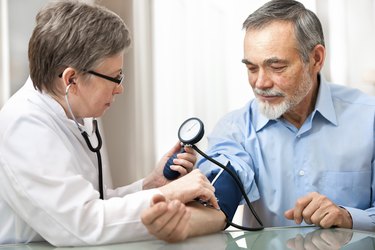
Blood pressure measures the force with which blood pumps through the arteries. Pressure is measured between contraction and relaxation of the heart, also known as systole and diastole. In a healthy reading of 120/80, 120 is the systolic pressure and 80 the diastolic.
According to the 2017 Clinical Practice Guideline, most adults with blood pressure at 130 systolic or 80 diastolic are now considered to have hypertension (high blood pressure).
Video of the Day
Video of the Day
These guidelines were released by the American Heart Association, American College of Cardiology and nine other health organizations. Previously the treatment standard for hypertension had been 140 systolic for people younger than 65 and 150 for people 65 years and older.
If diagnosed with hypertension, an individual may need treatment with medication. Among men, blood pressure tends to go up after age 55. Uncontrolled high blood pressure is a major risk factor for cardiovascular disease including heart attack and stroke.
Exercise and Blood Pressure
A 2012 study in the journal JRSM Cardiovascular Disease finds that regular exercise and good cardiovascular fitness in people with normal or high blood pressure can reduce the risk of death from all cause by between 41 and 51 percent and death from cardiovascular disease by up to 74 percent.
Initiating regular physical activity can prevent the development of hypertension; observational epidemiological studies suggest a reduction in the risk of developing hypertension of up to 52% in those who exercise regularly and maintain their cardiovascular fitness.6
However, according to a 2016 study published in BioMed International, during vigorous exercise, systolic pressure may rise to 250 mmHg or more. The increase may be even higher for people with existing heart disease or high blood pressure. Anyone who experiences one of these conditions should consult a doctor before starting any exercise program.
Read more: High Blood Pressure
Risks of High Blood Pressure
According to the American Heart Association, each rise of 20 points in resting systolic blood pressure doubles the risk of dying from a cardiovascular event such as heart attack, heart failure or stroke. High blood pressure has also been associated with serious kidney disease. Lowering resting systolic pressure is recommended to control hypertension.
The Mayo Clinic states that ways to control high blood pressure without medication include weight loss, eating more whole grains, fruits and vegetables, cutting down caffeine, reducing stress and regular exercise.
Just like it's important to keep regular track of changes in bodyweight with a scale, it's just as important for individuals to routinely monitor their blood pressure with an inexpensive blood pressure monitor. These devices are easily found in many drugstores, are easy to use, and may alert someone to blood pressure changes long before a scheduled check up.
According to the American Heart Association, self-monitoring of blood pressure allows someone with hypertension to take ownership of their treatment. They recommend home monitoring for everyone with high blood pressure because it helps healthcare providers to determine whether prescribed treatments are working. The American Heart Association also cautions that home monitoring of blood pressure is no substitute for regular visits to a physician.
Although results may vary by individual, following these recommendations can help many people with hypertension to significantly reduce their blood pressure.
- JRSM Cardiovascular Disease: The Physician's Role in Prescribing Physical Activity for the Prevention and Treatment of Essential Hypertension
- 2017 Clinical Practice Guideline:A Report of the American College of Cardiology/American Heart Association Task Force on Clinical Practice Guidelines:Whelton PK, et al:(2017)
- BioMed International:Blood Pressure Response to Submaximal Exercise Test in Adults:Katarzyna Wielemborek-Musial, et al: (2016)
- American Heart Association:Understanding Blood Pressure Readings: AHA Staff: (N.D.)
- CDC: High Blood Pressure
Is this an emergency? If you are experiencing serious medical symptoms, please see the National Library of Medicine’s list of signs you need emergency medical attention or call 911.