Elena Stepanova/Hemera/Getty Images
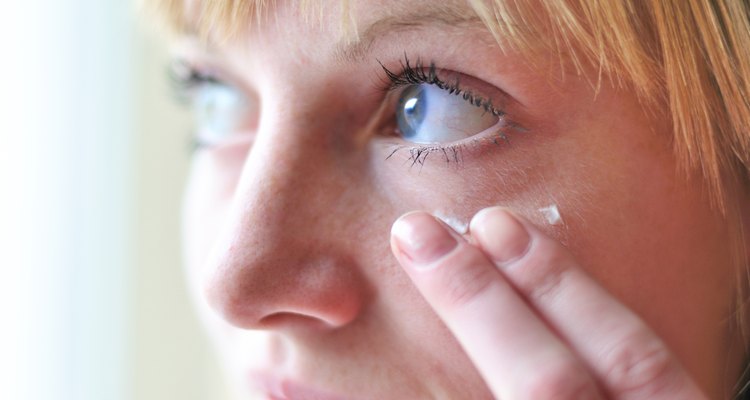
Sing your laments to Grandma, not your skin-care regimen. If a swollen, discolored eye area appears on more than one member of your family, your under-eye bags are probably hereditary. Fat pockets under the eyes often just naturally produce a less-than-pleasing protruding shape, but aging, dietary deficiencies, allergies and other health issues can make genetic eye bags look much puffier and more inflamed than normal.
Reduce Inflammation
No amount of eye cream will make your eye bags disappear completely, but you can reduce their appearance with a few lifestyle changes. Drink plenty of water every day to keep your skin hydrated, and elevate your head when you get at least seven hours of sleep -- if your lymphatic system isn't draining properly, fluid settles under the eyes. Avoid the sun and salty foods that encourage fluid buildup in the body, and treat your allergies with an antihistamine. As for eye creams, a moisturizing cooling cream or a cream with vitamin C or caffeine applied daily may help to calm irritated skin.
Dermatological Solutions
Seek out a dermatologist for under-eye bag treatments with a little more kick than just topical creams. Phosphatidycholine injections that dissolve fat may make your fat pockets look less noticeable. If your under-eye structure is hollowed with protruding fat pockets, fillers like Restylane, Voluma or Perlane may give your under-eye area a smoother appearance -- for a short time. Fillers are temporary -- the effect wears off after a few years and you'll have to go through the procedure again.
Surgical Options
No one likes going under the knife -- but for the most permanent cure for your eye bags, a surgeon's hand is necessary. During a lower blepharoplasty, an oculoplastic surgeon typically reduces sagging skin due to age -- but they can instead reshape or reposition your fat pockets to lie flatter and look smaller -- and to better suit your face's orbital socket. You may not even have to worry about scarring -- if done from the inside of the eyelid, this procedure leaves no visible mark.
Hide It Instead
If you don't want to go the surgical route, but still wish to improve your appearance, you can always hide your eye bags with makeup and topical fillers. Apply a primer under your eyes, then follow with liquid foundation or concealer and powder. Highlight the inner corners of your eyes to draw attention away from the under-eye area. For a more obvious change, an under-eye reshaping product made from polymer film temporarily flattens puffy lids. Dab the gel under your eyes and let it set, then conceal the gel with the accompanying powder.
Related Articles

Does Soaking Cotton Balls in Milk Help ...

How to Get Rid of Purple Bags Under the ...

How to Remove Shaving Scars

Is Cellulite a Permanent Condition?
Pros and Cons of Face Fillers

How to Get Rid of Light Colored Bags ...
How do I Speed Up the Reversal of Face ...

Do Body Wraps Help Cellulite?

The Best Eye Serums to Remove Puffiness
How to Reduce Acne Inflammation

What Do the Horizontal Lines on the ...

Mesotherapy & Weight Loss Results
How to Get Rid of Pink Scars

Vitamins for Mental Alertness

How to Reduce Facial Redness From ...
The Best Anti-Cellulite Supplements

Swollen Lymph Nodes in Horses
Does Putting Lotion Under Your Eyes at ...
How to Get Rid of Stomach Freckles

How to Get Rid of Stomach Hair ...
References
Writer Bio
A writer with a Bachelor of Science in English and secondary education, but also an interest in all things beautiful, Melissa J. Bell has handed out beauty and fashion advice since she could talk -- and for the last six years, write for online publications like Daily Glow and SheBudgets.
Photo Credits
Elena Stepanova/Hemera/Getty Images