What does fact checked mean?
At Healthfully, we strive to deliver objective content that is accurate and up-to-date. Our team periodically reviews articles in order to ensure content quality. The sources cited below consist of evidence from peer-reviewed journals, prominent medical organizations, academic associations, and government data.
The information contained on this site is for informational purposes only, and should not be used as a substitute for the advice of a professional health care provider. Please check with the appropriate physician regarding health questions and concerns. Although we strive to deliver accurate and up-to-date information, no guarantee to that effect is made.
Is Soluble Collagen Effective for Skin Care?
Collagen is a protein that's important for the skin 1. There are a number of different types of collagen. The amount and quality of collagen in your skin significantly affects your appearance. Soluble collagen is designed to easily pass through the skin’s pores.
Significance
Collagen is a mesh of fibers in the skin 1. It has high quantities of four amino acids, proline, lysine, hydroxylysine and hydroxyproline, according to Smart Skincare 2. There are 12 different types of collagen throughout the body. Type 1 and 2 are the most abundant in the skin. The amount of collagen in your skin begins to decline as you age. Skin collagen Type 2 begins to decline as the body stops growing, but Type 1 increases until age 35. Then Type 1 also starts to decline.
- Collagen is a mesh of fibers in the skin 1.
- Skin collagen Type 2 begins to decline as the body stops growing, but Type 1 increases until age 35.
Function
The Difference Between Retinol and Retin-A
Learn More
Collagen is an ingredient in many face lotions and creams 2. Their manufacturers often claim that these creams firm the skin and reduce the effects of aging as the collagen is absorbed by the skin 2. Actually, the collagen molecules contained in most of these creams are much too large to pass through the skin’s pores and so are unable to penetrate the surface of the skin, says Smart Skincare 12.
Considerations
Some cosmetics include soluble or hydrolyzed collagen. In this case, the collagen molecules have been broken down into much smaller fragments, which are able to penetrate the skin’s surface. According to Smart Skincare, even when this form of collagen enters the skin, the molecule fragments are too small to be able to integrate with the skin’s own collagen 12.
Expert Insight
What Are the Benefits of Retinol Cream?
Learn More
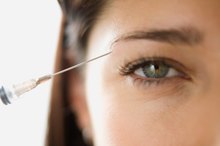
According to the Mayo Clinic, the most effective way to supplement the skin’s collagen is by means of collagen injections. The collagen contained in these injections may come from a number of sources, such as cow skin, pig skin or human skin. This type of treatment is used to repair acne and scars on the face. I most cases the collagen remains in the skin for about six months and is then absorbed by the skin, and its effects slowly disappear.
- According to the Mayo Clinic, the most effective way to supplement the skin’s collagen is by means of collagen injections.
Warning
Side effects of collagen injections may include sore red bumps on the skin, skin ulcerations and permanent scarring 4. These types of effects happen to about 2 percent of people who have collagen injections, according to A Board Certified Plastic Surgeon 4.
Related Articles

The Difference Between Retinol and Retin-A
Learn More

What Are the Benefits of Retinol Cream?
Learn More
How to Reduce Collagen Buildup
Learn More

The Best Skin Care Products for Over 70
Learn More
Can Damaged Collagen Naturally Restore Itself?
Learn More
What Are the Causes of Thinning Facial Skin?
Learn More

Retin-A 0.025 Cream Used for Wrinkles
Learn More

How to Firm Up Skin After Menopause
Learn More
What are the Top Anti-Aging Peptides?
Learn More
Collagen Functions
Learn More
References
- Smart Skincare:Skin collagen: More than meets the eye.
- Smart Skincare: Collagen Creams
- Mayo Clinic: Facial Fillers
- Board Certified Plastic Surgeon : Collagen Injections Side Effects
- Asserin, J., Lati, E., Shioya, T., & Prawitt, J. (2015). The effect of oral collagen peptide supplementation on skin moisture and the dermal collagen network: evidence from anex vivomodel and randomized, placebo-controlled clinical trials. Journal of Cosmetic Dermatology, 14(4), 291–301. doi:10.1111/jocd.12174
- Choi FD, Sung CT, Juhasz ML, Mesinkovsk NA. Oral Collagen Supplementation: A Systematic Review of Dermatological Applications. J Drugs Dermatol. 2019;18(1):9-16.
- Cúneo F, Costa-Paiva L, Pinto-Neto AM, Morais SS, Amaya-Farfan J. Effect of dietary supplementation with collagen hydrolysates on bone metabolism of postmenopausal women with low mineral density. Maturitas. 2010 Mar;65(3):253-7.
- Czajka, A., Kania, E. M., Genovese, L., Corbo, A., Merone, G., Luci, C., & Sibilla, S. (2018). Daily oral supplementation with collagen peptides combined with vitamins and other bioactive compounds improves skin elasticity and has a beneficial effect on joint and general wellbeing. Nutrition Research, 57, 97–108. doi:10.1016/j.nutres.2018.06.001
- García-Coronado, J. M., Martínez-Olvera, L., Elizondo-Omaña, R. E., Acosta-Olivo, C. A., Vilchez-Cavazos, F., Simental-Mendía, L. E., & Simental-Mendía, M. (2018). Effect of collagen supplementation on osteoarthritis symptoms: a meta-analysis of randomized placebo-controlled trials. International Orthopaedics, 43(3), 531–538. doi:10.1007/s00264-018-4211-5
- Hays NP, Kim H, Wells AM, Kajkenova O, Evans WJ. "Effects of whey and fortified collagen hydrolysate protein supplements on nitrogen balance and body composition in older women." J Am Diet Assoc. 2009 Jun;109(6):1082-7.
- Kirmse, M., Oertzen-Hagemann, V., de Marées, M., Bloch, W., & Platen, P. (2019). Prolonged Collagen Peptide Supplementation and Resistance Exercise Training Affects Body Composition in Recreationally Active Men. Nutrients, 11(5), 1154. doi:10.3390/nu11051154
- Proksch E, Schunck M, Zague V, Segger D, Degwert J, Oesser S. Oral intake of specific bioactive collagen peptides reduces skin wrinkles and increases dermal matrix synthesis. Skin Pharmacol Physiol. 2014;27(3):113-9.
- Proksch E, Segger D, Degwert J, Schunck M, Zague V, Oesser S. Oral supplementation of specific collagen peptides has beneficial effects on human skin physiology: a double-blind, placebo-controlled study. Skin Pharmacol Physiol. 2014;27(1):47-55.
- Tomosugi N, Yamamoto S, Takeuchi M, et al. Effect of Collagen Tripeptide on Atherosclerosis in Healthy Humans. J Atheroscler Thromb. 2017;24(5):530–538. doi:10.5551/jat.36293
Writer Bio
Corinna Underwood began writing in 2000. She has been published in many outlets, including Fox News, “Ultimate Athlete,” “Hardcore Muscle,” “Alternative Medicine” and “Alive.” Underwood also wrote "Haunted History of Atlanta and North Georgia" and "Murder and Mystery in Atlanta." She has a Bachelor of Arts in English literature and philosophy and a Master of Arts in women’s studies from Staffordshire University.