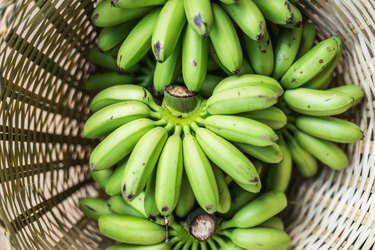
Eating a balanced diet that includes resistant starch foods may have positive effects on your health. A resistant starches list of foods includes complex carbohydrates that support healthy energy levels and may even be beneficial for weight loss.
Tip
Resistant starch foods such as green bananas, cooked and cooled rice, potatoes and lentils may offer health benefits such as stable blood sugar and energy levels.
Video of the Day
Resistant Starch Explained
Resistant starches are carbohydrates that resist digestion in the small intestine. A 2016 study published in Critical Reviews in Biotechnology explains that resistant starch is defined as the total amount of starch and the products of starch degradation that resists digestion in the small intestine. These resistant starches that were able to resist digestion will arrive at the colon, where they will be fermented by the gut microbiota, producing a range of physiological benefits.
Video of the Day
In order to be classified as a prebiotic, a resistant starch must include the following: resistance to the upper gastrointestinal environment, fermentation by the intestinal microbiota and selective stimulation of the growth and/or activity of the beneficial bacteria. As these resistant starches ferment in the large intestine, they act as a prebiotic that feeds the good bacteria in the gut. Because starches are broken down at a slower rate than simple carbs, the energy they provide tends to last longer.
The Benefits of Resistant Starch
According to the Mayo Clinic, the key to a healthy microbiome — and as a result, optimum health — is nourishing a balance among the nearly 1,000 different species of bacteria in your gut. The ways to maintain this balance include helping the microbes already there grow by giving them the foods they like, which are prebiotics, while also adding living microbes directly to the system, known as probiotics. Prebiotics are specialized plant fibers that stimulate the growth of healthy bacteria in the gut.
Many fruits and vegetables, especially those that contain complex carbohydrates, such as fiber and resistant starch, contain prebiotics. Because these carbs aren't digestible by the body, they pass through the digestive system to become food for the bacteria and other microbes. Including healthier starches such as complex carbohydrates in your diet may offer other health benefits in addition to improving gut health, such as positive effects on blood sugar levels, reduced appetite and various benefits for digestion.
Resistant starch can stabilize blood sugar after a meal because it's less readily digestible than other starches. Made up of glucose molecules, which are attached to each other to form long chains, when resistant starch enters the digestive tract, it resists being broken apart into its individual glucose molecules.
Read more: Are Green Bananas Better for You?
Resistant Starch Foods
A 2014 study published in Critical Reviews in Food Science and Nutrition suggests that resistant starch changes the microbiota in the gut, which has been shown to influence energy absorption and has effects that imply it would be a useful weight loss and/or maintenance tool. While too much starch can lead to weight gain, eating resistant starch food may benefit those looking to lose weight as it can cause an increased feeling of fullness.
Some examples of resistant starch foods include peas, beans, lentils, potatoes, plantains and green bananas (as a banana ripens the starch changes to a regular starch), as well as whole grains such as barley, oats and rice that has been cooked and cooled.
Heat changes the amount of resistant starch in foods. Oats, green bananas and plantains lose some of their resistant starch when cooked. Conversely, cooked rice that has been cooled is higher in resistant starch as another type of resistant starch is made in the cooking and cooling process than rice that was cooked and not cooled.
- Mayo Clinic: "Prebiotics, Probiotics and Your Health"
- Cleveland Clinic: "4 Starches That Don't Belong on Your Plate"
- Critical Reviews in Food Science and Nutrition: "Resistant Starch and Energy Balance: Impact on Weight Loss and Maintenance"
- Critical Reviews in Biotechnology: "The Potential of Resistant Starch as a Prebiotic"
Was this article helpful?
150 Characters Max
0/150
Thank you for sharing!
Thank you for your feedback!