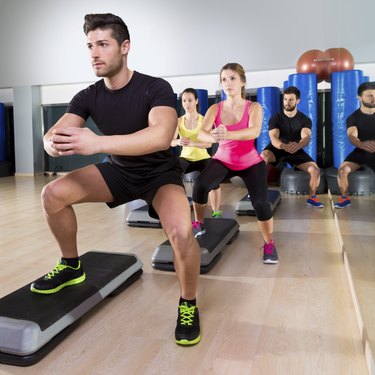
Your heart rate and blood pressure both rise when you exercise. Over time, however, regular exercise can help lower your resting blood pressure and heart rate. This is because exercise training improves the health of your heart and blood vessels, allowing your cardiovascular system to function more efficiently.
Heart Rate During Exercise
Video of the Day
Resting heart rate is normally 60 to 80 beats per minute but is often lower in trained athletes. Heart rate increases as you exercise to deliver more blood and oxygen to your working muscles. Intense exercise causes a steeper increase in your heart rate than moderate exercise. People who don't exercise regularly tend to have higher heart rates with physical exertion than those who are fit. Being in the heat, feeling dehydrated, having a high body mass index and getting up in years also tend to cause your heart to beat faster during exercise. After you finish exercising, your heart rate remains high for a few minutes as you recover. The more fit you are, the quicker your heart rate returns resting level.
Video of the Day
Blood Pressure During Exercise
Along with an increase in heart rate, the force of your heart's contractions also increases while exercising, so more blood is pumped with each beat. This effect increases blood pressure. However, the blood vessels that supply your muscles dilate, or get larger, during exercise. This enables increased blood flow to your muscles without putting excess pressure on your blood vessel walls. So while your blood pressure rises during exercise, it is to a much smaller degree than the increase in heart rate. Like your heart rate, your blood pressure returns to resting level a few minutes after you stop exercising.
Long-Term Effects on Heart Rate
Exercise doesn't just strengthen the muscles you can see; it also strengthens your heart and keeps your blood vessels healthy. After a few months of regular exercise, your resting heart rate may slowly decrease because your stronger heart pumps more efficiently. Your resting heart rate affects your risk for heart disease. One study of more than 29,000 men and women whose resting heart rate increased over 10 years were found more likely to die of heart disease, according to a December 2011 "JAMA" report.
Long-Term Effects on Blood Pressure
Regular exercise has blood-pressure-lowering effects in people with or without high blood pressure, or hypertension. The American Heart Association recommends regular exercise to help treat hypertension and prevent heart disease and stroke. A review article published in the spring 2001 issue of "Preventive Cardiology" reported that regular aerobic exercise decreases blood pressure 4 to 5 percent in people with hypertension and 1 to 2 percent in people with normal blood pressure. A January 2005 "Journal of Applied Physiology" review article reported significant blood pressure reductions after 12 weeks of regular exercise. The authors noted benefits with both aerobic and strength-training exercise.
Improving Your Heart Health
To keep your heart healthy, the American Heart Association recommends at least 150 minutes of moderate exercise or 75 minutes of vigorous exercise weekly. If you aren't currently exercising regularly, talk with your doctor about how to get started safely and setting personal goals. Because hypertension typically causes no signs or symptoms, it's also important to have your blood pressure checked regularly.
Seek medical care right away if you experience an unusually fast or slow heart rate, or a pounding or irregular heartbeat -- especially if accompanied by chest pain, dizziness, fainting or shortness of breath.
- Journal of Applied Physiology: Effects of Exercise and Diet on Chronic Disease
- Centers for Disease Control and Prevention: High Blood Pressure Fact Sheet
- JAMA: Temporal Changes in Resting Heart Rate and Deaths From Ischemic Heart Disease
- ARYA Atherosclerosis: Arterial Blood Pressure in Female Students Before, During and After Exercise
- American Heart Association: All About Heart Rate (Pulse)
- American Heart Association: The American Heart Association's Diet and Lifestyle Recommendations
- Preventive Cardiology: Aerobic Exercise and Resting Blood Pressure: A Meta-Analytic Review of Randomized, Controlled Trials
- American Heart Association: American Heart Association Recommendations for Physical Activity in Adults
Is this an emergency? If you are experiencing serious medical symptoms, please see the National Library of Medicine’s list of signs you need emergency medical attention or call 911.