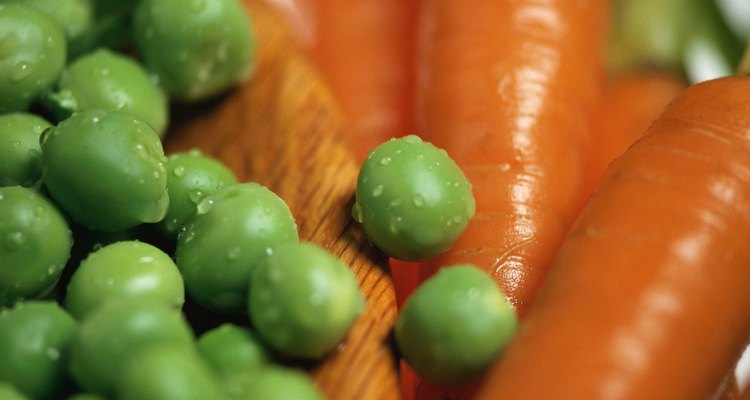
Fiber is one of the darlings in the nutrition world, and if it could, it would be congratulating itself on being so essential. Eating more fiber is a simple way to reduce your risk of certain health problems and improve the nutritional value of your diet. You don't have to look too hard to find tasty and nutritious sources of fiber, and carrots, beans, corn and peas are a few of your healthiest options.
Fiber Differences
Beans are the clear fiber winner when stacked against carrots, corn and peas, though the exact amount you get depends on what type of beans you're eating. A cup of black beans contains 15 grams of fiber, which is 60 percent of the 25 grams you need each day. A cup of lima beans contains 13.2 grams of fiber, and a cup of baked beans has 10.4 grams. In comparison, a cup of raw carrots or a cup of corn each contain 3.6 grams of fiber. Peas supply more with 8.8 grams of fiber per cup.
Fiber Facts
Fiber is defined as a carbohydrate that your body can't digest, according to the Harvard School of Public Health. Carrots, beans, corn and peas supply insoluble fiber, and can help your body digest food properly and efficiently. An efficient digestive system can lower your chances of developing an uncomfortable bout of constipation. These vegetables also contain soluble fiber, which turns gel-like as it passes through your digestive system. This gel substance can help lower your cholesterol levels and help manage your blood sugar.
Additional Nutrients
Adding carrots, corn, beans and peas to your diet is a wise idea, and they will help you increase your fiber intake, but that's not the end of the benefits they have to offer. Carrots, corn and peas are good sources of vitamin A, a nutrient that's necessary for healthy eyes, though carrots contain far more of the vitamin than corn or peas. The vegetables are also a nutritious source of potassium, a mineral that's crucial for a normal heartbeat and healthy blood pressure. Beans and peas also contain iron. Iron protects your immune system and helps you make red blood cells. Beans are a good source of protein, too.
Tips and Considerations
If you're looking for healthy foods that will help you increase your fiber intake, you can't go wrong with carrots, beans, corn and peas. As you add more fiber to your diet, take it slow. Increasing your fiber intake too much at one time can cause abdominal cramping, intestinal gas and bloating, according to MayoClinic.com. Let your body adjust by starting with one serving, then wait two or three days to add another serving. Have a serving of carrots with your lunch or stir a can of beans into a pot of soup or chili. Combine cooked peas with sauteed onions and fresh mint for a fiber-rich side dish. Serve corn on the cob with your next burger as another way to include the foods in your diet.
Related Articles
Food to Make Your Bowels Move
The Nutritional Value of Edamame Beans
Nutrition Information for Adzuki Beans
What Is the Nutrition for Cranberry ...
Top Vegetables With Selenium

Menu for a Calorie-Restricted Diet

Are Bean Sprouts Good for You?

Nutritional Value of Sugar Snap Peas & ...
The Nutrition of 15-Bean Soup

Avocado Serving Size & Nutrition
The Nutrition of Stone Ground Corn
Benefiber as an Appetite Suppressant

Which Vegetables Produce the Most ...
List of High Protein Vegetables

High Fiber & Protein Diet Menus
Food to Make Your Bowels Move
Which Is Healthier, Lima Beans or ...

Best Time to Take Vitamin B Complex
What Vegetables Are Good for Type 2 ...
Food Sources of Betaine
References
Writer Bio
Sara Ipatenco has taught writing, health and nutrition. She started writing in 2007 and has been published in Teaching Tolerance magazine. Ipatenco holds a bachelor's degree and a master's degree in education, both from the University of Denver.
Photo Credits
Stockbyte/Stockbyte/Getty Images