Vitamins That are Good for Stress and Depression
Although the most important vitamins that protect you against stress and depression are the B vitamins, they cannot be stored in your body. You must supply these essential micronutrients daily with diet and supplements, taking care they are not destroyed by refined sugars, nicotine, excessive alcohol intake and caffeine. Other important vitamins good for stress and depression are the antioxidants, vitamins C and E.
Vitamin B12
Vitamin B12 is vital in neurological and cognitive functioning, in coping with depression and in preventing confusion and dementia. It is not present in plant foods but is found abundantly in animal products such as lean red meat, poultry, fish, eggs, milk and in fortified breakfast cereals. Groups at risk for deficiency in vitamin B12 include the elderly, who have less hydrochloric acid in their stomachs to absorb the vitamin, and those with pernicious anemia or gastrointestinal disorders. Unless they receive sufficient vitamin B12 from fortified cereals, strict vegetarians and vegans are also at risk since the vitamin is not found in plant foods. Vitamin B12 is available as a prescription medication and as a supplement. However, only 10mcg of a 500mcg oral supplement of vitamin B12 is absorbed in healthy people, according to the Office of Dietary Supplements of the National Institutes of Health.
- Vitamin B12 is vital in neurological and cognitive functioning, in coping with depression and in preventing confusion and dementia.
- Unless they receive sufficient vitamin B12 from fortified cereals, strict vegetarians and vegans are also at risk since the vitamin is not found in plant foods.
Vitamin B6
Vitamin C Dosage to Help Lower Cortisol
Learn More
Vitamin B6 is essential for the metabolism of amino acids necessary in the synthesis of the neurotransmitters dopamine and serotonin, important in nervous system functioning and in the maintenance of calm and pleasurable moods. Deficiency of this vitamin can cause depression and confusion. Vitamin B6 is found in red meats, poultry, fish, whole grains and fortified cereals. It is also in bananas, the skin and flesh of potatoes, spinach, turnip greens, sunflower seeds, avocados, garbanzo beans, canned tomato juice, peanut butter, walnuts, soybeans and lima beans. An upper limit of 100mg of vitamin B6 per day has been established by the Food and Nutrition Board of the Institute of Medicine because excess vitamin B6 can cause nerve damage to arms and legs.
- Vitamin B6 is essential for the metabolism of amino acids necessary in the synthesis of the neurotransmitters dopamine and serotonin, important in nervous system functioning and in the maintenance of calm and pleasurable moods.
- Vitamin B6 is found in red meats, poultry, fish, whole grains and fortified cereals.
Vitamin B5
Vitamin B5, found in sweet potatoes, broccoli, yogurt, chicken, avocados and whole grains, is good for stress because it regulates adrenal gland functioning together with folic acid and vitamin C to produce the stress hormones cortisol and adrenaline.
Vitamin B3
Foods and Vitamins to Help Heal Nerve Endings
Learn More
Vitamin B3, found in fish and meat products, is necessary in the production of serotonin, responsible for calm moods. Deficiencies of this vitamin can produce anxiety and agitation. It is also found in green leafy vegetables, avocados, dates, figs, whole grains and asparagus.
Vitamin B1
Vitamin B1, found in brown rice, sunflower seeds and whole grains, helps convert blood sugar to energy. Deficiencies of this vitamin can cause anxiety and even thoughts of suicide.
Vitamins C and E
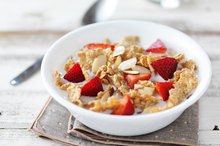
Vitamins C and E are strong antioxidants that neutralize free radicals in the body that damage cells. Because stress and anxiety produce more free radicals, these vitamins are useful in managing anxiety and stress. Strawberries, parsley, broccoli, oranges, lychees and papaya are sources of vitamin C. Vitamin E foods include hazelnuts, almonds, vegetable oils, popcorn, peanuts, mayonnaise, wheat germ and egg yolks.
Related Articles
Vitamin C Dosage to Help Lower Cortisol
Learn More
Foods and Vitamins to Help Heal Nerve Endings
Learn More
Vitamins for an Overactive Bladder
Learn More

Why Do People Need to Eat Healthy Foods?
Learn More

Can Certain Vitamins Help Weak Leg Muscles?
Learn More
Drug Interaction Between Lithium and Caffeine
Learn More

Does Vitamin B-12 Cause OCD to Be Worse?
Learn More

Can Gluten Intolerance Cause Insomnia?
Learn More

What Vitamins Does an Orange Contain?
Learn More
The Side Effects of Thiamine Mononitrate
Learn More
References
- National Institutes of Health: Office of Dietary Supplements: Vitamin B12
- U.S. Department of Health & Human Services: Dietary Guidelines for Americans
- National Institutes of Health: Office of Dietary Supplements: Vitamin B6
- Guide to Stress Management: Vitamins and Minerals for Stress
- Social Anxiety: B Vitamins
- U.S. National Library of Medicine. MedlinePlus. Vitamins. Reviewed February 2, 2019.
- U.S. National Library of Medicine. MedlinePlus. Vitamin D Deficiency.
- U.S. National Library of Medicine. MedlinePlus. Vitamin B12 deficiency anemia. Reviewed January 19, 2018.
- U.S. National Library of Medicine. MedlinePlus. Pellagra. Reviewed October 12, 2018.
- National Institute of Neurological Disorders and Stroke. Restless Legs Syndrome Fact Sheet.
- Vici G, Belli L, Biondi M, Polzonetti V. Gluten free diet and nutrient deficiencies: A review. Clin Nutr. 2016;35(6):1236-1241. doi:10.1016/j.clnu.2016.05.002
- Wacker M, Holick MF. Sunlight and Vitamin D: A global perspective for health. Dermatoendocrinol. 2013;5(1):51-108. doi:10.4161/derm.24494
- Crohn’s & Colitis Foundation. Vitamin and Mineral Supplementation.
- Foundation for Peripheral Neuropathy. Vitamin B12 Deficiency Neuropathy.
- U.S. National Library of Medicine. MedlinePlus. Vitamin B Test. Updated May 28, 2019.
- International Foundation for Gastrointestinal Disorder. Malabsorption.
- Diab L, Krebs NF.Vitamin Excess and Deficiency.Pediatr Rev. 2018 Apr;39(4):161-179. doi: 10.1542/pir.2016-0068.
- Thomas-Valdés S, Tostes MDGV, Anunciação PC, da Silva BP, Sant'Ana HMP.Association between vitamin deficiency and metabolic disorders related to obesity.Crit Rev Food Sci Nutr. 2017 Oct 13;57(15):3332-3343. doi: 10.1080/10408398.2015.1117413.
Writer Bio
Francine Juhasz has a doctorate in clinical psychology and is a Qi Gong and yoga teacher, health and nutrition freelance journalist and featured self-help and life-skills speaker. For more than 30 years she has conducted programs, workshops, seminars and private counseling sessions in emotional, mental, marital and sexual health and fitness in universities, elder-care communities and community centers in both the U.S. and Europe.