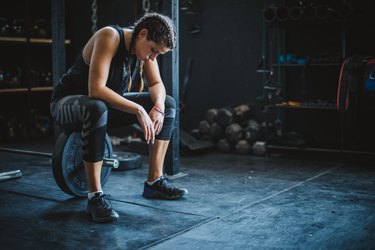
A really tough workout can leave you breathing hard, but you shouldn't be coughing or struggling to breathe after exercise. Coughing after exercising can be caused by a number of factors, from exercising too strenuously to a health condition.
If you find that you can't exercise without a coughing fit, or if you have any trouble breathing, check in with your doctor for an exam and diagnosis and tips to make exercising easier.
Video of the Day
Video of the Day
Cold-Weather Workouts
If you're shoveling snow, raking leaves on a chilly day or heading out for a winter run, you're sucking some pretty dry, icy air into your lungs. That cold, dry air is thought to be one reason why coughing after running and exercise-induced asthma occur, according to Kids Health. The cold air makes airways narrow, which means that less air can get through, making breathing difficult. Check the forecasts in your area suggests the American Lung Association. That can be especially important to people who have chronic lung diseases like asthma, COPD or bronchitis. Cover your nose and mouth with a scarf or face mask.
Read more: Dry Cough After Running
Exercise-Induced Bronchoconstriction
Exercise-induced asthma, the older term for exercise-induced bronchoconstriction, or EIB according to the Asthma and Allergy Foundation of America, is a major reason for coughing after cardio or any exercise. Symptoms of EIB include difficulty breathing after exercise, wheezing, chest pain and tightness in the chest.
The airways become narrower as you exercise, and cause asthma symptoms such as coughing and wheezing. Exercise-induced bronchoconstriction can be caused by exercising in dry, cold air, or when pollutants in the air or outdoor allergens are high. Having a viral respiratory infection can also cause EIB. Coughing and other symptoms can last for a few minutes or as long as several hours after exercise.
Read more: How to Build Cardio Stamina When You Have Asthma
Could It Be a Virus?
Being sick with a respiratory infection caused by a virus can lead to trouble breathing and coughing after a workout, as can having problems with the vocal chords or allergies. If you've been prescribed an inhaler for some reason, the British Lung Foundation advises using it half an hour before you head out to exercise. And always keep it with you. You may also cough or have trouble breathing after exercise if you're in poor physical shape and have exercised beyond your physical capabilities.
Read more: Should You Exercise When You Have the Flu?
Managing and Easing Coughing
Treating any underlying medical problem, such as asthma, a respiratory infection or allergies, can help manage coughing and other symptoms after exercise. You can also try sticking to exercising in warm, humid weather, or try swimming for your workout. Avoid exercises that require long periods of physical activity, such as basketball or running, and try playing basketball, biking or hiking instead.
Get a gym membership and use their weigh-lifting machines. If a gym is too cost-prohibitive, buy some dumbbells or a barbell or some resistance bands and work out at home for 20 minutes, two or three times a week. Experiment with which form of exercise cause the most coughing and then switch to something else.