
Drinking alcohol and losing weight might sound like one of those "you can't have your cake and eat it too" scenarios (sorry for the cake visual!), but it doesn't have to be. If imbibing is part of your social schedule or just a go-to way to unwind, you don't have to give it up entirely.
But (of course there's a but) if your average night out or Zoom happy hour currently features more than a few margaritas or craft beers, you may need to rethink your drinking.
Video of the Day
Video of the Day
Alcohol is a source of calories, after all. And one way those calories differ from, say, macronutrients like carbs, fat and protein, is that they can impair your judgment — which can affect the food choices you make while drinking. Regularly pairing your drinks with fried bar food or late-night pizza and nursing a hangover with an epic breakfast the next morning will most certainly sabotage your weight-loss goals.
It is possible to drink alcohol in a healthy way and still lose weight, though. Here are six tips to make it happen.
1. Drink in Moderation
We know, this one seems obvious, but it still needs to be said. The published research on the health benefits of drinking are on moderate drinking, not binge drinking.
So, what is moderate? This means one to two drinks per day, according to the Dietary Guidelines for Americans, which are compiled by the U.S. Department of Health and Human Services.
Tip
The one- or two-drink rule isn't intended as an average, but rather the amount you consume on any single day.
The other key factor is understanding what "one drink" really means:
- Beer: 12 fluid ounces
- Wine: 5 fluid ounces
- Spirits: 1.5 fluid ounces
Sticking to these servings and moderate drinking guidelines will help you with your weight-loss goals.
In fact, an August 2019 study in the American Journal of Preventative Medicine found that drinkers have lower odds of developing obesity compared to non-drinkers, but heavier drinking is associated with higher odds of obesity.
Related Reading
2. Know Your Lower-Calorie Drink Options
If you're trying to lose weight, knowing which drinks are lower in calories and sugar will definitely serve you.
- Rum, whiskey, vodka and tequila all have about 100 calories per serving. If you're not enjoying them neat or straight up, consider the mixers you're adding. Soda water, water or lightly flavored sparkling water are all great low-calorie options.
- Wine, both red and white, contains about 125 calories per serving.
- Champagne is also lower in calories, with about 95 calories per 4-ounce glass.
- Light beer is another good option, since it typically ranges between 60 and 100 calories per serving.
3. Keep Your Cocktails Simple
Ditch drinks with multiple liquors or high-calorie mixers. A Long Island iced tea, for example, has a whopping 240 calories and 20 grams of carbs, and a margarita clocks in at 275 calories and 36 grams of carbs.
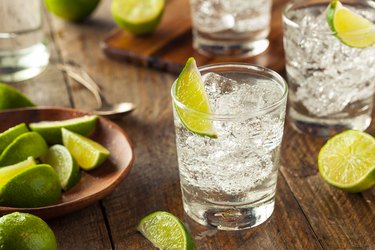
Instead, opt for some of the lower-calorie options mentioned earlier. Try a vodka and soda, and add a splash of grapefruit juice or lime juice if you're looking for more flavor. You can also try tequila on the rocks with lime, which has just 96 calories.
4. Don’t Drink on an Empty Stomach
If you're sacrificing food calories for booze calories, you may think it's perfectly fine to skip a meal in lieu of a "liquid dinner." Not the case.
Science shows having food in your stomach slows alcohol absorption. In fact, your blood alcohol content may not reach a quarter of what it would on an empty stomach.
Plus, it can help you avoid the "drinking munchies," which is when you feel hungry after a couple of drinks. There's actually a very good scientific reason why they occur: If you have a few drinks on an empty stomach, your liver can be blocked from releasing stored glucose into the bloodstream, which can lead to low blood sugar and cause you to feel hungry, according to the Mayo Clinic.
Instead, eat a meal balanced with fiber and protein before drinking. This will help absorb the alcohol and stabilize your blood sugar levels.
Related Reading
5. Sip Stronger to Linger Longer
When you're imbibing in a drink that "goes down easy," that likely means it'll go down quickly, too. And when that happens, especially if you're out with friends, you might be looking for a second or third drink.
Instead, go for a drink that's meant to be sipped slowly; a stronger drink like a dry martini or even one of your favorite liquors served neat or straight up. This will slow down your drinking, which will allow you to enjoy your drink and company more without overdoing it.
6. Alternate Cocktails With H2O
If you're drinking more than your one or two drinks per day, alternating your cocktails with water is a good idea, even if you aren't trying to lose weight. This trick slows down your drinking and keeps you hydrated (bye-bye, hangover!). You can even sip soda water — the bubbles may help you feel full and ultimately help you drink less.
- Mayo Clinic: "Alcohol Use: Weighing Risks and Benefits"
- Mayo Clinic: "Hypoglycemia"
- American Journal of Preventative Medicine: "Alcohol Use Among U.S. Adults by Weight Status and Weight Loss Attempt: NHANES, 2011–2016'
- MyFoodsData: "Rum"
- MyFoodsData: "White Wine"
- Nutritionix: "Champagne"
- MyFoodData: "Long Island Iced Tea"
- MyFoodData: "Frozen Margarita"
- British Medical Journal: "Alcohol in the Body"
- U.S. Department of Health and Human Services: "2015-2020 Dietary Guidelines for Americans"