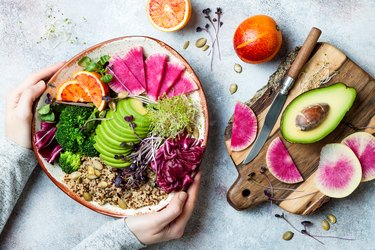
We get it: You're tired of the same old lettuce, tomato, cucumber and onion medley.
Sitting down to the same bowl of greens means it's time to find some new salad ideas in the form of creative, nutrient-dense, nutritious recipes.
Video of the Day
Video of the Day
You're bound to find at least a few delicious-sounding picks in this collection of salad recipes. We've got greens, grains and so much to choose from, whether you're bringing a salad to work or munching on it at home. Bon appetit!
1. Easy Strawberry Salad With Feta and Walnuts
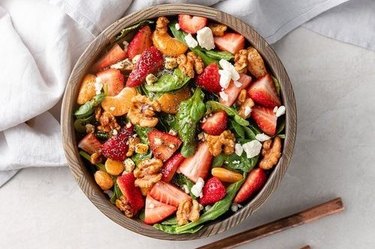
A rich summer salad that's packed with nutrients, antioxidants and big flavor, this bowl combines spinach, mandarin oranges and strawberries with a delightfully bright dressing that's sure to please.
The vitamin C in the strawberries could help increase the absorption of iron that's found in spinach, says Morgan Brod, RDN.
Also, vitamin C is an antioxidant so "it can act as a protector from molecules called free radicals," says Cynthia Lanzillotto, RD, adding that "a diet with a variety of antioxidants has been associated with lower levels of cancer and increased heart health."
Get the Easy Strawberry With Feta and Walnuts recipe from Nourish and Fete.
2. Healthy Tuna Pasta Salad
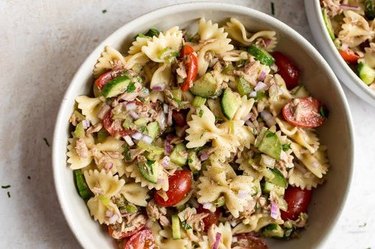
This tuna salad is nothing like the mayo-laden classic. Instead, it's brimming with antioxidant-rich tomatoes, heart-healthy olive oil and protein from the tuna.
The American Heart Association recommends eating at least two 3.5-ounce servings of fish per week as it's a solid source of omega-3 fatty acids. "Diets with adequate omega-3 intake have been associated with improved heart health," Lanizillotto says.
On top of that, making this simple salad dressing with olive oil and balsamic vinegar is a great way to avoid hidden added sugars often found in pre-made dressings, Brod says.
Get the Healthy Tuna Pasta Salad recipe from Salt and Lavender.
3. All You Ever Wanted in a Couscous Salad
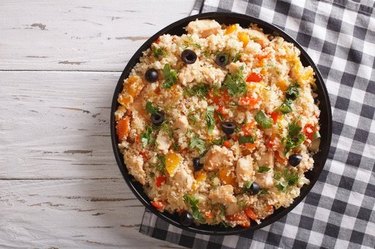
This recipe, as its name not-so-subtly implies, is made up of everything you want with nothing you don't.
It's complete with protein, fiber and healthy fats and will fuel you for whatever comes your way. The main ingredients in this tasty dish, including chicken breast, feta, dried apricots and, of course, couscous, come together so wonderfully, the recipe is sure to become a staple.
Get the All You Ever Wanted in a Couscous Salad recipe and nutrition info here.
4. Vegan Buffalo Cauliflower Salad With Tahini Ranch
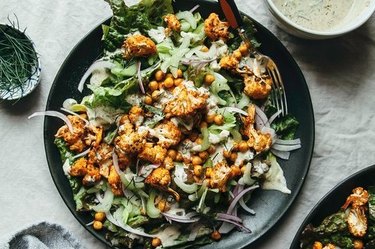
The same old buffalo chicken can get boring, so this tangy salad switches things up with cauliflower — a veggie Brod considers a blank canvas for bold flavors. This salad recipe also incorporates red leaf lettuce, chickpeas, celery and red onion for an adventurous array of flavors.
But don't fret about skipping the meat in this recipe — this qualifies as a high-protein salad thanks to the tasty chickpeas.
"Chickpeas are a great plant-based protein that promotes satiety and can help maintain muscle mass," Lanzillotto says.
Get the Buffalo Cauliflower Salad With Tahini Ranch from The First Mess.
5. Make-Ahead Soba Noodle Salad
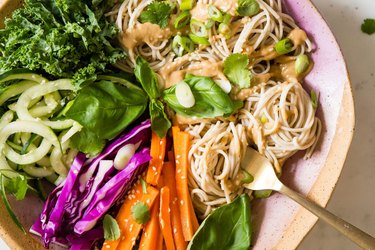
A little meal prep can go a long way. This inventive swaps lettuce for soba noodles, and you can make it gluten-free by choosing 100-percent buckwheat noodles. While lettuce isn't the base here, it's still filled with hearty greens, like kale, which offers an added crisp.
"Kale is an excellent source of vitamin K," Lanzillotto says. "This fat-soluble vitamin plays a role in blood clotting and calcium absorption to ensure bone health."
The unique dressing provides myriad health benefits, too. "The miso paste is fermented and contains probiotics, which promote gut health. Gut health has many associated benefits being researched such as decreased risk of chronic disease," Brod says.
Get the Make-Ahead Soba Noodle Salad recipe from Liz Moody.
6. Greek Salad
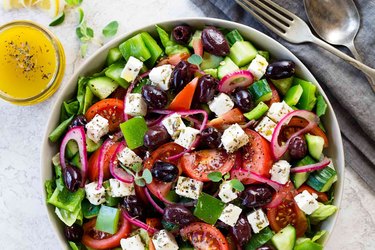
A familiar but oft-neglected recipe, the traditional Greek salad is a wonderful lunch option that's simple to throw together. It typically includes four classic ingredients: romaine lettuce, red onion, kalamata olives and feta cheese.
Recipe developer Jessica Gavin recommends soaking your onions in vinegar for 15 minutes before tossing them into your salad to reduce the pungent flavor and add some tang.
Alongside the veggies and feta (and grilled chicken, if you're looking to add some protein), often the most delicious part of a Greek salad is the perfectly seasoned dressing. Lanzillotto notes that one of the most important foods in the Mediterranean diet is olive oil because of its monounsaturated fat content. "Incorporating olive oil into your diet may provide heart health benefits," she says.
Get the Greek Salad recipe from Jessica Gavin.
7. Healthy Summer Broccoli Salad
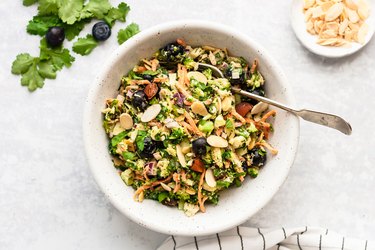
Who knew broccoli and blueberries made the perfect combination?
If you're looking for a creative way to eat broccoli, this sweet and savory salad is your answer. "Broccoli is part of the cruciferous vegetable family. It has a ton of fiber and an antioxidant called sulforaphane, which may boast anti-inflammatory properties," Lanizillotto says.
This salad also combines fresh herbs like cilantro and parsley to really elevate the flavor. "Herbs and spices can provide added nutritional value," Brod says.
Get the Healthy Summer Broccoli Salad recipe from Ambitious Kitchen.
8. Lemony Lentil Salad With Vegan Feta
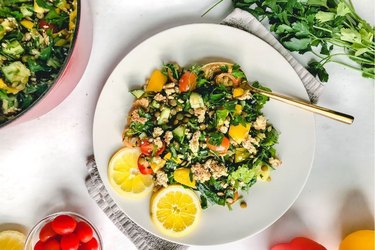
Lentils can do way more than make soup. Find proof in this fresh salad, which is packed with lentils, lemons and a slew of veggies. It's loaded with fiber and boasts a crisp taste.
Lanzillotto also points out that lentils contain soluble fiber, which "plays a role in why you may feel full after eating a high fiber-meal and can help to lower cholesterol," adding that, "insoluble fiber can bulk up the stool and keeps things moving in the digestive tract."
Get the Lemony Lentil Salad With Vegan Feta recipe from Garlic Head.
9. Mexican-Inspired Shrimp Salad
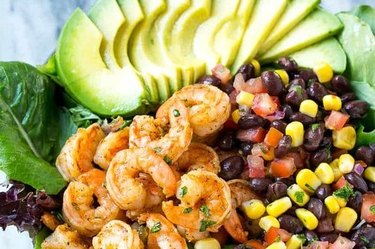
This delicious ensemble of shrimp, avocado and corn salsa can satisfy any taco craving, all while packing in some serious protein.
"Shrimp is low in saturated fat and calories and is a great source of protein. Shrimp also contains the mineral selenium, which plays a role in the body's immunity," Lanzillotto says.
And the nutrient-filled avocados bring this salad full circle. "Full of omega-3 fatty acids and fiber, avocados are a star in terms of heart health," Brod says.
Get the Mexican-Inspired Shrimp Salad recipe from Healthy Fitness Meals.
10. Summer Salad With Homemade Dressing
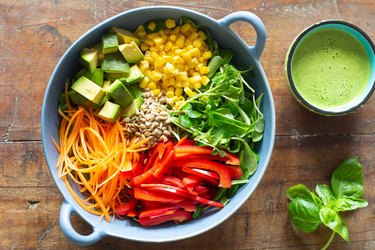
This seasonal salad is filled with colorful vegetables like carrots, peppers, corn and lettuce — making it the perfect summer melange. "It's a great strategy to shop produce based on what is in season, as it tends to be the least expensive as well as deliciously ripe," Brod says.
The orange-basil dressing ties all the ingredients together while the avocado offers a dose of healthful monounsaturated fats. "Pairing foods high in fat-soluble vitamins A, D, K and E [like the veggies in this salad recipe] with avocados can help with the absorption of these nutrients," Lanzillotto says.
Get the Summer Salad With Homemade Dressing recipe from Green Healthy Cooking.
11. Red Quinoa With Avocado Salad
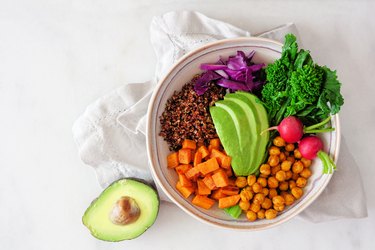
Quinoa deserves a place as a kitchen pantry staple because it's a complete protein that contains all nine essential amino acids.
Quinoa also earns points for being a gluten-free source of calcium, iron, vitamin E and several B vitamins. Its texture pairs perfectly with creamy avocado and sunflower seeds for some extra healthy fat.
Get the Red Quinoa and Avocado Salad recipe and nutrition info here.
12. Corn, Crab and Tomato Salad
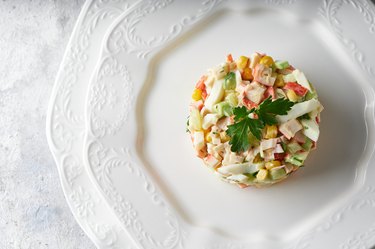
Chock full of lean protein, crunchy sweet corn and juicy tomatoes, this summer salad is very refreshing.
The crab's full of protein and the fresh veggies are perfectly in season around summertime. The dill and lemon seasoning packs a flavorful punch you'll crave time and time again.
Get the Crab, Corn and Tomato Salad recipe and nutrition info here.
13. French Lentil and Golden Beet Salad
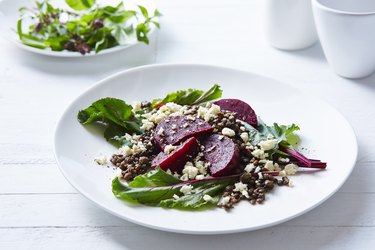
This salad makes a satisfying meal. It's a tasty, complex blend of bitter and sweet, acid and oil, with contrasting texture and color.
While every ingredient in this recipe is healthy on its own, the lentils really take the cake. Loaded with both soluble and insoluble fiber, lentils are also rich in critical nutrients like folic acid, B vitamins and a host of minerals.
Get the French Lentil and Golden Beet Salad recipe and nutrition info here.
14. Nutty Kale Salad
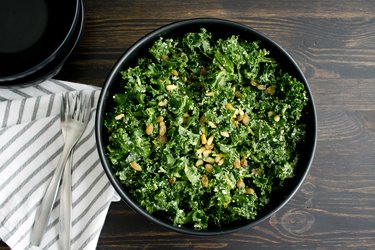
This vitamin C-packed salad is totally original in its flavor: It's nutty and crunchy and has hints of Asian-inspired flavor, thanks to the combination of Shoyu and rice vinegar.
The peanut butter adds a creaminess while providing heart-healthy fats, and the whole thing serves as a great foundation for adding whatever kind of salad toppings you're in the mood for. Consider a handful of raisins or pumpkin seeds, roasted sweet potatoes or a serving of cubed tofu.
Get the Nutty Kale Salad recipe and nutrition info here.
15. Healthy Chicken Fajita Salad
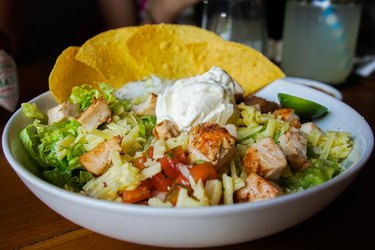
Each serving of this easy-to-make fajita salad contains a full serving of protein, a tasty variety of vegetables and a wonderful mix of healthy fats.
If you're eating after a particularly strenuous workout, consider adding some rice or a whole-wheat tortilla for a more complete recovery meal.
Get the Healthy Chicken Fajita Salad recipe and nutrition info here.
16. Pesto Kale and Cabbage Salad
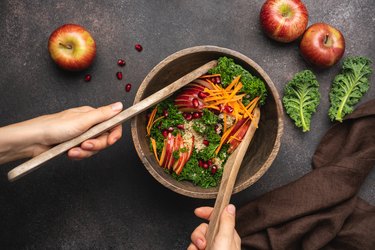
While kale and cabbage are among the most nutrient-dense vegetables, they can be a pain to prepare.
This quick, easy and delicious recipe takes the hard work out of the equation. This is a great make-ahead salad, since the leaves are sturdy and won't wilt as quickly in the fridge compared to other greens.
Get the Pesto Kale and Cabbage Salad recipe and nutrition info here.
17. Roasted Vegetable and Quinoa Salad
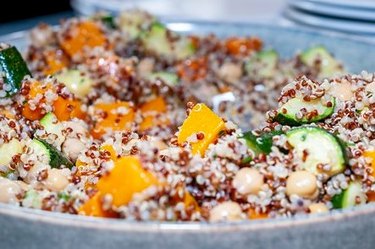
This salad is delicious and also quite convenient — if you play your cards right. Roast a few more servings of vegetables when you're cooking dinner and you'll have the perfect leftovers to make this salad.
While you can use any assortment of veggies, this particular recipe provides an array of vitamins, minerals and antioxidants.
Get the Roasted Vegetable and Quinoa Salad recipe and nutrition info here.
18. Wheat Berry Veggie Salad With Citrus Vinaigrette
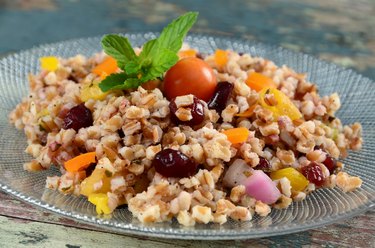
This is a great dish to bring to barbecues and potlucks — everyone will enjoy it and you'll feel good knowing there's something healthy to eat during the group gathering. It's full of fiber and will be a welcome addition to summer parties, which are typically full of processed snacks and refined carbs.
The light recipe pairs well with any barbecued meat or seafood, and it can also be made into a hearty meal with some additional protein — think diced chicken, shrimp or tofu.
Get the Wheat Berry Veggie Salad With Citrus Vinaigrette recipe and nutrition info here.
19. Orange-Scented Beet Salad
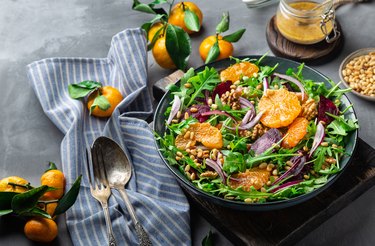
This gorgeous salad relies on the natural sweetness of beets for a refreshing flavor.
Paired with the antioxidant properties of orange zest, this dish is as healthy as it is delicious. You'll also be getting a good dose of iron from the beets, plus the many nutrients and minerals from the greens.
Get the Orange-Scented Beet Salad recipe and nutrition info here.
20. Strawberry Greens Salad
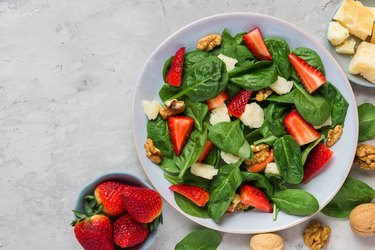
You'll be craving strawberry greens forever after one bite of this fresh, summery salad.
The powerful combination of watercress and strawberries in this salad helps your body absorb the iron found in the spinach. Add the quinoa for something hearty, or skip it if you want something a little lighter.
Get the Strawberry Greens Salad recipe and nutrition info here.
21. Mediterranean Feta Quinoa Salad
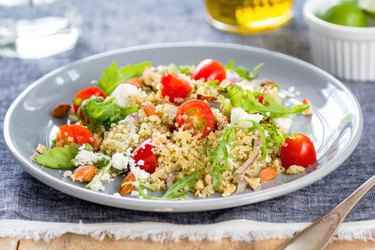
A little twist on the classic Greek salad, this mix is full of energizing B vitamins, muscle-relaxing magnesium and blood-sugars-balancing fiber.
This is the perfect lunch salad and, for a more robust meal, add some additional lean protein.
Get the Mediterranean Feta Quinoa Salad recipe and nutrition info here.
22. Asian Pear and Blue Cheese Salad
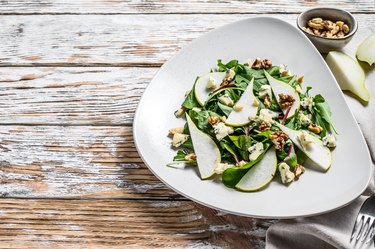
This salad is more than just a crowd-pleaser, though it certainly passes the people-pleasing test.
It's loaded with immune-supporting antioxidants from the pecans, contains calcium and vitamin A from the blue cheese and is a good source of fiber.
Better yet, the red leaf lettuce is packed with vitamins C and K, folate, iron and potassium. It's a delicious blend of sweet and savory flavors.
Get the Asian Pear and Blue Cheese Salad recipe and nutrition info here.
23. Strawberry Chicken Salad With Hoisin-Sesame Dressing
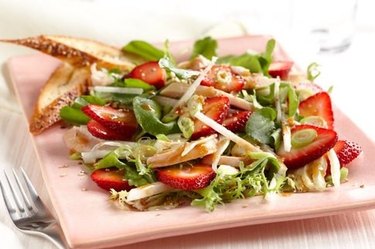
If you thought you could only experience bold, fancy dinner salads when dining out, well, this recipe proves otherwise.
This pick is a super source of vitamin C and protein, and while it looks restaurant-quality, it's simple to prepare.
This recipe makes about 1 1/3 cups of the flavorful hoisin-sesame dressing (more than the 1/2 cup you'll need for the chicken salad), so consider refrigerating the rest and using it during the week to flavor other salads or drizzle over grilled meats or fish.
Get the Strawberry Chicken Salad With Hoisin-Sesame Dressing recipe and nutrition info here.
24. Cranberry Quinoa Salad
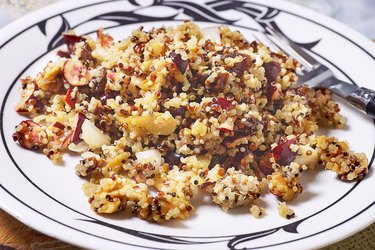
Not only is this salad colorful and full of flavor, but it's also a protein powerhouse and a good source of iron and magnesium.
Antioxidants and vitamin C from the cranberries help protect the body from damaging free radicals and may have anti-inflammatory and anti-cancer properties, too.
Get the Cranberry Quinoa Salad recipe and nutrition info here.
25. Blink of an Eye Green Salad
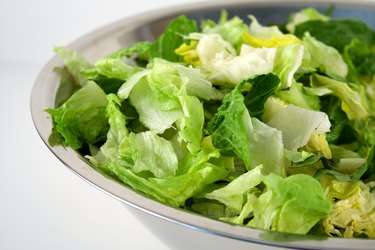
The name of this recipe really says it all; it comes together in, well, you get the picture.
You can make this salad in just three minutes; and even though it's quick, it's full of nutrition, packing in 75 percent of your daily recommended dose of vitamin A. It's the perfect side salad when you don't feel like making a side salad.
Get the Blink of an Eye Green Salad recipe and nutrition info here.
26. Marinated Thai-Inspired Steak Salad
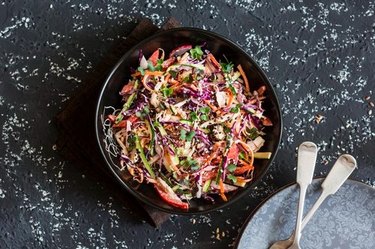
Cabbage is the winning ingredient in this recipe, though the zingy marinade is sure to please you, too.
Red cabbage gets its purple color from anthocyanins (the same type of pigment that makes blueberries blue), which are powerful antioxidants with anti-inflammatory properties, which protect connective tissue and blood vessel walls from damage, per an August 2017 study in Food & Nutrition Research.
Cabbage is also a good source of fiber, which we know helps promote gut health and also helps to keep you full, making it one of the healthiest, low-calorie vegetables you can eat.
You'll want to marinate the steak the night before you plan to put together this delicious salad. If you do that, it'll all come together in a flash.
Get the Marinated Thai-Inspired Steak Salad recipe and nutrition info here.
27. Strawberry Almond Spinach Salad
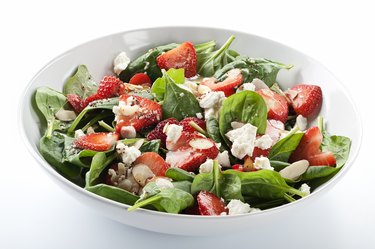
This light, colorful salad calls for just five ingredients, making it an easy pick on rushed days. You can always swap out the blue cheese crumbles for feta or another soft cheese if blue isn't your cup of tea.
Get the Strawberry Almond Spinach Salad recipe and nutrition info here.
28. Fruity Shrimp Salad
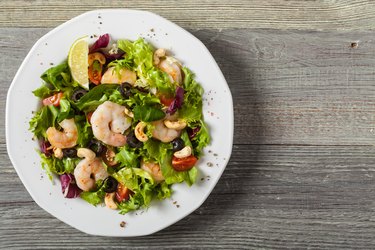
Fruit like mandarin oranges, red grapes and strawberries offer a sweet and tangy complement to protein-packed shrimp in this recipe — everything tastes destined to be together.
It is rounded out by the creaminess of avocado, which provides a healthy dose of good fats and just seems to pair with virtually everything.
Get the Fruity Shrimp Salad recipe and nutrition info here.
29. Daikon, Salmon and Quinoa Grain Salad
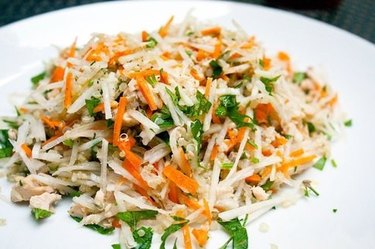
This light and refreshing meal offers some serious crunch that even a bag of Lay's can't rival. It shows off the wonders daikon, an antioxidant-rich cruciferous vegetable that grows primarily in East Asia.
The flavors of crisp daikon pair perfectly with parsley, salmon and carrots in this salad.
Get the Daikon, Salmon and Quinoa Grain Salad recipe and nutrition info here.
30. Tofu and Mixed Rice Grain Salad
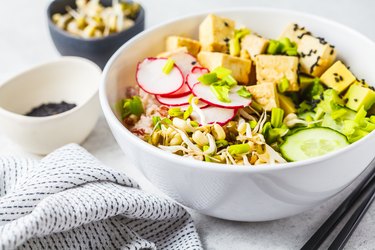
This vegetarian salad includes protein-rich tofu served alongside sweet and crunchy carrots, cabbage and celery.
For this slaw, almost any grain will taste good, but this combination of black rice and short-grain brown rice creates a uniquely delicious pairing. The Asian-inspired dressing features tamari, orange juice, honey and ginger for a light and zesty punch.
Get the Tofu and Mixed Rice Grain Salad recipe and nutrition info here.
31. Artichoke, Chicken and Corn Salad
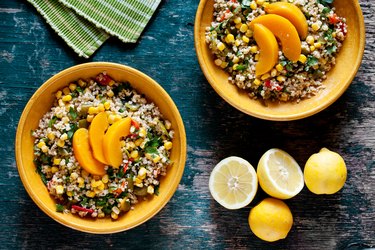
This salad bursts with sweet corn and artichokes, which pair perfectly with a tangy lemon dressing. Better yet, you'll get 25 grams of protein per serving.
While this recipe requires baking chicken breast, feel free to use precooked chicken — or leftovers from last night — to cut down on time.
Get the Artichoke, Corn and Chicken Grain Salad recipe and nutrition info here.
32. Nutty Zucchini Millet Salad
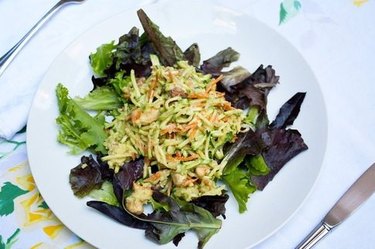
This salad features a nice blend of crunchy, omega-rich nuts, which complement the soft millet and raw zucchini.
If you end up with leftover avocado dressing, don't limit it to this single dish. Drizzle it over other vegetables, like roasted asparagus and carrot sticks.
Get the Nutty Zucchini Millet Salad recipe and nutrition info here.
33. Quinoa and Fruit Salad
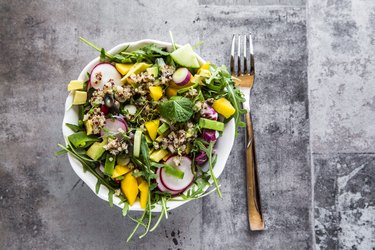
Quinoa, a good source of protein, vitamin E, calcium, iron and other nutrients works as the base of this salad, serving as a sturdy foundation for the softer fruits and greens.
The tofu-based dressing adds a hearty boost of protein to give you lasting energy. While this salad is perfect for any time of day, it makes for a great brunch side dish, and would taste great topped with an egg, too.
Get the Quinoa and Fruit Salad recipe and nutrition info here.
34. Southwest Grain Salad With Thyme Vinaigrette
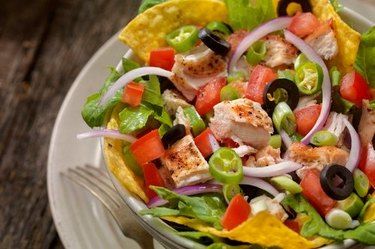
Who says complex flavors can't be quick and simple to make? Rice and beans get all dressed up in this divine salad inspired by the southwest.
You can even wrap this salad in a large tortilla as a fresh take on a burrito, or toss in a few tortilla chips for crunch. Add in some chicken or another lean meat for extra protein and, if you enjoy a bit of kick, toss in roasted peppers and some cayenne pepper.
Get the Southwest Grain Salad With Thyme Vinaigrette recipe and nutrition info here.
35. Pasta Caprese Salad
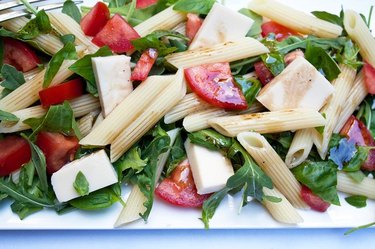
This fiber-rich, whole-grain pasta salad is summer on a plate (or in a bowl, if you like). Consider this recipe a new staple for barbecues and appetizers, or make it your go-to for weekday lunches.
You can add arugula for a nice dose of calcium and vitamins A, C and K.
Get the Pasta Caprese Salad recipe and nutrition info here.
Was this article helpful?
150 Characters Max
0/150
Thank you for sharing!
Thank you for your feedback!