The glycemic index (GI) measures the effect of carbohydrate-containing foods on blood sugar. Low GI Indian food isn't hard to find as long as it's prepared properly. Some of the most widely used ingredients in Indian cuisine have low GI values.
Measuring Glycemic Index
Video of the Day
When you eat carbohydrates, your body breaks them down into simpler sugars that go into your bloodstream. Foods are rated on the glycemic index scale based on how quickly they spike your blood sugar.
Video of the Day
According to Oregon State University, pure glucose is rated at 100, and every other food is rated in comparison to that. The ratings are broken down into three groups: low, medium and high GI. Low is between 0 and 55, medium is 56 to 69, and high is 70 and above.
Low GI foods typically contain complex carbs and fiber, which remains intact in the digestive tract. Something that takes longer to digest will release glucose slowly into your bloodstream.
There's conflicting evidence about the health effect of high GI foods. Some studies suggest that eating high GI foods in excess may increase the risk of diabetes, cardiovascular disease and even cancer, warn the experts at Oregon State University.
Read more: Indian Vegetarian Diet for Weight Loss
However, a February 2019 meta-analysis published in the Lancet found that there was no meaningful link between lower GI foods and better health. The most important takeaway from the study was that higher fiber intakes may lead to improved health and wellbeing.
Indian food can be healthy or unhealthy. India is a large country, and there are many regions with different ingredients and spices in their recipes. While there's no singular Indian cuisine, there are some popular foods that have a low GI.
Try Low GI Legumes
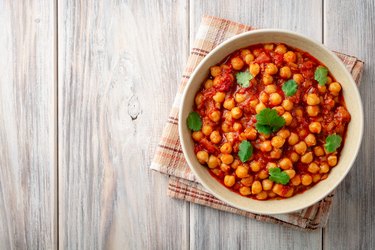
Chana masala is an Indian dish that uses chickpeas as the base. It also calls for onion, garlic and other spices to round out the dish. Half a cup of chickpeas contains 160 calories, according to the USDA. It also offers 10 grams of protein, 26 grams of carbs and 5 grams of fiber, making chana masala a good source of nutrients.
According to Harvard Health Publishing, chickpeas have a glycemic index value of 28, with a standard deviation of 9. Since a low glycemic index is technically anything under 55, chickpeas fall into this category.
Lentils are classified as legumes, in the same family as soy. They're used in many cuisines internationally since they create a nutritious base for a meal. In Indian cooking, they're used in dishes like the vegetarian soup dal, and they could be a staple in a low glycemic Indian diet plan. Eating a plant-based that includes legumes may decrease your risk of cardiovascular disease, according to an October 2017 study published in Current Cardiology Reports.
There are 240 calories and 20 grams of protein in half a cup of lentils. You'll also get 40 grams of carbs and 22 grams of fiber, according to the USDA. If you're vegetarian or vegan, these legumes are good sources of both carbohydrates and protein. Their glycemic index (32) is slightly higher than that of chickpeas, with a standard deviation of 5.
Read more: Side Effects and Benefits of Curry Powder
Other Low GI Indian Food
Naan bread's glycemic index is high, but it's one of the most popular types of bread served in Indian restaurants. There's another slightly lower GI bread that's also traditional. Made with wheat, roti prata is a type of flatbread that's crispier than naan. It's typically served with curry or another dish.
Wheat roti has a GI value of 62, with a standard deviation of 3, which is considered moderate, according to Harvard Health Publishing. It's still lower on the GI scale than whole-wheat bread and white or brown rice. If you're looking for low GI Indian food alternatives to traditional high-carb foods, wheat roti is a good choice.
As the base for a sauce and an additive to many dishes, yogurt is another low GI Indian food and a staple in many kinds of Indian cooking. Even though it isn't comprised entirely of carbs, it still contains sugars, like most dairy products. An 8-ounce serving of yogurt has 10.6 grams of carbs, but its glycemic index is low.
- Singapore Infopedia: "Roti Prata"
- Harvard Health Publishing: "Glycemic Index for 60+ Foods"
- USDA: "Chickpeas"
- The Lancet: "Carbohydrate Quality and Human Health: A Series of Systematic Reviews and Meta-Analyses"
- Oregon State University: "Glycemic Index and Glycemic Load"
- U.S. National Library of Medicine: "Glycemic Index and Diabetes"
- USDA: "Lentils"
- Current Cardiology Reports: "A Heart-Healthy Diet: Recent Insights and Practical Recommendations"
- Diabetes Canada: "Glycemic Index Food Guide"
- USDA: "Plain Yogurt"