Causes of Left Atrial Enlargement
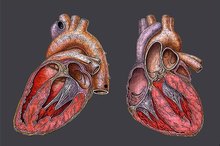
The left atrium is the chamber of the heart that receives oxygen-rich blood from the lungs. Blood moves from the left atrium through the mitral valve into the main pumping chamber of the heart -- the left ventricle -- and then out to the body.
If you are experiencing serious medical symptoms, seek emergency treatment immediately.
Any condition that increases pressure in this portion of the cardiac system can lead to enlargement of the left atrium. Left atrial enlargement can be mild, moderate or severe depending on the severity of the underlying condition. Conditions that lead to left atrial enlargement include hypertension, heart valve problems, heart failure and atrial fibrillation 1.
Hypertension
Hypertension, or high blood pressure, causes the heart to work harder as it pumps blood to the body. Since the heart is made of elastic muscle tissue, it gradually enlarges when it has to pump against elevated pressures. The main pumping chamber of the heart, the left ventricle, typically enlarges first.
As the pressure rises in the left ventricle, the left atrium gradually enlarges as well. When left atrial enlargement occurs due to elevated blood pressure, it is associated with an increased risk of heart attack and stroke.
- Hypertension, or high blood pressure, causes the heart to work harder as it pumps blood to the body.
- As the pressure rises in the left ventricle, the left atrium gradually enlarges as well.
Valvular Heart Disease
What is Mild Cardiomegaly?
Learn More
Disorders of certain heart valves can also lead to left atrial enlargement. The mitral valve separates the left atrium from the left ventricle. **If the mitral valve becomes narrow -- a condition known as mitral stenosis -- blood accumulates in the left atrium and causes enlargement.
** Another condition called mitral regurgitation can also cause excess blood in the left atrium leading to enlargement. With this condition, a leaky mitral valve allows blood to escape back into the left atrium when the left ventricle contracts.
The aortic valve allows blood to flow from the left ventricle into a large artery called the aorta and out to the rest of the body. Aortic valve narrowing, known as aortic stenosis, forces the heart to pump against a higher pressure to eject blood into the aorta. As with high blood pressure, pumping against increased resistance eventually leads to left ventricular and left atrial enlargement.
- Disorders of certain heart valves can also lead to left atrial enlargement.
- With this condition, a leaky mitral valve allows blood to escape back into the left atrium when the left ventricle contracts.
Heart Failure
Heart failure develops when the heart is unable to pump blood effectively to the rest of the body. Uncontrolled hypertension, coronary artery disease, and drug and alcohol abuse can all lead to heart failure. As the heart becomes progressively weaker, blood tends to pool in the heart and lungs resulting in left ventricular and left atrial enlargement. If heart failure remains untreated, the excess blood volume can eventually affect the right side of the heart causing dilation of the right ventricle and right atrium as well.
- Heart failure develops when the heart is unable to pump blood effectively to the rest of the body.
- If heart failure remains untreated, the excess blood volume can eventually affect the right side of the heart causing dilation of the right ventricle and right atrium as well.
Atrial Fibrillation
The Causes of Left Bundle Branch Block
Learn More
Atrial fibrillation is an abnormal heart rhythm that causes the heart to beat irregularly. Under normal circumstances, the atria and the ventricles beat together in a coordinated fashion, but atrial fibrillation disrupts this process. Disorders such as mitral stenosis and heart failure that cause left atrial enlargement often lead to atrial fibrillation.
But atrial fibrillation can develop in the absence of left atrial enlargement. With persistent atrial fibrillation, however, the atria eventually enlarge. Untreated atrial enlargement and atrial fibrillation promote the formation of blood clots, which can travel to the brain and cause a stroke. For this reason, most people with atrial fibrillation and left atrial enlargement are treated with blood thinners to reduce the risk of stroke.
- Atrial fibrillation is an abnormal heart rhythm that causes the heart to beat irregularly.
- Untreated atrial enlargement and atrial fibrillation promote the formation of blood clots, which can travel to the brain and cause a stroke.
Less Common Causes
Other medical conditions are less frequent causes of left atrial enlargement. For example, a ventricular septal defect -- a hole in the wall that separates the right and left ventricles -- can alter blood flow through the heart such that there is overfilling and enlargement of the left atrium.
Other congenital heart defects that lead to increased pressure in the left atrium can also cause enlargement 4. A noncancerous heart tumor called a cardiac myoma is another uncommon cause of left atrial enlargement, as roughly 75 percent of these tumors occur in the left atrium.
Reviewed by: Tina M. St. John, M.D.
- Other medical conditions are less frequent causes of left atrial enlargement.
- For example, a ventricular septal defect -- a hole in the wall that separates the right and left ventricles -- can alter blood flow through the heart such that there is overfilling and enlargement of the left atrium.
Related Articles
What is Mild Cardiomegaly?
Learn More

The Causes of Left Bundle Branch Block
Learn More

What Are the Dangers of Caffeine for Mitral Valve Prolapse?
Learn More
How Do the Walls of the Atria & Ventricles Differ?
Learn More
How Do the Walls of the Atria & Ventricles Differ?
Learn More

What Are the Causes of Swollen Testicles?
Learn More

Instructions for How to Calibrate a Sphygmomanometer
Learn More

What Are the Treatments for Cardiomegaly?
Learn More

What Is the Formula for Calculating Blood Pressure?
Learn More

Dangers of an Adderall Overdose
Learn More
References
- BMJ: Conditions Affecting the Left Side of the Heart
- Journal of the American College of Cardiology: Left Atrial Size: Physiologic Determinants and Clinical Applications
- Circulation: Left Atrial Volume: A Powerful Predictor of Survival After Acute Myocardial Infarction
- Circulation: Congenital Heart Disease for the Adult Cardiologist: Ventricular Septal Defects
- Merck Manual Professional Version: Cardiac Tumors
- Braunwald's Heart Disease: A Textbook of Cardiovascular Medicine, 9th Edition; Robert O. Bonow, et al.
- Clinical Imaging: An Atlas of Differential Diagnosis, 5th Edition; Ronald L. Eisenberg
- Sabzi F. Huge left atrium accompanied by normally functioning prosthetic valve. J Tehran Heart Cent. 2015;10(1):53–57.
- Cuspidi C, Rescaldani M, Sala C. Prevalence of echocardiographic left-atrial enlargement in hypertension: a systematic review of recent clinical studies. Am J Hypertens. 2013;26(4):456-64. doi:10.1093/ajh/hpt001
- Tiwari S, Schirmer H, Jacobsen BK, et al. Association between diastolic dysfunction and future atrial fibrillation in the Tromsø Study from 1994 to 2010. Heart. 2015;101(16):1302-8. doi:10.1136/heartjnl-2015-307438
- Lu R, Ma N, Jiang Z, et al. Endothelin-1 is associated with dilatation of the left atrium and can be an independent predictor of atrial fibrillation after mitral valve surgery. Interact Cardiovasc Thorac Surg. 2018 Jan 1;26(1):66-70. doi:10.1093/icvts/ivx250
- Wozakowska-kapłon B. Changes in left atrial size in patients with persistent atrial fibrillation: a prospective echocardiographic study with a 5-year follow-up period. Int J Cardiol. 2005;101(1):47-52. doi:10.1016/j.ijcard.2004.03.010
- Pande S, Agarwal SK, Mohanty S, Bansal A. Effect of mitral valve replacement on reduction of left atrial size. Asian Cardiovasc Thorac Ann. 2013;21(3):288-92. doi:10.1177/0218492312453142
- Kühl JT, Nielsen JB, Stisen ZR, et al. Left ventricular hypertrophy identified by cardiac computed tomography and ECG in hypertensive individuals: a population-based study. J Hypertens. 2019;37(4):739-746. doi:10.1097/HJH.0000000000001962
- Cuspidi C, Rescaldani M, Sala C. Prevalence of echocardiographic left-atrial enlargement in hypertension: a systematic review of recent clinical studies. Am J Hypertens. 2013;26(4):456-64. doi:10.1093/ajh/hpt001
- Patel DA, Lavie CJ, Milani RV, Shah S, Gilliland Y. Clinical implications of left atrial enlargement: a review. Ochsner J. 2009;9(4):191-6. PMID:21603443
Writer Bio
Dr. Shaun Thompson has more than 10 years experience practicing rural family medicine. He has been writing freelance since 2008 and has had articles published on various health and fitness websites. He earned a biology degree at the University of Denver in 1991 and his medical doctorate from the University of Colorado in 1995.