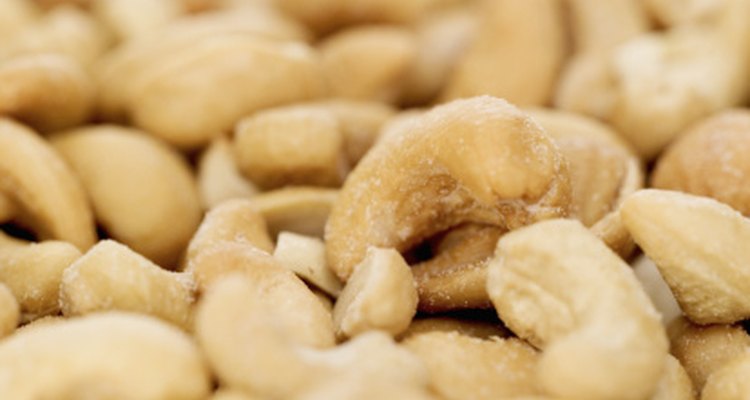
Cashew butter is a naturally sweet spread made from ground cashews.You can use it on toast or as an ingredient in stir fries or baked goods. When eaten in moderation, cashew butter is a healthy addition to any diet.
Nutrients
Cashew butter contains 3 g of protein per 1-tbsp. serving. It offers 4 percent of the recommended dietary allowance for iron and 1 percent for calcium. It also has 18 percent of the RDA for copper and 10 percent for magnesium. Both of these minerals help with bone, muscle and joint health. Cashew butter is also a source of riboflavin, thiamin, niacin and vitamin E.
Healthy Fats
Seventy-five percent of the fat in cashew butter is oleic acid, the type of heart-healthy unsaturated fat found in olive oil. Substituting unsaturated fats for saturated fats found in animal products and tropical oils can help improve your cholesterol levels, notes the American Heart Association.
Potential
Regular consumption of nuts and nut products, like cashew butter, can improve your overall diet. Researchers from the Oakland Research Institute report in a September 2008 issue of the "Journal of Nutrition" that people who eat nuts tend to have higher intakes of certain nutrients such as folate, beta-carotene, vitamin K, lutein, zeaxanthin, phosphorus, copper, selenium, potassium and zinc.
Diet Considerations
One tablespoon of cashew butter contains 94 calories and 8 g of fat. If you are on a weight loss plan, these calories can quickly add up. Keep your portions to just one or two tablespoons per day to benefit from the multiple vitamins and minerals available in the butter, but keep calories under control. Consuming moderate amounts of nuts can help you feel fuller and more satisfied, and prevent you from overeating.
Uses
Cashew butter is usually sold raw, and requires refrigeration after opening to prevent it becoming rancid. Cashew butter does not usually contain added sugar, making it a healthy alternative to sweetened peanut butters. Use it in lieu of peanut butter for cookies or peanut sauces. Add cashew butter to a smoothie made with frozen bananas and soy milk to make a mock ice cream.
Related Articles

How Long Can You Keep Butter ...

Substitutes for Shortening in Frosting

Vegan Alternatives to Lanolin in ...
How to Use Butter Powder
Butter Substitute for Baking Scones
How to Home-Can Peanut Butter

How to Make Fresh Strawberry Frosting ...
How to Make Almond Buttercream Frosting

How to Get Rid of Razor Bumps With ...
How to Replace Yogurt for Butter in ...

Can You Substitute Butter for ...
Substitute for Peanut Satay Sauce
Avocado Butter Hair Treatment

How to Make Sugared Almonds
Should You Refrigerate Homemade Nut ...

How Many Calories Are in Peanut M&Ms?
How to Make Salted Mixed Nuts

How to Cook Tilapia With Orange Juice & ...
How to Make Soy Body Butter
Butter Substitute for Molten Lava Cake
References
Writer Bio
Andrea Boldt has been in the fitness industry for more than 20 years. A personal trainer, run coach, group fitness instructor and master yoga teacher, she also holds certifications in holistic and fitness nutrition.
Photo Credits
Stockbyte/Stockbyte/Getty Images