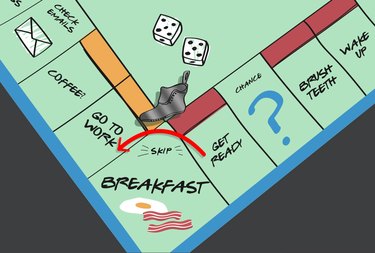

How Bad Is It Really? sets the record straight on all the habits and behaviors you’ve heard might be unhealthy.
It's very likely that someone, somewhere, at some point has told you this one steadfast rule: Never skip breakfast. The morning meal is often touted as the "most important," and everyone from your mother to your trainer tends to preach this weighty claim.
But while this wisdom is seemingly timeless, passed down from one generation to the next — does it actually have substance? If you're one of those people who just doesn't have time for a bite before you rush out the door, or you recently hopped on the intermittent fasting train (more on that later), you might be wondering: How bad is it — really and truly — to skip breakfast?
Video of the Day
Video of the Day
In an effort to understand why this meal is held on a golden platter compared to lunch and dinner, we chatted with a few experts on where the theory comes from. Overwhelmingly, they agreed that breakfast is essential to prioritize, and you shouldn't nix it if you can help it — but there are exceptions to the rule. And in some cases, it's actually totally fine to forgo a meal first thing in the morning. This guide will help you craft the right strategy when it comes to your a.m. nosh.
It’s More About What You Eat Than When You Eat It
It's important to jumpstart your metabolism in the morning by putting something in your stomach, integrative cardiologist Stephen Sinatra, MD, tells LIVESTRONG.com. But what matters more is that you're choosing the right food to do so.
There's a big difference between an overloaded bowl of sugary cereal and a balanced plate of lean protein, healthy fat and fiber-rich fruit. Indeed, your goal in the a.m. should be to choose nutritious foods that help you feel full and satisfied, so you aren't starving before lunchtime. "When lower-glycemic foods are consumed, your insulin response is automatically more controlled, and your body absorbs nutrients over a longer period," Dr. Sinatra explains.
Think about what happens when you drink a glass of wine on an empty stomach. The alcohol hits you fast, right? But, if you pair that vino with nuts and cheese, or even a full meal, it has less of an effect, since it's absorbed slower. "The same thing happens when you combine fatty and fiber-rich foods at breakfast, like organic butter and oatmeal. The insulin response is somewhat curtailed," he says.
"Not eating causes your blood sugar to drop, sending you on a craving roller coaster, which 90 percent of the time leads to overconsumption of sugar. This affects insulin levels and weight, setting you up for major health issues if this becomes a common practice."
Not Eating Breakfast Could Trigger Unhealthy Cravings
You know the feeling when it's been too long since your last meal? You're tired, maybe a little cranky and your head is starting to pound. Your partner or best friend probably calls this the "hangry" side of you — and it's pretty much guaranteed if you forgo breakfast on an irregular basis.
Unless you're practicing a specific, consistent eating schedule, skipping breakfast could set up a negative cycle of food cravings that will continue throughout the day, says certified nutritional consultant Jayne Williams. Once you satisfy the need to graze once, you will continue to experience desires for other foods, most of which aren't great for you. "Not eating causes your blood sugar to drop, sending you on a craving roller coaster, which 90 percent of the time leads to overconsumption of sugar. This affects insulin levels and can lead to weight gain, setting you up for major health issues if this becomes a common practice," she warns.
Read more: A Detox Plan to Kick Your Sugar Habit for Good
If You're Not Hungry, You Shouldn't Eat Breakfast — Sort Of
Many people who aren't exactly fans of breakfast argue: But I'm not hungry! Why should I eat?
The answer? You shouldn't, actually, according to Williams. However, you should also investigate why you aren't ready to nibble from the time you wake up. Do you often have late-night, large dinners? Or is your sleep schedule out of whack, making your circadian rhythm — which regulates hunger and appetite — off-kilter?
It's OK to not immediately run to the kitchen right after your alarm clock goes off, says Keith Thomas-Ayoob, RD, an associate clinical professor at the Albert Einstein College of Medicine in New York City who specializes in obesity. But it's important to eat something within two to three hours of starting your day. This paves the way for stable gut health by getting your digestive system moving and also signals your metabolism to start chugging along.
However, if you find yourself never in the mood for a morning meal — and you've ruled out the causes discussed above — it's worth speaking to your doctor or a registered dietitian, since there could be a hormonal imbalance that needs your attention.
Practicing Intermittent Fasting? Skip Away
Intermittent fasting re-trains the body to only be hungry at certain periods of the day. The benefit? By implementing long (typically 12- to 16-hour) periods of fasting, you may start to control your cravings, which can help you make healthier choices, and possibly help you lose weight.
Folks who follow this discipline will often stop eating around 8 p.m. and won't start again until noon the next day, says holistic health physician Kristine Blanche, PhD. This means lunch will be a bigger meal that ideally consists of a hearty blend of vegetables, protein, healthy fats and balanced carbs. The key, according to Blanche, is consistency — aka following the same pattern each day — and being extremely mindful about your meal choices.
For example, if you eat something with very little nutritional value for dinner — looking at you, cheesy pasta — you may experience hunger-induced headaches in the a.m. This is bad news for your job, but also for your goals. "The biggest mistake I see people make is not eating enough nutrient-dense foods, and then they slip into starvation mode," Blanche says. "If they do this, they will not lose weight."
Read more: The Beginner's Guide to 16:8 Fasting for Weight Loss
The Bottom Line
Once and for all, how bad is it to skip breakfast? It's not ideal. A balanced breakfast can stabilize your blood sugar and set you up for healthy eating throughout the day.
Of course, there's an exception to just about every rule out there. In this case, for folks who are practicing intermittent fasting on a consistent schedule — and making sure to meet their daily calorie and nutrition requirements at other times of the day — nixing the "most important meal" is likely totally fine.
Related Reading