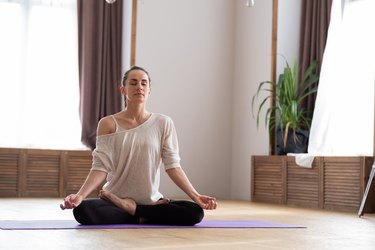
Exercise for a skinny neck depends on your reasons for trimming the neck area. If you're carrying excess neck fat, cardio workouts can help you shed fat all over your body, which includes your neck. If your neck appears stumpy from long stretches of hunched-over sitting or poor posture, stretching can elongate your neck and make it appear slimmer. Design an exercise regimen for your neck that suits your objectives.
Tip
Although you can't control where your body burns fat, you can have a slimmer-appearing neck with overall fat loss and better posture.
Video of the Day
From Fat to Skinny Neck
Losing overall total body fat can lead to a skinny neck. For most people, moderate-intensity cardio performed over a reasonably long period — jogging, cycling, swimming or rowing — is a sustainable route to burning fat. A calorie deficit is required if you want to lose weight, and the more you exercise, the faster the weight will come off.
Video of the Day
While you'll burn more calories with exercise at a higher intensity, you risk tiring quickly and truncating your workout. Focus on duration rather than intensity during the early stage of training, increasing the intensity of your workouts as you build endurance.
Read more: How to Get Perfect Posture in 30 Days
Sit Up Straight
The exquisite posture of dancers — neck long, back erect and shoulders down — creates the appearance of a long, slender neck. Because many people spend hours hovering over computers, poor posture results in which their necks scrunch down or jut forward. Stretching can help to lengthen a tight, compressed neck.
For example, begin a neck stretch by sitting erect on a chair. Exhale and gently pull your head back as if you're a turtle. Draw your chin toward your chest, lengthening your rear neck muscles. Inhale and raise your head, moving your chin toward the ceiling and elongating the muscles in the front of your neck. Repeat this nodding motion — chin down, chin up — for three reps.
Other neck stretches involve turning your head from left to right as well as drawing your ear toward your shoulder on your right and left sides.
Strengthen to Combat Flabbiness
If you tone and sculpt your neck with isometrics or more intense resistance exercises to slim your neck, such as neck pulls with elastic bands, it can counteract soft, sagging muscles and improve your appearance. Isometric exercises involve placing your palm on your head in various positions to resist neck flexion, extension, rotation or the movement of your ear to your shoulder.
For example, lie supine on the floor with knees bent and feet flat. Put your palm on your forehead. Press your head into your hand as you try and draw your chin to your chest. You should feel your front neck muscles contract. Hold this position for up to five seconds and then release. Perform 10 reps.
Diet to Whittle Down
In addition to exercises to slim your neck, follow a sensible diet to achieve the calorie deficit required to shed pounds and lose neck fat. According to the American Council on Exercise, a pound of fat amounts to 3,500 calories. If you want to lose a pound per week, aim for an average deficit of about 500 calories per day.
Your diet should consist primarily of lean protein, vegetables, fruits, whole grains and low-fat dairy products. Reduce the portion size of your meals and consume smaller meals throughout your day instead of three large meals. Also, moderate your intake of salty food, alcohol and caffeine, which can lead to water retention.
Read more: The Ultimate Guide to Fat Loss