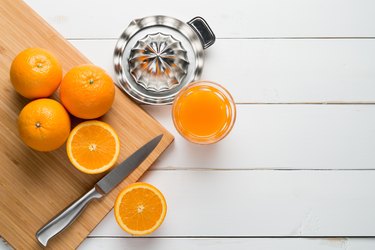
Juicing is a billion-dollar industry and a health trend that just won't go away. Take any health magazine, and you'll find at least a page or two dedicated to juice diet plans, juice cleanses, detox juice recipes and everything in between.
While no one can deny that fruits and vegetables are healthy, juicing is subject to debate. In fact, drinking too much juice can be just as harmful as sipping on soda and other sugary beverages.
Video of the Day
Video of the Day
Tip
- Rather than going on a juice fast, try to incorporate fresh juices into your daily menu. Drink a small glass of fruit or vegetable juice along with your meals to fully reap the benefits.
- Experiment with different juice recipes, try new fruits and veggies and clean up your diet. Add herbs and spices to fresh juice for extra flavor and nutrition.
The Dark Side of Juicing
From celebrities and food bloggers to so-called "health" gurus, everyone is talking about juicing and its "incredible" benefits. Proponents claim that fasting with juices energizes the body, ignites weight loss, improves sleep and increases lifespan. This practice is supposed to clear your skin, boost your metabolism and flush toxins from your system. Unfortunately, most claims lack scientific evidence.
Let's take the Gerson therapy, for example. This plant-based diet plan was designed as a natural treatment for cancer, migraine headaches, impaired immune function and other conditions. It's largely based on juices, vegan meals, dietary supplements and daily coffee enemas (up to five per day!). Dieters must drink 13 glasses of organic fresh juice and eat three vegan meals daily.
As the National Cancer Institute points out, the Gerson protocol has not been approved by the FDA. Most studies involving this treatment are reviews of past cases with a small number of subjects. Modern research doesn't support their findings. Furthermore, taking too many enemas may affect organ function and blood chemistry, causing electrolyte imbalances and even death.
This dietary protocol and other juice diet plans aim to cleanse the liver and colon, which in turn, may rid the body of cancer cells and promote healing. Juicing is also popular among dieters and is promoted as a natural way to lose weight. Proponents say that fresh juices flood the body with nutrients and remove toxins.
The truth is, your body doesn't really need help to get rid of toxins, as the Association of UK Dietitians notes. Your liver, kidneys, lungs, skin and other organs work 24/7 to filter out and eliminate chemicals, dead cells and metabolic waste. No pill or beverage can "detoxify" your body.
Some food-based nutrients, especially antioxidants and phytonutrients, support specific detoxification pathways and help mitigate the risks of toxin buildup, according to a review published in the Journal of Nutrition and Metabolism in October 2015.
However, the same source states that ingesting small amounts of various compounds (eating a varied diet) is more beneficial than getting high doses of nutrients from supplements or large quantities of the same food. Additionally, any detox plan should be developed by trained clinicians and followed under medical supervision.
Is a Juice Diet Safe?
The National Center for Complementary and Integrative Health (NCCIH) warns that detox programs and cleanses may not be safe. These usually involve potentially dangerous practices, such as colon cleansing, fasting or liquid diets based on juices, water and other fluids. For example, some juices are high in oxalates and may worsen kidney disease. Oxalates are a major contributing factor to kidney stones.
Read more: How to Detox in 3 Days Without Juicing
A 30-day juice fast or a juice detox plan may help you lose weight because such diets are low in calories. The problem is that you'll also lose lean mass, not just fat. Your body needs protein to build, preserve and repair muscle tissue. Fruit and vegetable juices contain little or no protein — here are a few examples:
- Orange juice: 56 calories, 0.8 grams of protein and 12.9 grams of carbs per serving (half a cup)
- Lemon juice: 27 calories, 0.4 grams of protein and 8.4 grams of carbs per serving (half a cup)
- Carrot juice: 47 calories, 1.1 grams of protein and 10.9 grams of carbs per serving (half a cup)
- Organic wheatgrass juice: 99 calories, 1.9 grams of protein and 23 grams of carbs per serving (one bottle)
- Apple juice: 57 calories, 0.1 grams of protein and 14 grams of carbs per serving (half a cup)
The daily recommended protein intake is 0.8 grams per kilogram of body weight. As Harvard Health Publishing notes, consuming twice that amount is safe and more beneficial for overall health. If you go on a 30-day juice fast, you won't even meet the minimum daily requirement for protein.
This doesn't mean that fruit and vegetable juices are unhealthy. On the contrary, they boast large doses of vitamins, minerals and phytonutrients that promote health and wellbeing. But it's one thing to drink an occasional glass of juice, and another thing to go on a juice fast.
A 30-day juice cleanse can actually do more harm than good. According to a May 2017 research paper featured in the JAMA Network Open, there isn't too much difference between fruit juices and soft drinks in terms of sugar content. Both types of beverages are high in sugar and elicit the same biological response. Each additional daily serving of fruit juice has been shown to increase the risk of diabetes by a whopping 7 percent.
Start Juicing the Healthy Way
Now that you know more about juicing, you may wonder how to do it the right way. A typical 30-day juice diet is based mostly on water, juices and homemade smoothies. Some versions allow small quantities of raw fruits and veggies.
Unfortunately, drinking nothing but water and juices for a whole month is a recipe for disaster. Nutrient deficiencies, intense hunger and cravings, digestive problems, low energy and fatigue are all common side effects. But who says you need to live off juices? Instead, clean up your diet and incorporate a variety of fresh juices into your menu.
Beware that fresh juices count towards the recommended daily five servings of fruits and veggies. As the NHS points out, it's not advisable to drink more than 5 ounces of juice and smoothies daily — that's the equivalent of a small glass. Also, consume these beverages along with your meals and not as a snack because the sugars in juice can damage your teeth.
Warning
Your daily intake of juices and smoothies should not exceed 5 ounces (one small glass). These beverages are rich in sugars that can damage tooth enamel and contribute to weight gain.
Try to eliminate junk food, candy, ice cream, pastries, deli meats, soft drinks, ready-made meals and other processed foods and beverages from your diet. Experiment with new juice recipes each day.
Read more: The DOs and DON'Ts of Clean Eating
For example, you may drink apple and pear juice on day one, kale juice on day two, grapefruit juice on day three and so on. Mix different fruits and vegetables to boost your nutrient intake and add variety to your diet.
Don't hesitate to use spices and herbs. Ginger and turmeric, for example, go well with citrus juices. You may also add cumin, cinnamon, fennel, parsley, cilantro or even a pinch of black pepper. These herbs and spices are rich in phytonutrients that support optimal health.
- Cancer.gov: "Gerson Therapy (PDQ®) – Patient Version"
- Cancer.gov: "Gerson Therapy (PDQ®)–Health Professional Version"
- Association of UK Dieticians: "Detox Diets "
- Journal of Nutrition and Metabolism: "Modulation of Metabolic Detoxification Pathways Using Foods and Food-Derived Components: A Scientific Review with Clinical Application"
- NCCIH: "Detoxes and Cleanses"
- National Kidney Foundation: "What Are Oxalates and Why Are They a Concern for Kidney Disease Patients?"
- ACE Fitness: "9 Things to Know About How the Body Uses Protein to Repair Muscle Tissue"
- USDA: "Raw Orange Juice"
- USDA: "Raw Lemon Juice"
- USDA: "Carrot Juice"
- USDA: "Organic Wheatgrass Juice"
- USDA: "Apple Juice"
- Harvard Health Publishing: "How Much Protein Do You Need Every Day?"
- JAMA Network: "Are Fruit Juices Just as Unhealthy as Sugar-Sweetened Beverages?"
- NHS: "Water, Drinks and Your Health"
- NHS: "5 a Day: What Counts?"
- NCBI: "Culinary Herbs and Spices: Their Bioactive Properties, the Contribution of Polyphenols and the Challenges in Deducing Their True Health Benefits"