TOSHIAKI ONO/amanaimagesRF/amana images/Getty Images
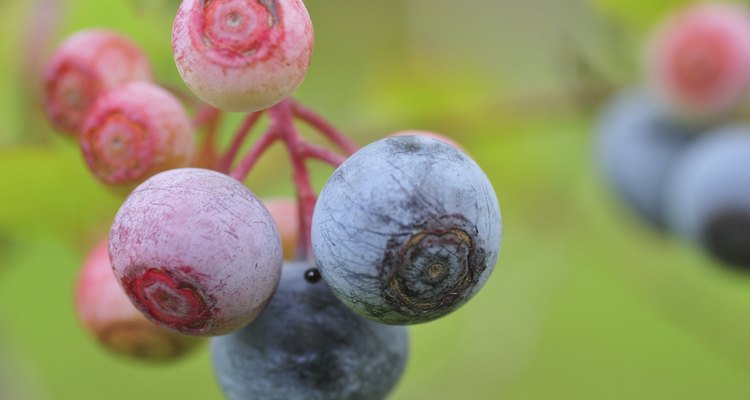
Blueberries may help lower your risk for heart disease, according to a study published in "The Journal of Nutrition" in September 2010. This is most likely due to the high amounts of a type of antioxidant called polyphenols that they contain. Blueberries also provide a number of essential nutrients, including fiber, manganese and vitamins C and K.
Calories and Macronutrients
A 1-cup serving of raw blueberries has 84 calories, 0.5 gram of fat, 1.1 grams of protein and 21.4 grams of carbohydrates, including 3.6 grams of fiber. This is 14 percent of the daily value for fiber, based on a 2,000-calorie diet. Getting the recommended amount of fiber in your diet may help lower your risk for certain types of cancer, constipation, high cholesterol and heart disease.
Vitamins and Minerals
Each 1-cup serving of blueberries also provides 24 percent of the DV for vitamin C, 36 percent of the DV for vitamin K and 25 percent of the DV for manganese. You need vitamin K for blood clotting and to keep your bones strong. Both manganese and vitamin C aid in wound healing and also act as antioxidants to help protect your cells from damage by free radicals, which are highly reactive chemicals found in the body and environment that can harm cells.
Related Articles

The Nutrition of Melted Cheese
The Recommended Serving Sizes for Raw ...
Nutrition Drinks for Diabetics

How to Freeze Tzatziki
Fruits & Vegetables Rich in Potassium ...

Can Age Spots Be Reversed?

How to Make Fresh Strawberry Frosting ...
How to Peel Guava

How to Make a Fruit Reduction
Foods From Rainforest Plants

What Foods Provide Calcium D-Glucarate?

How to Freeze Lentils

Avocado Serving Size & Nutrition

Can I Exercise on the Master Cleanse ...

How to Store Apples

A List of Foods That Contain Choline

Calories in One Slice Provolone Cheese
Calories in a Cucumber and Avocado Roll
Fiber in Soybeans
List of Foods With a High Water Content
References
Writer Bio
Based in Massachusetts, Jessica Bruso has been writing since 2008. She holds a master of science degree in food policy and applied nutrition and a bachelor of arts degree in international relations, both from Tufts University.
Photo Credits
TOSHIAKI ONO/amanaimagesRF/amana images/Getty Images