How Much EPA & DHA Are in Chia Seeds?
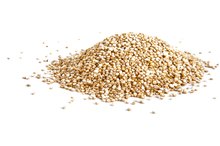
Salvia hispanica and salvia columbariae, more commonly known as chia, are flowering plants in the mint family originating from Central America and Northern America, respectively.
Related Articles
The Vitamins in Hemp Seed
Learn More
Sunflower Seeds & B-6 Toxicity
Learn More

Symptoms of Exhaust Fumes
Learn More
Calories in a Slice of Whole-Grain Bread
Learn More
List of Roughage Foods
Learn More
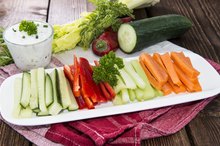
How Many Calories in Carrot Sticks?
Learn More
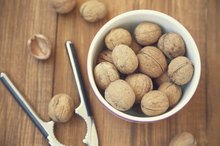
How Much Fiber Do Walnuts Have?
Learn More
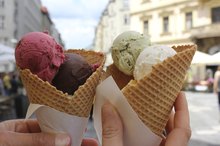
How Many Calories Are in Frozen Yogurt Compared with Ice Cream?
Learn More
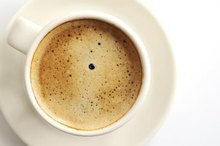
Caffeine Content in One Cup of Coffee Vs. One Shot of Espresso
Learn More
Amino Acids That You Can't Get from a Vegetarian Diet
Learn More
References
- United States Drug Enforcement Administration. Drug Facts: Salvia Divinorum.
- Butelman ER, Kreek MJ. Salvinorin A, a kappa-opioid receptor agonist hallucinogen: pharmacology and potential template for novel pharmacotherapeutic agents in neuropsychiatric disorders. Front Pharmacol. 2015;6:190. doi:10.3389/fphar.2015.00190
- Maqueda AE, Valle M, Addy PH, et al. Salvinorin-A Induces Intense Dissociative Effects, Blocking External Sensory Perception and Modulating Interoception and Sense of Body Ownership in Humans. Int J Neuropsychopharmacol. 2015;18(12) doi:10.1093/ijnp/pyv065
- Akhondzadeh S, Noroozian M, Mohammadi M, Ohadinia S, Jamshidi AH, Khani M. Salvia officinalis extract in the treatment of patients with mild to moderate Alzheimer's disease: a double blind, randomized and placebo-controlled trial. J Clin Pharm Ther. 2003;28(1):53-9. doi:10.1046/j.1365-2710.2003.00463.x
- European Monitoring Centre for Drugs and Drug Addiction. Salvia divinorum drug profile. Updated January 2010.
- Lopresti AL. Salvia (Sage): A Review of its Potential Cognitive-Enhancing and Protective Effects. Drugs R D. 2017;17(1):53-64. doi:10.1007/s40268-016-0157-5
- Casselman I. From Local to Global-Fifty Years of Research on Salvia Divinorum. Journal of Ethnopharmacology. 2014;151(2):768-83. doi: 10.1016/j.jep.2013.11.032.
- Center for Substance Abuse Research. Salvia Divinorum.
- Johnson MW. Human Psychopharmacology and Dose-Effects of Salvinorin A, a Kappa-Opioid Agonist Hallucinogen Present in the Plant Salvia Divinorum. Drug and Alcohol Dependence. 2011; 115(102): 150-155. doi: 10.1016/j.drugalcdep.2010.11.005.
- Lange JE. Salvia Divinorum: Effects and Use Among YouTube Users. Drug and Alcohol Dependence. 2010;108(1-2):138-40. doi: 10.1016/j.drugalcdep.2009.11.010.
- National Institute on Drug Abuse for Teens. Salvia.
Writer Bio
Chris Daniels covers advances in nutrition and fitness online. Daniels has numerous certifications and degrees covering human health, nutritional requirements and sports performance. An avid cyclist, weightlifter and swimmer, Daniels has experienced the journey of fitness in the role of both an athlete and coach.