Milan Markovic/iStock/Getty Images
In the quest to remove body hair, people have tried razors, creams, lasers and a host of other methods designed to leave skin smooth and hair-free. Removing the hair at the surface, as with a razor, can be effective, but the results don't last long. Removing the hair beneath the surface of the skin, as with an epilator, lasts longer, but can also increase the chance of developing red, itchy bumps known as razor bumps or shaving bumps.
Epilator
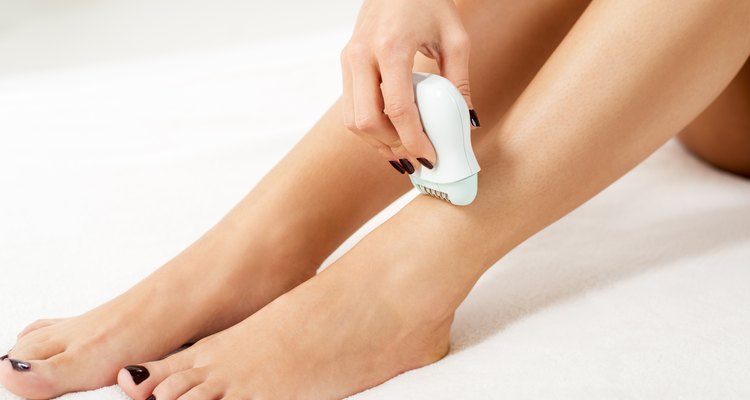
An epilator uses a metal coil to grab the hair and pull it out by the roots. The process can be quite effective but also painful. To help ease pain, a numbing lotion or spray can be used. Hair should be at least 1/8 inch long in order for the epilotor to have something to grab.
Shaving Bumps
Shaving bumps may be due to irritation or to ingrown hairs. Immediately after using an epilator, skin may redden as a response to having the hair ripped out. These bumps should resolve within a few hours or overnight. Shaving bumps that appear the next day or later may be a type of folliculitis that results from ingrown hairs. As hair grows it may curl back on itself and grow back into the skin. The skin reacts to this irritation by attacking the hairs as if they were foreign bodies. In some cases, these bumps may even become infected, causing even more irritation.
Treatment
If you develop shaving bumps, keep the area clean to prevent infection. Use a mild antibacterial soap. You can also apply an over-the-counter corticosteroid cream to help relieve the itching and discomfort. Let the hair grow for several weeks to allow the hairs to grow long enough to emerge from the skin on their own. If bumps are severe, see your doctor; you may need treatment with antibiotics to combat the infection.
Prevention/Solution
Exfoliating the skin daily can help prevent the ingrown hairs that cause most shaving bumps. Use a loofah or an exfoliating scrub and rinse thoroughly. You might also try a different type of epilator to see if one type is less irritating to your skin than another.
Alternatives
If you continue to experience shaving bumps with an epilator, you may need to switch to a different method of hair removal. Try shaving or depilatory creams. A series of laser treatments could result in permanent hair removal and no more shaving bumps.
Related Articles

How to Get Rid of Body Hair Permanently

How to Take Care of Painful Ingrown Hair

How to Prevent Underarm Bumps
How to Remove Hair on the Side of My ...

How to Taper Sideburns
Hyperpigmentation and Shaving
How to Remove an Ingrown Hair ...
How to Unclump Eyelashes

How to Pluck Your Eyebrows With Strings
How to Get Rid of Visible Hair Follicles

How to Get a Smooth, Bald Look
How to Get Elmer's Glue Out of Hair
How to Get Rid of Bumps From Plucking
Instructions for How to Use Hard Wax ...

Shaving Armpits the Correct Way
How to Remove the Blade on a Schick ...

How to Clear Up Red Bikini Line Bumps

How to Painlessly Remove Genital Hair

How to Clean an Electric Self Shaver

How to Put Rods in for a Perm
References
Writer Bio
Cynthia Myers is the author of numerous novels and her nonfiction work has appeared in publications ranging from "Historic Traveler" to "Texas Highways" to "Medical Practice Management." She has a degree in economics from Sam Houston State University.
Photo Credits
Milan Markovic/iStock/Getty Images