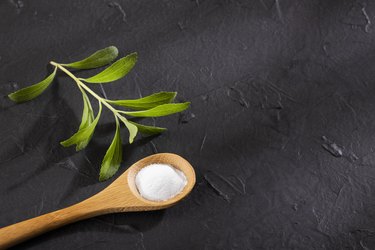
When you want to add a pinch of sweet taste to your food or drinks without the pitfalls of sugar, you may find yourself turning to sugar alternatives like stevia. Learn more about stevia side effects to educate yourself on how to incorporate sweeteners into your diet.
While stevia is generally considered safe to be used in food and drink, some extracts of the plant have not been approved by the Food & Drug Administration (FDA). Some stevia side effects include digestive or stomach issues, allergies, an increased risk of weight gain and potential endocrine disruption.
Video of the Day
Video of the Day
The Science Behind Stevia
Stevia, not to be confused with Splenda, is a sugar substitute sweetener that comes from the plant Stevia rebaudiana, which is native to South America. The plant contains steviol glycosides, such as stevioside and rebaudioside, which are actually a lot sweeter than regular sugar.
A study published in June 2019 in Proceedings of the National Academy of Sciences of the United States of America delved into how and why this plant naturally creates such a high level of sweetness. The study notes that its compounds, stevioside and rebaudioside, are up to 200 times sweeter than sugar.
But because stevia is noncaloric, it's often used as a sugar substitute, especially for people hoping to manage diabetes or obesity. Sugar, particularly refined sugars, has been linked to countless health risks, including diabetes and heart disease.
Interestingly, stevia isn't a new discovery either. Indigenous people in South America have been using it as a sweetener for hundreds of years, according to a study published in May 2015 in Nutrition Today.
Adding stevia products to foods instead of sugar can lead to lower energy intake, the same study concludes. However, there still isn't enough evidence or medical consensus on the benefits of stevia, and its side effects are still being explored.
The FDA considers stevia and its compounds steviol glycosides safe, deeming it "generally recognized as safe" (GRAS). However, the FDA has not approved stevia leaf and crude stevia extracts for use in food.
Health Benefits of Stevia
In addition to some of stevia's touted benefits as a sugar substitute in helping people lose weight or improve diabetes management, it has been linked to a number of other potential health benefits, though these are still being explored further.
For example, research has shown that stevia extract may improve glucose tolerance in people with diabetes, and even in those without diabetes, according to a small study with 97 participants published in August 2018 in Contemporary Clinical Trials Communications. That same study notes that past research in rats showed stevia had positive effects on kidneys and lowered mean arterial pressure.
The study also found that stevia may have antioxidant and anti-inflammatory properties. And finally, the study says that stevia in addition to a regular drug regimen could reduce the progression of chronic kidney disease (CKD).
Stevia may also work as a better option than sugar for people wanting to maintain good oral health. Tooth decay occurs when bacteria from sugar damage the teeth. Reducing sugar in your diet, and instead replacing it with other sweeteners, could potentially reduce that risk. A study published in December 2015 in Physiology & Behavior notes that certain non-nutritive sweeteners have been linked to a reduction in dental cavities.
Stevia and Digestive Issues
Not all research shows that stevia is beneficial to health, however. In fact, evidence is still inconclusive in many ways as to how stevia affects the body over time.
Some stevia side effects include potentially making it harder to lose weight. While some studies have shown stevia can be used to manage diabetes and weight loss, a study published in July 2017 in Canadian Medical Association Journal showed that consuming nonnutritive sweeteners frequently may actually result in an increase in body mass index (BMI).
Routine consumption of these sweeteners may also lead to a higher risk of cardiometabolic disease. And while the study published in December 2015 in Physiology & Behavior also investigated whether stevia can impair gut flora in the digestive tract, more research is needed to solidify the link. So it's still unclear exactly what potential stevia side effects may occur from routine consumption of the sweetener.
Stevia stomach upset, however, may be a cause for concern. Stevia may cause mild digestive issues like nausea, according to Memorial Sloan Kettering Cancer Center.
It's possible that different types of products may cause stevia stomach upset more than others. Since there's a variety of stevia products out there, ranging from pure stevia powder to liquid drops and extract, it's possible other sweeteners or products have been added to those mixes.
To avoid stevia stomach upset, be careful before purchasing stevia products. Remain wary and read labels to make sure you're not consuming stevia leaf or crude extracts, which have not been approved by the FDA.
Allergic Reactions From Stevia
Some other potential side effects of stevia include allergic reactions. Since stevia is a plant-based extract, there's some possibility it can cause allergies or irritation in certain people.
Stevia comes from the Asteraceae family of plants, which as a whole has been linked to certain allergies. Plants that come from the Asteraceae family that have been known to cause allergies include ragweed and sunflower seeds.
It's possible people with pollen or plant allergies related to things like ragweed may also be more sensitive to stevia. People with allergies to ragweed, chrysanthemums, marigolds or daisies should be careful when trying stevia, according to Tufts Medical Center Community Care.
However, not enough research exists to support this claim. A January 2015 study published in Food and Chemical Toxicology explained that there's little evidence to support that there is any link between allergic reactions and highly purified stevia extracts. Again, to be safe, only use the type of stevia that is considered safe by the FDA (anything that's pure stevia extract rather than crude extracts or the leaf itself).
Stevia Products as Endocrine Disruptors
Though research on this issue is limited, it's possible that stevia may have an effect on the endocrine system, which includes glands that produce hormones. A study published in May 2016 in Molecular and Cellular Endocrinology found that the metabolite steviol boosted progesterone production, as well as caused a response in CatSper, a progesterone receptor of sperm.
Progesterone is a hormone released into the ovary that plays a role in menstruation and the early stages of pregnancy. The study concluded that stevia may act as an endocrine disruptor, or a chemical that can interfere with hormones.
Finally, Harvard Health cites research that found some non-sugar sweeteners (NSSs) were actually linked to weight gain and obesity, despite their use in attempting to prevent those very problems.
People who drank high levels of diet soda, which typically contains NSSs, had increased rates of metabolic syndrome as well as Type 2 diabetes. It's possible this is because people who consume a lot of sweet food or drinks in general — even those with NSSs — experience a greater craving for sweeter and unhealthy foods.
However, as the research on stevia itself is limited, it's safe to say that incorporating this natural sweetener into your diet as a sugar substitute will likely yield greater benefits than risks. Be sure to consume pure extract stevia that's considered safe, and eat it as part of a more balanced diet.
- Proceedings of the National Academy of Sciences of the United States of America: "Molecular Basis for Branched Steviol Glucoside Biosynthesis"
- Nutrition Today: "Stevia, Nature’s Zero-Calorie Sustainable Sweetener"
- U.S. Food & Drug Administration: "Has Stevia Been Approved by FDA to Be Used as a Sweetener?"
- Contemporary Clinical Trials Communications: "Preliminary Analysis of the Effect of Stevia (Stevia rebaudiana) in Patients With Chronic Kidney Disease (Stage I to Stage III)"
- Physiology & Behavior: "Metabolic Effects of Non-Nutritive Sweeteners"
- Canadian Medical Association Journal: "Nonnutritive Sweeteners and Cardiometabolic Health: A Systematic Review and Meta-Analysis of Randomized Controlled Trials and Prospective Cohort Studies"
- Memorial Sloan Kettering Cancer Center: "Stevia"
- Food and Chemical Toxicology: "Steviol Glycoside Safety: Are Highly Purified Steviol Glycoside Sweeteners Food Allergens?"
- Molecular and Cellular Endocrinology: "In Vitro Bioassay Investigations of the Endocrine Disrupting Potential of Steviol Glycosides and Their Metabolite Steviol, Components of the Natural Sweetener Stevia"
- Harvard Health: "Sweeteners: Time to Rethink Your Choices?"
- Tufts Medical Center Community Care: "Stevia"