There's a reason you've been told since childhood that milk is good for your bones: Milk is high in calcium — the most abundant mineral in the body — and 99 percent of the calcium in your body is stored in your bones and teeth, according to the National Institutes of Health.
The other 1 percent of calcium in your body is equally important — your muscle, nerve and blood vessel function all depend on it. If you don't get enough from your diet, your body will take it from your bones, and this could lead to weak and brittle bones (osteoporosis) if it's not replaced.
Video of the Day
Video of the Day
The best way to get the calcium you need is through your diet, in foods including dairy products, leafy greens, almonds and tofu. But if you're unable to meet your calcium needs through your diet and your doctor has suggested a supplement, here are the best products on the market now.
The Best Calcium Supplements
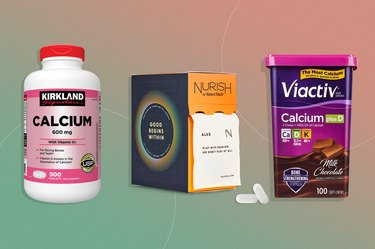
- Best Overall: Nature Made Calcium + Vitamin D3 ($12.34, Amazon.com)
- Best on a Budget: Kirkland Signature Calcium + Vitamin D3 ($13.99, Costco.com)
- Best Gummy: Kirkland Adult Gummies Calcium + Vitamin D3 ($18.99, Costco.com)
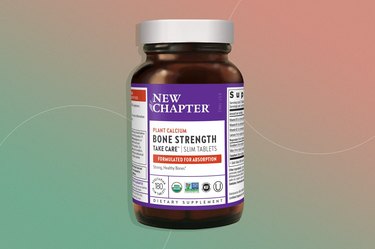
- Best Organic: New Chapter Bone Strength Take Care ($49.90, Amazon.com)
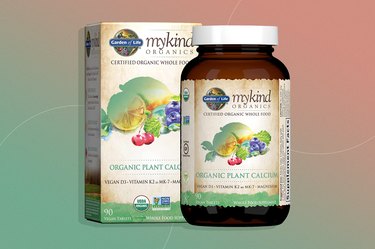
- Best Vegan: Garden of Life mykind Organic Plant Calcium ($27.99, Amazon.com)
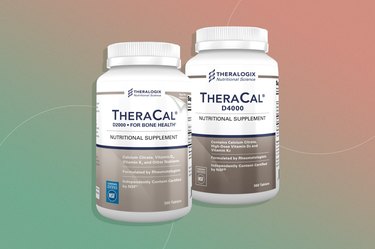
- Best for Post-Menopause: Theralogix TheraCal Bone Health Supplement ($61, Theralogix.com)
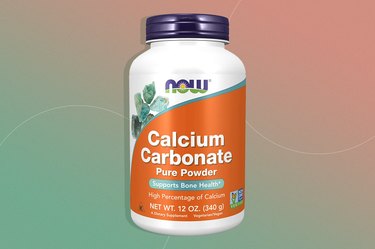
- Best Powder: NOW Calcium Carbonate Powder ($6.99, Amazon.com)
- Best for Athletes: Thorne Cal Mag Citrate + Vitamin C ($18.05, Amazon.com)
- Best Tasting: Viactiv Calcium + Vitamin D3 ($10.54, Walmart.com)
- Best Chewable: Caltrate 600+D3 Plus Minerals Chewable ($14.24, Amazon)
- Best Subscription: Nurish by Nature Made ($4/month, Nurish.naturemade.com)
How We Chose
For this roundup of the best calcium supplements, we tapped the writer's own credentials as a registered dietitian, and assessed options using the following criteria:
- Quality
- Cost
- Availability
For more information on how to choose and cover products, click here.
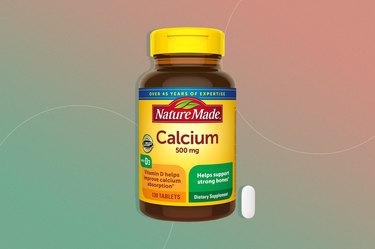
1. Best Overall: Nature Made Calcium + Vitamin D3
Pros
- Reputable brand
- Also includes vitamin D
- USP verified
- Budget-friendly
Cons
- Must be taken with food and water
Nature Made often gets the nod for the best overall supplement in many categories. It's a brand that's hard to beat on formulation, third-party testing and price.
This Nature Made supplement provides 500 mg of calcium carbonate — the most your body can absorb at one time — plus vitamin D to help you absorb the calcium better.
It is USP verified and comes at a price that beats out the competition. With the recommendation to take one tablet a day, this bottle should last you a little over four months — that's a good deal.
Buy it: Amazon.com; Price: $12.34 for 130 tablets
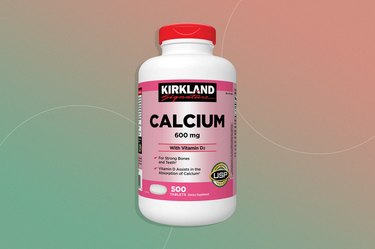
2. Best on a Budget: Kirkland Signature Calcium + Vitamin D3
Pros
- Budget-friendly
- Contains vitamin D3
- USP-verified
- Gluten-free
Cons
- Some reviewers find it hard to swallow
Costco's brand Kirkland is your best deal for a basic calcium plus vitamin D3 supplement. There is a lot going for this supplement. It contains calcium carbonate, and the dosage is close to perfect for best absorption. It also contains vitamin D3 to help your body hold onto it.
Kirkland's calcium supplement is USP-verified, which means it contains what it says on the label and breaks down appropriately in your body. It is also gluten-free, and Costco offers a money-back guarantee if you're not happy with it for any reason.
Buy it: Costco; Price: $13.99 for 500 tablets
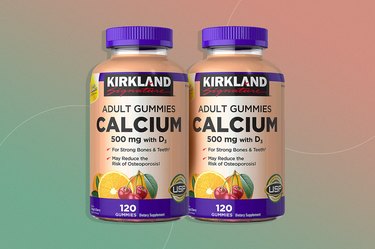
3. Best Gummy: Kirkland Adult Gummies Calcium + Vitamin D3
Pros
- USP-tested
- Consumer Lab-approved
Cons
- Contains phosphorus
Not only are these gummies USP-tested, they've also been tested and approved by Consumer Lab. This means they contain the amounts of nutrients listed on the label and do not contain heavy metals.
The calcium in the gummies is tricalcium phosphate, which is also used in supplements and fortification of foods, according to the NIH, and the type you will find in most gummy formulations. If you are limiting your phosphorus intake for kidney disease, then opt for a non-gummy calcium supplement to avoid extra phosphorus.
The serving size is two gummies, so this is a 60-day supply.
Buy it: Costco; Price: $18.99 for 240 gummies
4. Best Organic: New Chapter Bone Strength Take Care
Pros
- Contains vitamin D
- Consumer Lab-approved
Cons
- Has more calcium than recommended
If you're looking for a calcium supplement that's a little off the beaten path, the New Chapter supplement may be for you. The calcium in this blend is derived from algae. It contains more than the recommended absorbable amount of calcium per three tablets (the recommended dose), so you could cut that back to two and still get the calcium you need.
The 1,000 IU of vitamin D is a nice bonus, as well as being certified organic.
It was approved by Consumer Lab, which verified that it contains the amount of nutrients on the label, doesn't contain heavy metals and passes the disintegration test, which means it will break down in your body in time for absorption.
Buy it: Amazon.com; Price: $49.90 for 180 tablets
5. Best Vegan: Garden of Life mykind Organic Plant Calcium
Pros
- Appropriate for vegans
- Contains vitamin D
Cons
- Requires three tablets, ideally taken throughout the day (not all at once)
If you follow a vegan diet, getting enough calcium can be tricky. In fact, those who eat vegan are at higher risk for hip fractures, according to an August 2021 paper in The American Journal of Clinical Nutrition. This could be in part due to the limited amount of calcium and vitamin D in a vegan diet. This makes it so important to look for a quality vegan supplement.
Garden of Life calcium is a plant-based supplement with three tablets supplying 800 mg of calcium, plus 1,000 IU of vitamin D. It would be best to spread the tablets throughout the day for the most benefit, as your body can only absorb so much at once.
This supplement is certified organic, which also helps ensure it does not contain any questionable ingredients.
Buy it: Amazon.com; Price: $27.99 for a 30-day supply
6. Best for Post-Menopause: Theralogix TheraCal Bone Health Supplement
Pros
- Does not need to be taken with food
- Contains vitamin D
- NSF-tested
Cons
- Pricier option
This calcium supplement checks all the boxes for any woman who needs the extra boost either during or after menopause. It contains an appropriate amount of calcium citrate — 500 mg per two tablets. It does not have to be taken with food, and the form of calcium it uses (calcium citrate) has a low risk of gastrointestinal discomfort. In addition to the calcium, you also get 1,000 IU of vitamin D.
It's a bit pricier than other supplements, but you get a quality supplement that has been third-party tested by NSF.
Buy it: Theralogix.com; Price: $61 for a 90-day supply
7. Best Powder: NOW Calcium Carbonate Powder
Pros
- Vegan
- Kosher
- Brand adheres to CGMPs
Cons
- May work best as 2 servings
- Does not contain vitamin D
There may not be an easier way to get your calcium than to stir it into your morning OJ. NOW calcium carbonate powder is for those who can't swallow pills or just don't want to.
A level one-half teaspoon of this powder provides 600 mg of calcium, so it might be best to split that over two servings for best absorption.
NOW adheres to CGMPs, and this supplement is vegan, kosher and non-GMO. It does not contain extra vitamin D, so ensure you get that either from sunlight, foods or a separate supplement.
This powder should last you well over six months, so it's an affordable way to get your calcium.
Buy it: Amazon.com; Price: $6.99 for 200 servings
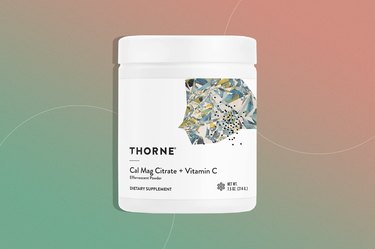
8. Best for Athletes: Thorne Cal Mag Citrate + Vitamin C
Pros
- NSF Certified for Sport
- Has vitamin C and magnesium
Cons
- Does not have vitamin D
If you're an athlete, the first thing you look for on the packaging is NSF Certified for Sport. This certification ensures that your supplement is free from banned substances.
Thorne Cal Mag Citrate + Vitamin C is NSF certified for sport. Along with calcium, it also provides vitamin C and magnesium. It does not contain vitamin D, so make sure you are getting some vitamin D throughout the day or through a separate supplement.
Buy it: Amazon.com; Price: $18.05
9. Best Tasting: Viactiv Calcium + Vitamin D3
Pros
- Contains vitamin K
- A tasty option
Cons
- Best eaten with meal or snack
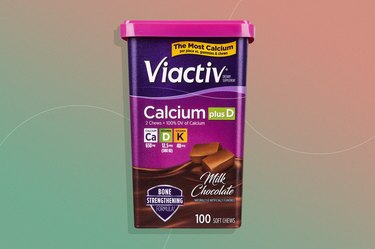
It's hard to believe you can get your daily calcium and chocolate craving out of the way in one bite, but with Viactiv, it's possible.
Viactiv was tested by Consumer Lab in 2017 and passed its rigorous standards. It provides just over what you can absorb at one time, 650 mg. You can have up to two per day, but if you're getting calcium from food sources too, you can stick with one.
This calcium is in the form of calcium carbonate, so it's best to still eat this chew with a meal or snack. This supplement also contains vitamin K, which emerging research suggests may play a role in the maintenance of healthy bones, according to the NIH.
Buy it: Walmart.com; Price: $10.54 for 100 chews
10. Best Chewable: Caltrate 600+D3 Plus Minerals Chewable
Pros
- Does not contain added sugar
- Chewable options are ideal if you can't swallow pills
- Contains vitamin D3
Cons
- Provides more than the recommended amount of calcium
- Should be taken with a meal
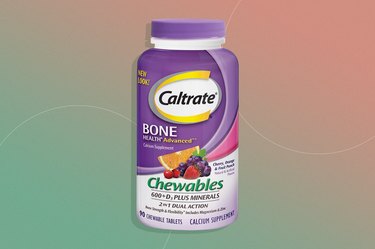
A chewable is slightly different from a gummy in that it typically doesn't contain any added sugar. This one has a small amount of non-caloric sugar alcohol for sweetness.
Caltrate calcium chewable passed Consumer Lab's testing for quality and heavy metals, which means it has the exact amounts of nutrients claimed on the bottle without any extra harmful stuff.
One chewable gives you slightly over the recommended amount for absorption, but also 800 IU of vitamin D3, which is a good ratio for one chewable.
This calcium is in the form of calcium carbonate, so take it with a meal. The other minerals in this supplement are magnesium, zinc, copper and manganese — all of which you might find in a multivitamin and may help improve bone health, according to the NIH.
Buy it: Amazon.com; Price: $14.24 for 90 chewables
11. Best Subscription: Nurish by Nature Made
Pros
- Budget-friendly
- Contains vitamin D
Cons
- Should be taken with food
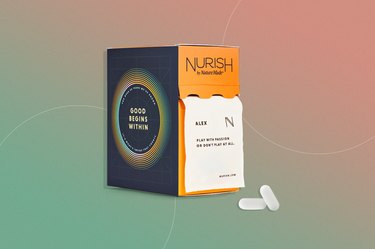
Nurish is a subscription service from the brand Nature Made. For only $4 a month, you get a 30-day supply of calcium and vitamin D delivered to your door.
This supplement contains the ideal formulation: 500 mg of calcium carbonate and 400 IU of vitamin D. This is truly a supplement for your diet and the most calcium your body can absorb at one time.
Take this supplement with food and rest assured you are getting what the package claims, as it is USP verified.
Buy it: Nurish.Naturemade.com; Price: $4 for a 30-day supply
What to Look for in a Calcium Supplement
If you've had a conversation with your doctor and decided a calcium supplement is a good idea, finding the right one for you is essential. There are some things you need to consider before you head to the store, because being armed with knowledge will help you navigate your way through the many calcium supplements available.
1. Dosage
For anyone ages 19 to 50, the daily recommended amount of calcium is 1,000 mg. This increases for those assigned female at birth to 1,200 mg from age 51 onward.
It's important to note that just because you need that much, it doesn't mean your body can absorb all of it at once. Experts at Harvard Health Publishing stress that you should limit your dosage to 500 mg at a time, as the body may not be able to use more than that. So, more is not always better in this case.
2. Type of Calcium
When you turn the supplement bottle over to look at the type of calcium in the supplement, you will most likely find one of two kinds: calcium carbonate or calcium citrate. These two types have some differences.
One of the most important differences is how much elemental calcium they contain. Elemental calcium is the amount that can actually be used by the body, according to the Mayo Clinic. Lucky for you, the supplement company has already done the hard math for you, so the amount of calcium on the label is the elemental calcium.
- Calcium carbonate is best taken with food, as it relies on your stomach acid to be absorbed properly. This type of calcium has the highest amount of elemental calcium — 40 percent, so it can be a great choice to maximize your calcium absorption. Some fortified foods, such as juices and plant based milks also contain calcium carbonate.
- Calcium citrate can be taken without food and is a good choice for those with low stomach acid or absorption disorders, such as inflammatory bowel disease (IBD). Calcium citrate has a lower amount of elemental calcium, around 21 percent.
3. Third-Party Tested
This is your safety net and guarantee that you're getting what it says on the label. Companies who choose to be third-party tested have their products checked to ensure that the supplement contains what it claims with nothing else added in. It also ensures that it breaks down appropriately in the body so you can absorb it.
The most common third-party testing certifications you will see are NSF, NSF certified for Sport, USP and Consumer Lab. Supplement brands will specify on their website if they are third-party tested and through which laboratory, and most will also label it on the bottle.
The Food and Drug Administration also encourages supplement manufacturers to participate in CGMP (current good manufacturing practices), which is another safety check to ensure the company adheres to appropriate manufacturing, which includes quality control of their dietary supplements. If a brand follows CGMP, it will usually note it on the bottle and/or on its website.
Safety Concerns
1. Don't Take Too Much
When it comes to calcium, you can have too much of a good thing. Chances are, if your diet is filled with a variety of foods, you probably don't need a supplement. Calcium is found in all dairy foods, fortified plant-based milks (check the label), almonds, kale, tofu and beans.
A condition called hypercalcemia can occur if you have too much calcium, possibly leading to heart and brain issues, so it's important not to overdo it on your calcium intake from both food and supplements, per the Mayo Clinic.
The NIH indicates that some studies have shown calcium supplements to increase the risk for cardiovascular disease and kidney stones, but they add other studies have not, so the results on this are inconclusive.
2. Be Careful With Iron
Calcium intake can interfere with iron absorption, so if you're taking an iron supplement as well, it's best to take them a few hours apart.
3. Talk to Your Doctor if You Take Meds
Calcium supplements have been shown to interfere with some medications, such as thyroid medication, lithium and some antibiotics, so it's always a good idea to mention your supplement choices to your doctor if you take any medication regularly.
- NIH: "Calcium Fact Sheet for Health Professionals"
- Harvard Health Publishing: "Choosing a Calcium Supplement"
- Mayo Clinic: "Calcium and Calcium Supplements"
- Consumer Lab: "Calcium Supplements Review"
- NIH: "Vitamin D Fact Sheet for Health Professionals"
- FDA: "Facts About The Current Good Manufacturing Practices (CGMPs)"
- The American Journal of Clinical Nutrition: "Dietary patterns and hip fracture in the Adventist Health Study 2: Combined Vitamin D and Calcium Supplementation Mitigate Increased Hip Fracture Risk Among Vegans"
- NIH: "Manganese Fact Sheet for Health Professionals"