List of Foods in a High Residue Diet
Residue refers to undigested material, or roughage left in the digestive tract from fiber-containing foods. Fiber compounds, such as cellulose, hemi cellulose, lignin and pectin, which are in the foods you eat, pass through your system undigested. These fiber components, however, play a role in digestive health since they promote movement of food through the digestive tract and provide bulk for stool. A high-residue diet goes hand in hand with eating high-fiber foods and is commonly prescribed to treat digestive issues such as constipation and diverticulitis.
Following a High-Residue Diet
It's essential that you follow your doctor's dietary advice when it comes to medically prescribed diets. If you're not used to eating a high-fiber diet, increasing your fiber intake all at once may cause digestive issues, such as bloating and gas. Increasing your fiber intake gradually can help decrease the risk of digestive discomfort. A high-residue diet follows the standard dietary fiber intake recommendation of 25 to 30 grams of fiber per day, according to the Norman Endoscopy Center.
- It's essential that you follow your doctor's dietary advice when it comes to medically prescribed diets.
- If you're not used to eating a high-fiber diet, increasing your fiber intake all at once may cause digestive issues, such as bloating and gas.
Breakfast Cereals
A Diverticulitis Diet Without Wheat
Learn More
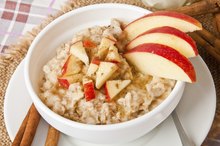
When following a high-residue diet, start your day with foods high in fiber 1. Adding cereal to your morning routine is an easy way to increase your fiber intake. On a high-residue diet, it's typical to aim for at least 3 grams of fiber per serving, according to the Norman Endoscopy Center. Bran cereals are particularly rich in fiber, containing 5 to 8 grams per serving on average, reports the Harvard School of Public Health. Hot cereals such as oatmeal provide another option. Oatmeal contains about 2.7 grams of fiber per serving, according to Harvard. To give your oatmeal a fiber boost, you can mix in some high-fiber, ready-to-eat cereal.
- When following a high-residue diet, start your day with foods high in fiber 1.
- To give your oatmeal a fiber boost, you can mix in some high-fiber, ready-to-eat cereal.
Fruits and Vegetables
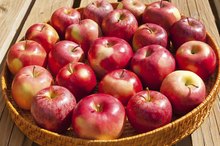
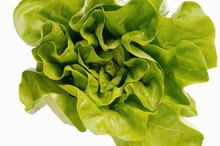
Fruits and vegetables contain fiber, although the content varies greatly. Eating a wide variety of fruits and vegetables helps assure you get enough fiber for a high-residue diet. Certain vegetables are particularly rich in fiber. For example, beans and other legumes provide up to 8 grams per serving on average, according to the Harvard School of Public Health. Other high-fiber vegetables include turnips, sweet potatoes, peas, brussels sprouts and asparagus. Among the fruits that are highest in fiber are raspberries, apricots, figs and dates. Leave the skin on fruits and vegetables to get the most fiber from them.
- Fruits and vegetables contain fiber, although the content varies greatly.
- Among the fruits that are highest in fiber are raspberries, apricots, figs and dates.
Bread Breakdown
Is It Okay to Eat Ground Flax Meal With Diverticulosis?
Learn More
Eating more bread and replacing refined bread with whole-grain, high-fiber bread is another way to increase the fiber in your diet. Not all breads are rich in fiber, however. Some manufacturers add artificial coloring to make the bread look more wholesome, and some wheat bread may lack fiber. Read labels to find breads that are whole-wheat and whole-grain varieties. Because some manufacturers list the fiber content on the label, compare labels to determine which breads contain the most fiber and how much fiber you're getting per serving.
- Eating more bread and replacing refined bread with whole-grain, high-fiber bread is another way to increase the fiber in your diet.
- Some manufacturers add artificial coloring to make the bread look more wholesome, and some wheat bread may lack fiber.
Related Articles

A Diverticulitis Diet Without Wheat
Learn More
Is It Okay to Eat Ground Flax Meal With Diverticulosis?
Learn More
Are Whole-Grain Breads Good for Constipation?
Learn More
Do Some Foods Aggravate Diverticulitis?
Learn More
Fructans in the Diet
Learn More

What Cereals are Recommended for People With Diabetes?
Learn More
Water Soluble Fiber Foods
Learn More
Types of High Soluble Fiber in Lettuce
Learn More
Can You Eat Very High-Fiber Foods and Still Be Constipated?
Learn More
Compare Soluble Fiber in Lentils & Barley
Learn More
References
- Colon and Rectal Surgery Associates: High-Fiber Diet
- Veronese N, Solmi M, Caruso MG, et al. Dietary fiber and health outcomes: an umbrella review of systematic reviews and meta-analyses. Am J Clin Nutr. 2018;107(3):436-444. doi:10.1093/ajcn/nqx082
- Slavin JL, Lloyd B. Health benefits of fruits and vegetables. Adv Nutr. 2012;3(4):506-516. doi:10.3945/an.112.002154
- Raspberries, raw. FoodData Central. U.S. Department of Agriculture. Published April 1, 2019.
- Edamame, shelled. FoodData Central. U.S. Department of Agriculture. Published April 1, 2019.
- El-Salhy M, Ystad SO, Mazzawi T, Gundersen D. Dietary fiber in irritable bowel syndrome (Review). Int J Mol Med. 2017;40(3):607–613. doi:10.3892/ijmm.2017.3072
- Ma Y, Hu M, Zhou L, et al. Dietary fiber intake and risks of proximal and distal colon cancers: A meta-analysis. Medicine (Baltimore). 2018;97(36):e11678. doi:10.1097/MD.0000000000011678
- Ma Y, Olendzki BC, Wang J, et al. Single-component versus multicomponent dietary goals for the metabolic syndrome: A randomized trial. Ann Intern Med. 2015;162(4):248-57. doi:10.7326/M14-0611
- Kim Y, Je Y. Dietary fibre intake and mortality from cardiovascular disease and all cancers: A meta-analysis of prospective cohort studies. Arch Cardiovasc Dis. 2016;109(1):39-54. doi:10.1016/j.acvd.2015.09.005
- Hajishafiee M, Saneei P, Benisi-Kohansal S, Esmaillzadeh A. Cereal fibre intake and risk of mortality from all causes, CVD, cancer and inflammatory diseases: a systematic review and meta-analysis of prospective cohort studies. Br J Nutr. 2016;116(2):343-52. doi:10.1017/S0007114516001938
- U.S. Department of Health and Human Services and U.S. Department of Agriculture. 2015 – 2020 Dietary Guidelines for Americans. 8th Edition.
- Juraschek SP, Miller ER 3rd, Weaver CM, Appel LJ. Effects of sodium reduction and the DASH diet in relation to baseline blood pressure. J Am Coll Cardiol. 2017;70(23):2841–2848. doi:10.1016/j.jacc.2017.10.011
Writer Bio
Janet Renee is a clinical dietitian with a special interest in weight management, sports dietetics, medical nutrition therapy and diet trends. She earned her Master of Science in nutrition from the University of Chicago and has contributed to health and wellness magazines, including Prevention, Self, Shape and Cooking Light.