
Importance of Core Strength in Ballet
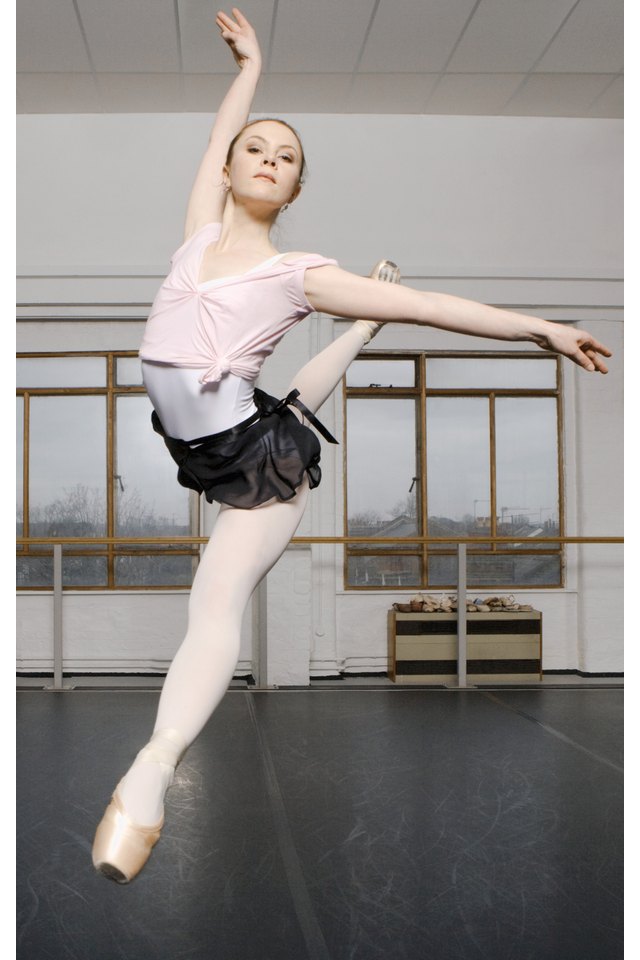
Your core is your center of gravity and all movement begins there, according to Dr. Robert Donatelli in an article for SportsMD website. The core stabilizes the legs and mobilizes bones, allowing movement. A ballet dancer needs strong core muscles to perform lifts, stabilize the torso during leaps and facilitate graceful stretching and bending during a dance routine. Ballet dancers also require considerable flexibility and extensive range of motion, especially in the back, hips and ankles.
Core Muscles
Core muscles include all of the muscles in your trunk and pelvis. Among these muscles are the transverse abdominis, obliques, erector spinae and gluteal muscles. Core exercises strengthen these muscles as well as a number of others in the shoulders, abdomen, pelvis and buttocks. Most sports and physical activities in general require strong core muscles, according to the Mayo Clinic's website, and ballet is no exception. A weak core results in poor posture and increases the risk of falls, lower back pain and muscle injuries.
Strength
Ballet dancers must be strong to perform various dance maneuvers. Core strength is particularly important for a ballet dancer, as a strong core promotes better balance, helps a dancer stay properly aligned and improves stability. Strong muscles in the core also decrease the risk of injury. Dancers are particularly prone to low back injuries because they must frequently put their backs through an extreme range of motion while dancing.
Hypermobility
A dancer uses core muscles in positions ranging from standing to balancing and turning, according to dancer and fitness trainer Nikol Klein. A weak core makes dancers more susceptible to back injuries. Dancers who are hypermobile, or very flexible, have ligaments that can become lax and predisposed to injury. Ligaments connect bone to bone in a joint, but muscles are the supporting structure around the joint. Strengthening the core can compensate for lax ligaments in areas such as the hips, according to Dance Magazine.
Control
Core strength stabilizes the torso and improves extremity control, according to an article in the February 2012 issue of Dance Magazine. Muscular imbalances and weakness of the abdominal and spinal muscles frequently contribute to injuries. The combination of tight hip flexors and weak abdominal muscles increases compression in the spine, according to The Stretching Institute. The sacroiliac joint joins the spine and pelvis; this joint transfers the load from your upper to lower body and can be strained during dance maneuvers. Strengthening the core protects this joint.
References
Resources
Writer Bio
Beth Greenwood is an RN and has been a writer since 2010. She specializes in medical and health topics, as well as career articles about health care professions. Greenwood holds an Associate of Science in nursing from Shasta College.